

Plant galls
You might have noticed strange, bulbous growths on oak leaves or rose stems. These curious structures, called galls, are nature’s hidden laboratories — formed when insects or fungi persuade plants to grow in extraordinary ways.
By Cherry Alexander
Silvia the editor and I talked about the subject for this issue. “Let’s do something about plants”, she said. I had just been spotting a lot of different galls around the garden and local wood and it seemed a good subject... As it turns out, for a book!
Galls are growths on plants, formed of plant tissue, that are caused by other organisms. These could be insects, fungi, bacteria or viruses and the forms they take are very varied. Mostly they do little or no damage to the host plant.
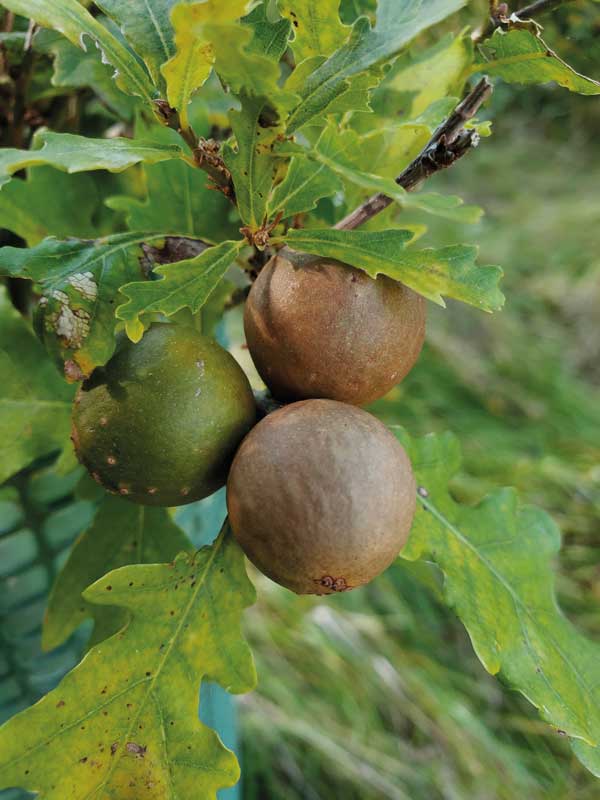
There are about 3,000 forms of plant galls found in the UK and I have had a fine time finding just a few of them around us here on the Kyle. Oak trees are a good place to start as they are known to support over 50 different galls. The most obvious are caused by oak gall wasps and can be large, like the familiar Oak marble gall caused by the Andricus kollari wasp.
Oak galls
The marble gall on oaks is caused by the asexual generation of the gall wasp Andricus kollari. This is not a native species of gall wasp and was introduced in the early 19th century as a possible source of tannin for ink making and dyeing industries. Each marble is inhabited by a single larva but may also be invaded by parasitoids, that will harm the larva for their own benefit, or more interesting, by inquilines. These are defined as an animal that exploits the living space of another species, but without harming its host, so they live in the gall alongside the wasp it was made for.
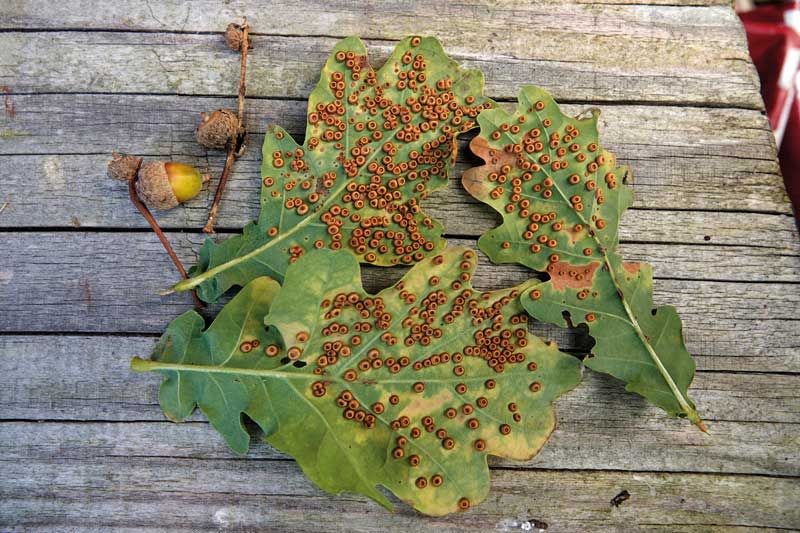
Far smaller than the marble gall is the silk button spangle gall, caused by the tiny wasp Neuroterus numismalis. Always female, the wasp stays in the gall, amongst the leaf litter until spring. Then she emerges and reproduces asexually (without mating). This is known as the agamic generation, She lays her eggs in oak leaf buds, this spring generation causes blister galls on the oak leaves. When these hatch, between May and July, they are the sexual generation, both male and female. These mate and lay their eggs on oak leaves, which cause the formation of silk button galls and the circle is complete.
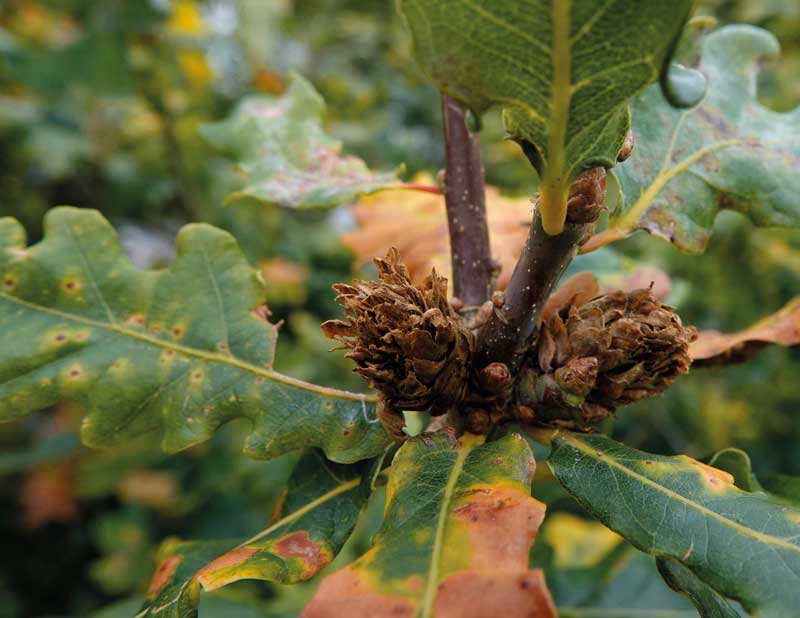
On my search for insect galls, I found artichoke galls on oaks where the terminal bud is very enlarged and deformed, different varieties of spangle galls, home to the asexual generation of the gall wasp Neuroterus quercusbaccarum, and kidney galls, the asexual galls of Trigonaspis megaptera, all tucked away safely under the leaves, but as the oak can play host to well over 35 different galls, I have a lot more to find.
Galls caused by bacteria are more unusual, but one form is crown galls. They’re caused by a bacteria called Agrobacterium tumefaciens, a bacteria that is harmless to humans but a problem for susceptible plants. The bacteria enter trees through wounds on the roots or stems and cause galls on a wide range of trees and shrubs. Poplars like aspens are very susceptible to crown gall. I had wondered if the burrs/burl seen on so many trees in the Gearrchoille Community Woodland were galls, but it seems they are originally caused by damage to the trunks of the trees, and are too big to be galls.
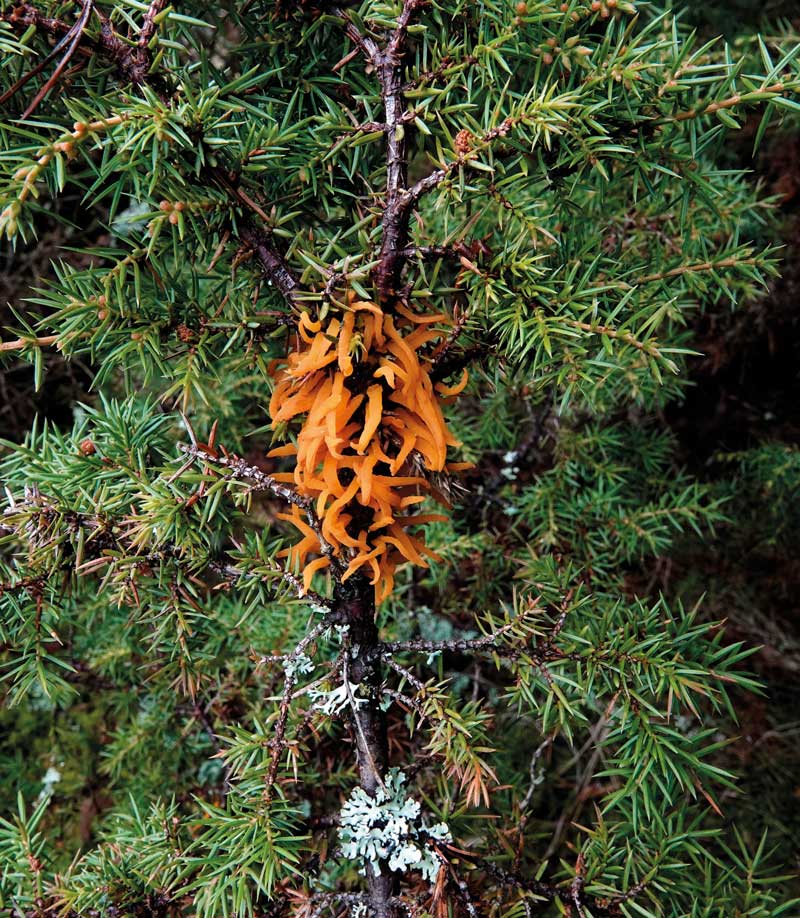
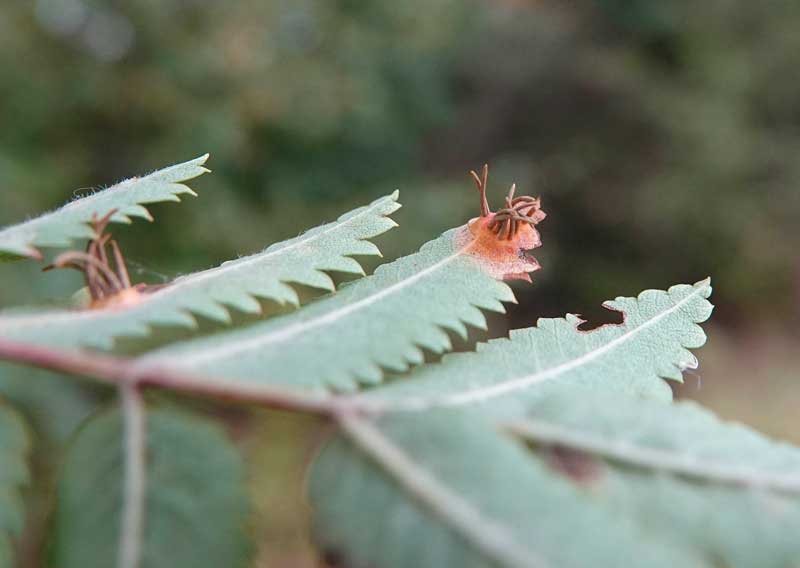
I had already photographed a fungal gall, a rust, it is a very visible gall in our area, Gymnosporangium cornutum also known as the Mountain ash juniper rust. Several years ago I became aware of orange growths on the stems of juniper during wet weather, also known as tongues of fire. These are the telial rolls from which are released the spores which infect the second host, rowan trees, where it causes the rowan to form concave orange spots on the topside of the leaf and outgrowths on the underside, known as aecial rolls, these produce spores that infect the juniper. Keep a look out for them on the stems of juniper in a wet spring.
Ergots
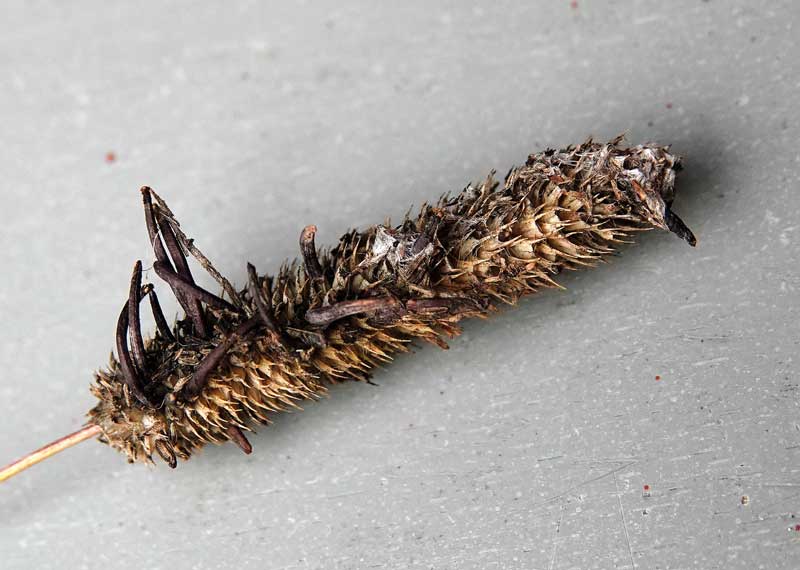
I have always been curious about ergots, the fungus on cultivated grains like rye can also be found on our wild grasses. I have them in my own garden on Yorkshire Fog grass and in the picture, on Timothy grass. When the grass or grain plant is infected by the spores from the fruiting body of the fungus Claviceps purpurea, it makes the grass form a gall, a kernel called a sclerotia, this falls to the ground in the autumn and in the spring produces a fruiting body, these are tiny mushrooms, the spores of which cause a gall. The sclerotia are very poisonous and can cause Ergotism. Early references to ergotism date back as far as 600 BC, an Assyrian tablet referred to it as a “noxious pustule in the ear of grain.”It was also common in Europe in the Middle Ages, but it seems that in Britain we escaped the worst of it because we made our bread from wheat, which at the time was resistant to ergot.
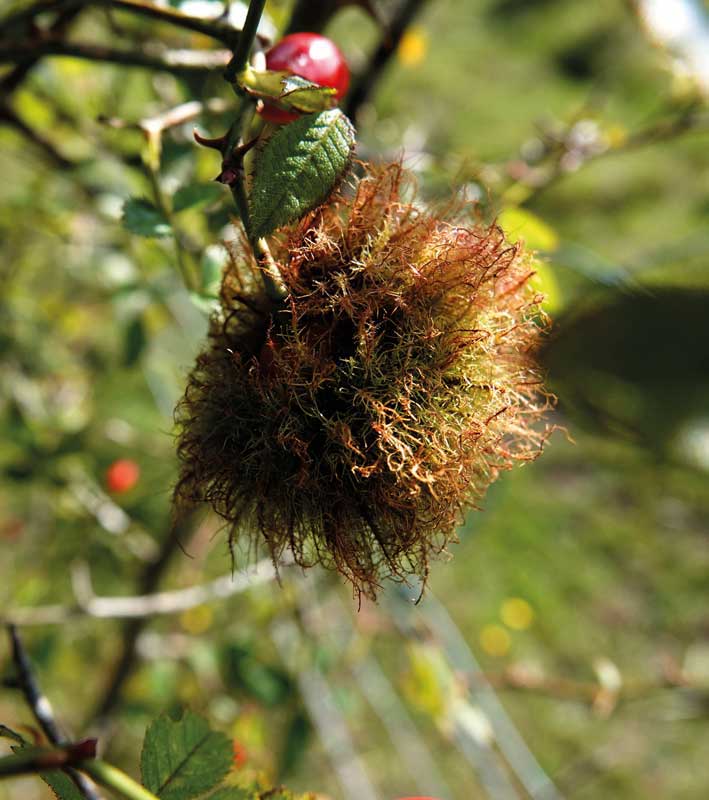
I had always assumed that the marks on plant leaves were cause by direct insect damage but now I will be studying the undersides of these marked leaves to see if they are in fact homes to tiny mites and wasps that have caused the plant to build them a home. It turns out that the badly curled leaves on my guelder rose (viburnum opulus) are galls caused by aphids. But keep an eye open for one of the more glamorous galls, the Robin’s pincushion caused by the gall wasp Diplolepsis rosae, these fluffy red galls are found on wild roses and can grow to 7cm across.
This subject is massive and much of the information on galls is provided by enthusiasts. If you want to follow up and learn more, there is a Facebook page British Plant Galls in association with BPGS. Or the British Plant Gall Society website where they have a checklist of British galls that runs to 1,469 entries.
Comments ()