

Carnivorous plants
Dave Browne, member of the Carnivorous Plants Society, shares with us how he ended up ‘captivated’ by these plants, which blur the line between flora and predator, using ingenious traps to lure, capture, and digest unsuspecting insects.
By Dave Browne
My name is Dave and I’ve been a grower of these beautiful plants for the last 7 years. How it all started was a visit to a local garden centre and I came home with two or three plants, then the “bug” hit me. Before moving up here I had four greenhouses and thousands of plants and now I have half the collection and one big polytunnel.
There are many different varieties of carnivorous plants which I will go into later, but I grow only a few different varieties. They all have the same common elements which are to attract, trap and digest prey. Despite their often exotic appearance they are very undemanding and do not need any special growing conditions. Many will grow happily on a sunny window sill, but a greenhouse would help some to grow better. At the end of the day these plants are bog plants needing to be sat in water and never let their growing medium dry out. The varieties I grow also go dormant throughout the winter and new growth appears in the spring. For us up here in Scotland we do have some native species.
There are about 13 different species of carnivorous plants of which I grow several - Sarracenia, Dionaea, Darlingtonia and Drosera.
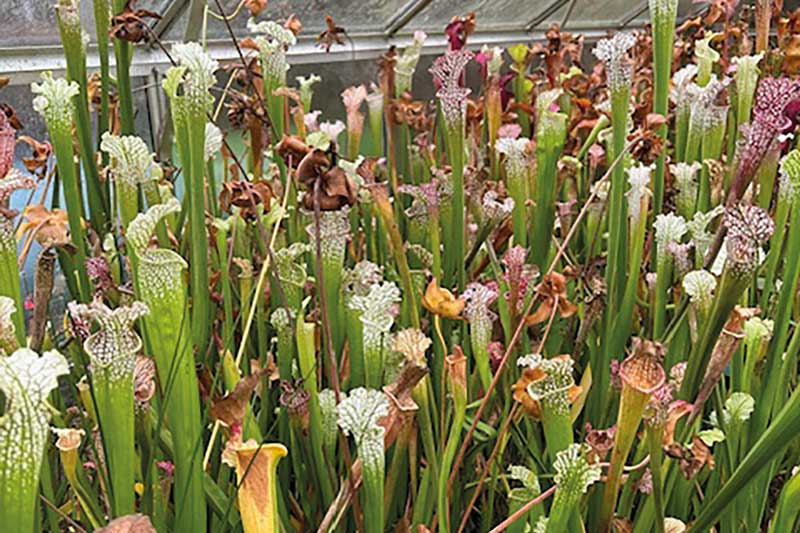
Sarracenia
Sarracenia is often called pitcher plant or trumpet pitcher.
There are 8 different varieties within this group originally found in the bogs in south eastern parts of United States. Although these amazing plants are definitely carnivorous, they don’t move, instead they employ a system of downward pointing hairs inside the pitcher and a sweet and sticky liquid that drugs any flies that care to drink it.
Once inside it’s very hard to try to escape. These plants can grow for decades (taking 3 to 5 years to mature) and can grow from a few centimetres to over a metre in height. Pitchers vary in colour from plain green to shades of mauve, whilst some are mottled with white and red or pink. In some cases the first thing you see in the spring are flower buds which turn out to be large flowers from yellows to reds. They are grown in a peat and perlite mix and propagation can be either seed or division of the rhizome.
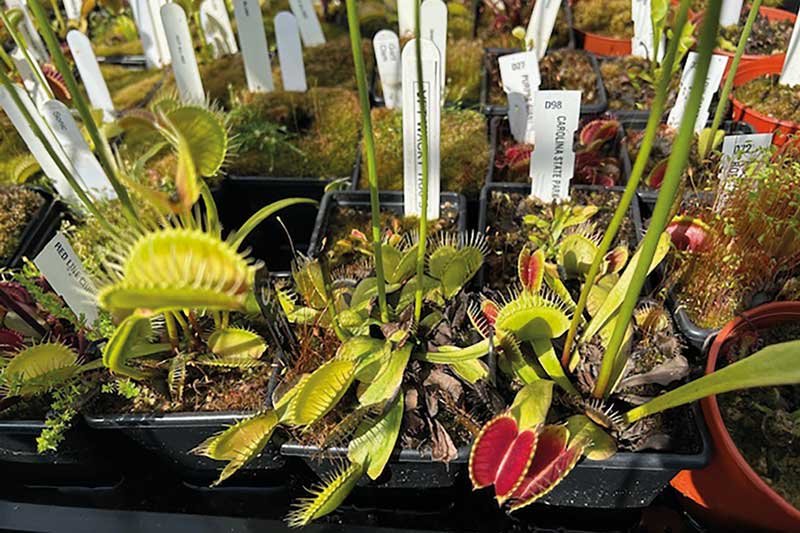
Venus fly trap
Dionaea is more often called Venus Fly Trap.
The Venus fly trap is probably the most famous of all carnivorous plants. The plant in the wild can be found growing in North and South Carolina, USA. There are many different forms of the one type that have been created over the years: red, green, purple, spotty, sawtooth and even giants. It is a bog plant that catches its own food by means of sensitive trigger hairs on the inner surface of each trap. So it never needs plant food, it just needs to sit in rain water (some tap water can kill them) and they love sunshine. The one thing they don’t like and what hurts them most is getting poked, prodded and having strange food dropped into the trap. They grow fine without any help. Propagation can be seed, divisions and leaf / flower cuttings.
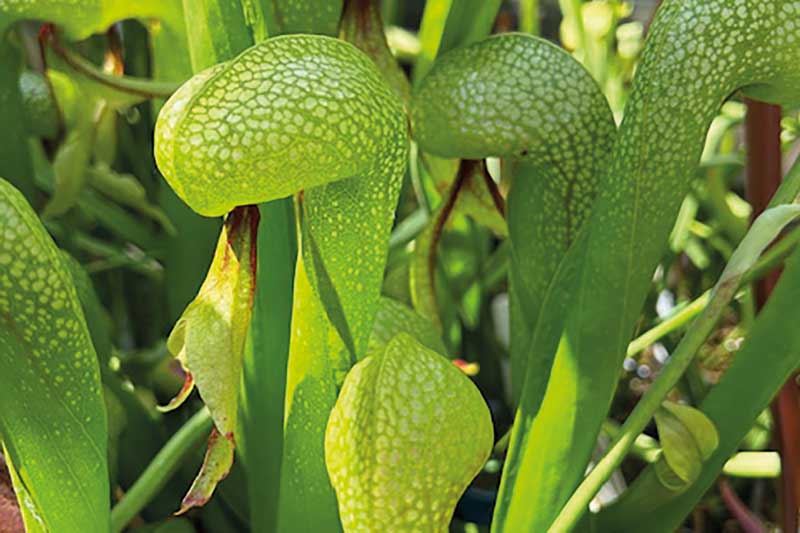
Darlingtonia or Cobra Lily
The striking looking Cobra Lily was first discovered growing in the wild in California. The Cobra Lily is a sole member of this distinctive genus. It is one of the most spectacular looking of all carnivorous plants growing to a height of a metre but commonly 40-60 cm. The pitcher has numerous windows to allow light to enter the pitcher and access to it is by means of a hole underneath the dome. A two-lobed tongue hangs beneath the dome giving the pitcher the appearance of a snake poised and ready to strike, hence its English name Cobra Lily. They are easy to grow but they do like their roots to be cool and damp, hence using old clay pots instead of plastic pots. Propagation is from seed, division or runners.
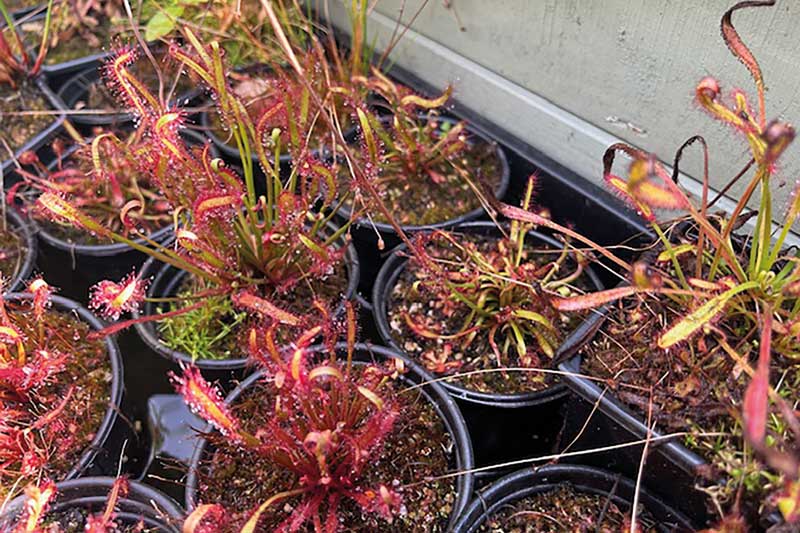
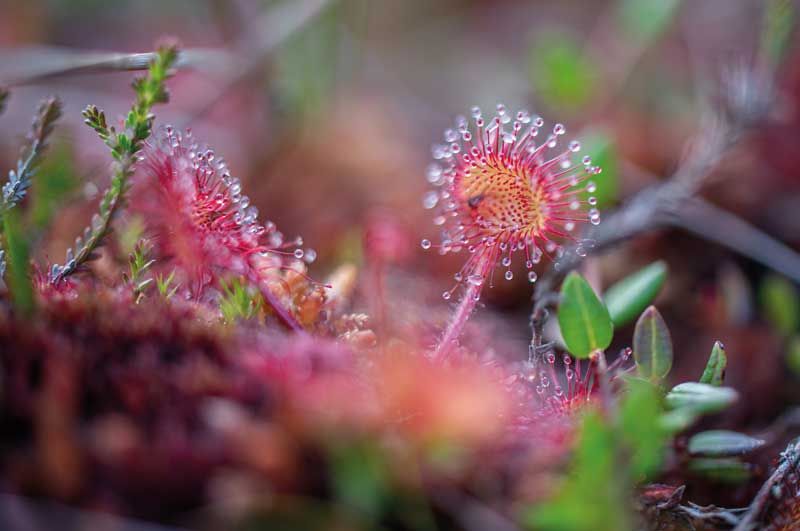
Drosera or Sundew
Sundews are one of the prettiest and also one of the most widespread of all the carnivorous plants, they can be found all over the world; in hot countries and in cold ones too. There are over 170 species recognised and cultivation can be easy to highly specialised. This number maybe higher due to many more hybrids that occur in the wild and by growers around the world. Sundew leaves occur in a wide range of colours, shapes, sizes and these leaves have stalked glands (tentacles) on the upper part of the leaf. The tentacles of the sundews are made of “Xylem” and are a quarter the width of a human hair. Propagation is from seed, leaf, root cuttings and removal of winter resting buds known as gemmae.
All of the above I grow in a mixture of peat and perlite, never ordinary compost from garden centres etc because these have nutrients / fertiliser in them that carnivorous plants do not require. Other growers use sphagnum moss, sand/grit, orchid bark and coir. The best water to use is rain water, being the cheapest and easiest means of obtaining it. Tap water may contain contaminants and additives that will kill your plants.
If anyone would like more information or join the Carnivorous Plants Society please get in touch with me by email. Also I do talks to local groups interested in these wonderful plants.
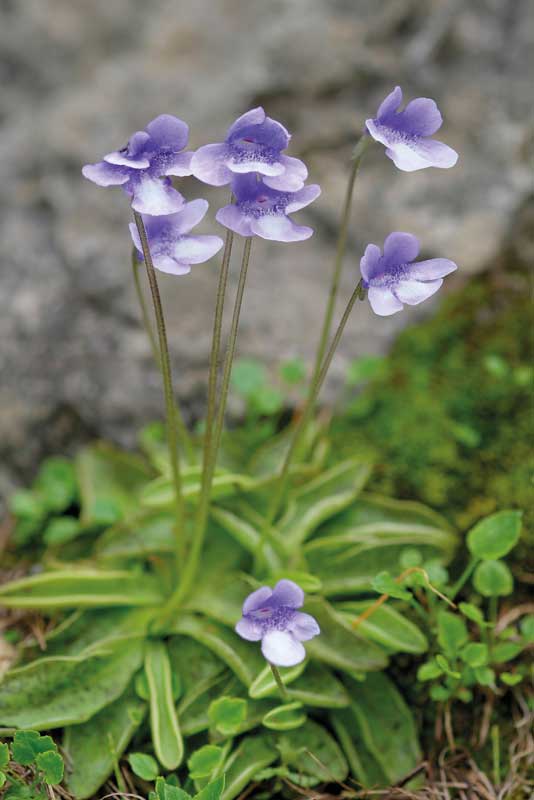
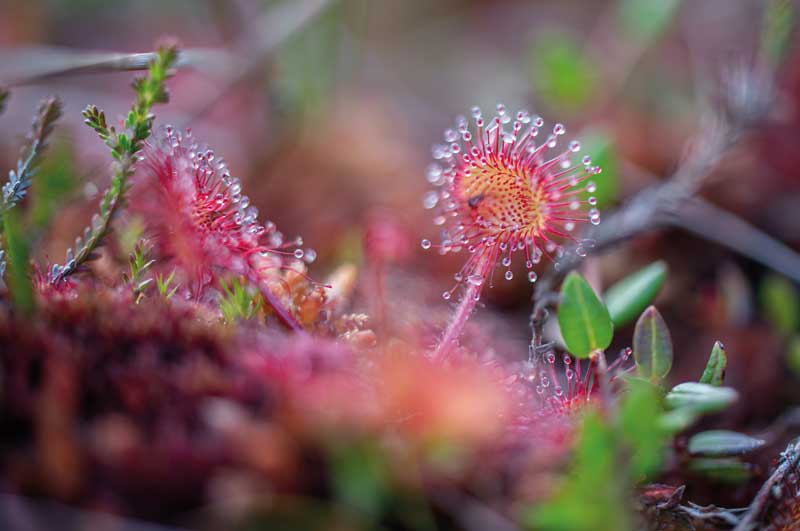
(Left) Butterwort. © AdobeStock/Pixaterra (Right) Sundew. © AdobeStock/Gunta
Scottish native plants:
Sundews & Butterworts
These grow in the bogs and wet areas of peatland in Scotland. Sundew species, especially the small round leaved variety with its glistening leaves and butterwort with its rosette of pale green greasy looking leaves are easy to spot in late spring/early summer. Keep a look out for these plants on your next walk!
Comments ()