

Nature, the secret ingredient in our food
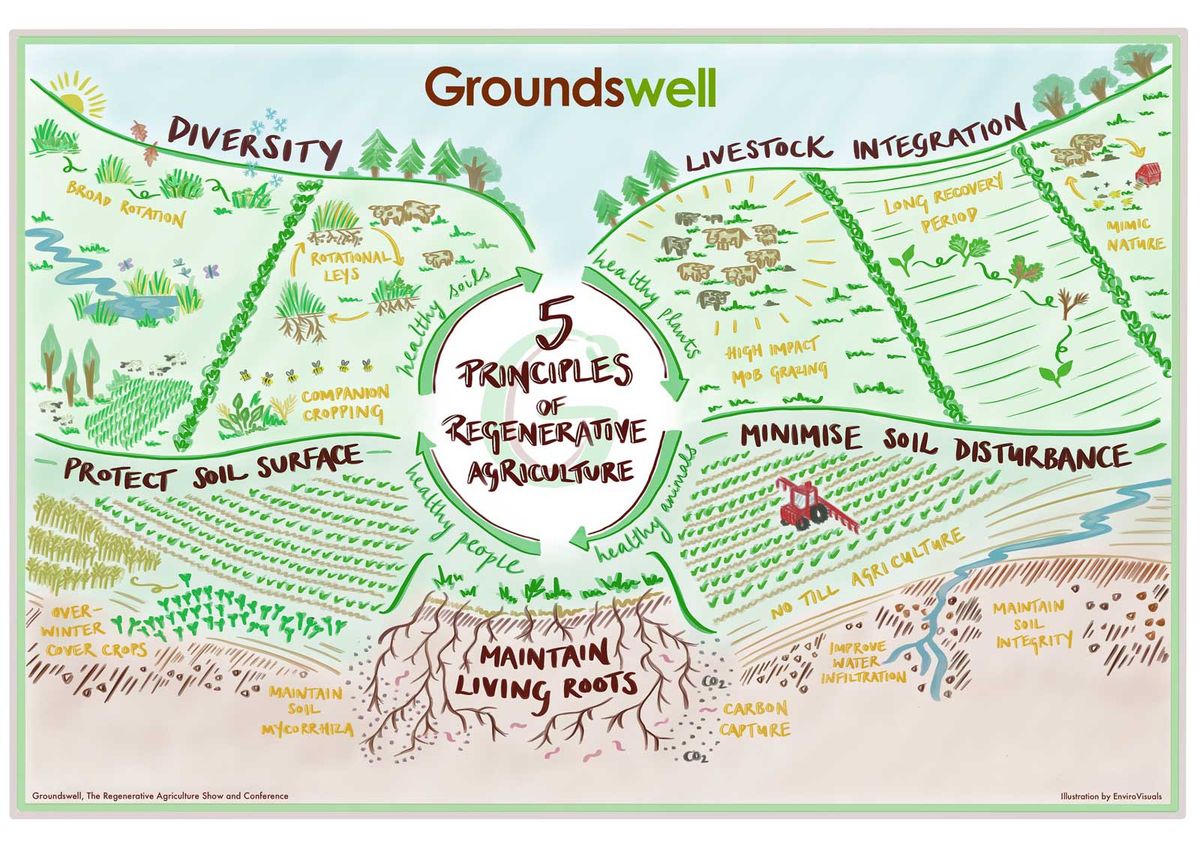
Perhaps this should say Nature, the secret ingredient missing from our food!
By Kate Heightman
Because it certainly is missing from indoor-reared pork and chicken, as well as intensively produced beef, dairy, and cereals, fruit and vegetables, which rely heavily on synthetic fertilisers, pesticides, and herbicides. There are public health and environmental implications from over-use of these - we are what we eat – and so are our livestock and crops. Eating food containing very few natural minerals and high levels of chemicals may fill us up, but over a lifetime can make us unwell.
It’s thought we now need to eat up to half a dozen carrots to get the same amount of minerals as we would have got from one carrot in the 1940s due to the depletion of minerals from our soils over the last 60 years. Post war agricultural policy has favoured yield, appearance, and speed of production over what’s actually in our food. But by using a regenerative system, we can produce highly nutritious food in a sustainable way.
This type of farming works by copying nature. Ecosystems replenish themselves by cycling nutrients, allowing sustainable production and harvesting. We can benefit from these ‘ecosystem services’, which nature provides for free.
Key to this approach is looking after soil – the ‘digestive system’ of the planet. Soil is an ecosystem in its own right, full of living organisms that convert organic matter (dead plants and animal waste) into nutrients available to living plants. Like us, soil needs a healthy ‘microbiome’ of bacteria and other organisms to process the organic matter. When it’s able to function properly, soil stores carbon, and a higher organic content can help it hold more water, safeguarding it from both flooding and drought. Continuous cover of crops or pasture can also reduce temperatures as plants continually release moisture through transpiration, combating the effects of climate change.
Practices like crop and grazing rotation, growing cover crops to avoid bare soil, using green (plant) fertilisers or manures, and reducing tillage (ploughing) will improve fertility, soil structure, carbon storage, and productivity, as well as reducing soil erosion and depletion.
Livestock practices like short bursts of high intensity ‘mob grazing’ followed by resting fields ensure that permanent pastures can recover, especially where species like beetles and earthworms are present to break down dung and replenish the soil. This method can also break parasite cycles, avoiding the need for chemical wormers.
Looking after the soil is the basis of the entire regenerative system – and when the system is working, it produces a whole range of other benefits:
Cleaner water
Reduced use of synthetic fertilisers and pesticides lowers the risk of pollution and helps keep rivers, lochs, groundwater and water supplies pure. Soil with a high organic content from manure or dead plant matter also benefits watercourses, because it soaks up heavy rainfall, reducing runoff and filtering water before it enters burns and rivers. If eroded soil and peat particles end up in these, aquatic species are starved of essential oxygen and sunlight.
Increased biodiversity
Wildlife-friendly farming allows less productive areas to revert to natural habitat, increasing numbers of insects including pollinators and pest predators. These can boost yields, as well as reducing costs by doing the job of expensive pesticides. Insects are also food for a variety of other species, enabling these to increase in number too.
Climate resilience
Farming systems with a variety of different crops, mixed livestock systems and natural soil cover are more resistant to droughts, floods, and extreme weather conditions. This way, in years that are challenging for one crop, others will survive and produce a harvest, ensuring the survival of the business and the people who depend on it.
Lower emissions
Using fewer chemicals and improving soil carbon storage helps reduce greenhouse gas emissions. Many fertilisers, herbicides and pesticides depend on fossil fuels, either as ingredients or for transport and delivery, while green fertilisers and manures can be produced as an integral part of a mixed farming system.
Ecosystem recovery
Naturally occurring bacteria, fungi, worms and other invertebrates break down organic nutrients from dead plant matter and make them available to crops. Crops and livestock take up a diverse range of nutrients and trace elements from the soil, so that when their leaves, seeds, fruit, vegetables or meat are consumed by people the nutrients are passed on.
Vibrant rural economy
The regenerative system can save money for farmers, by utilising free ‘ecosystem services’, but more than this, it can be part of a circular local economy. Local producers can supply local consumers with healthy sustainable food, through a system that’s more resilient to climate change and stops revenue being lost to large corporations far away.
Health and wellbeing
There is evidence to show that not only can the public benefit from spending time in nature, but that the mental health of farmers who adopt nature-friendly farming practices is improved too. Regenerative farming tends to be less stressful and isolating, especially where farm clusters are developed so farmers can collaborate, share knowledge and machinery, or where diversification into farm-gate sales puts producers in touch with customers in the community.
In summary, regenerative farming can reduce dependency on high-cost inputs, making businesses more resilient to economic and climate challenges, while providing us with more nutrient rich food. What’s more, incentives exist for producers to increase their ‘natural capital’, with payments for woodland creation and peatland restoration for example. There are already opportunities to sell carbon credits generated by this type of work, with the development of biodiversity credits not far behind. Diversifying into direct sales can improve local food security and sustainability too. These are all elements of the transition to a nature-based economy: when we make nature the secret ingredient, our food, and the way it’s produced is not only better for the planet, but for our physical, mental and economic health as well.
(Based on a presentation prepared for the Local Food Convention in Ardgay in October 2025)
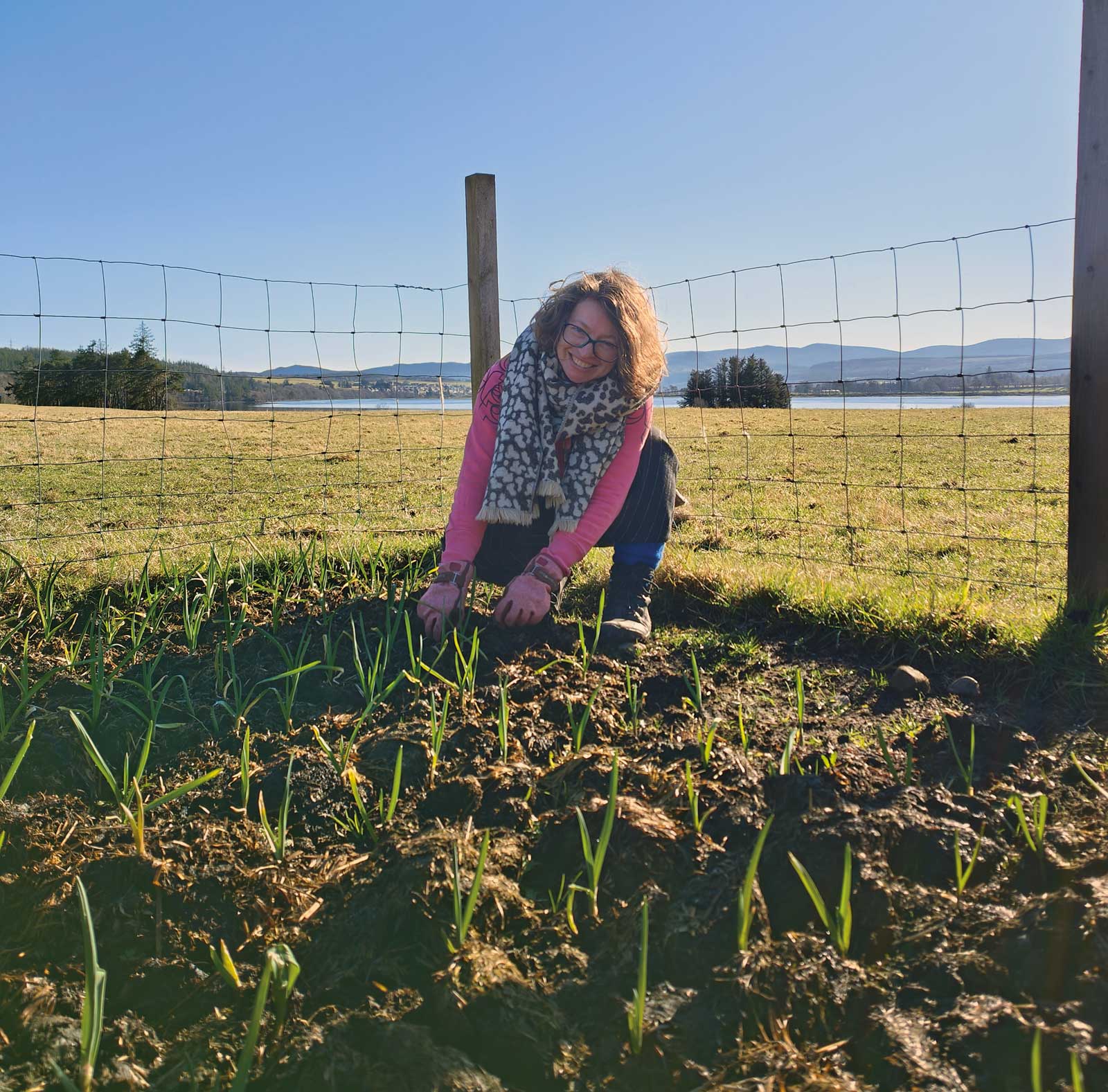
Locally-grown garlic
By Marieke de Jong
Garlic has been cultivated for thousands of years as a medicine, food flavouring, and condiment. Despite being a low input crop, UK-grown garlic is extremely rare. All our supermarket garlic comes from abroad, mostly from China which produces the bulk of the world’s garlic.
Bucking the imported food trend, the Kyle of Sutherland is now home to a real garlic field. Over the 2025/2026 season Kyle FEEDS and Seed to Supper, part of Kyle of Sutherland Development Trust, use this field to test local growing conditions for four different garlic varieties.
The aim is to assess feasibility and if possible, to select one or more suitable varieties of garlic for future local commercial garlic production.
To have a go at growing garlic at home, plant some cloves in March for a crop in mid-summer.
Comments ()