
The seer Swein Macdonald
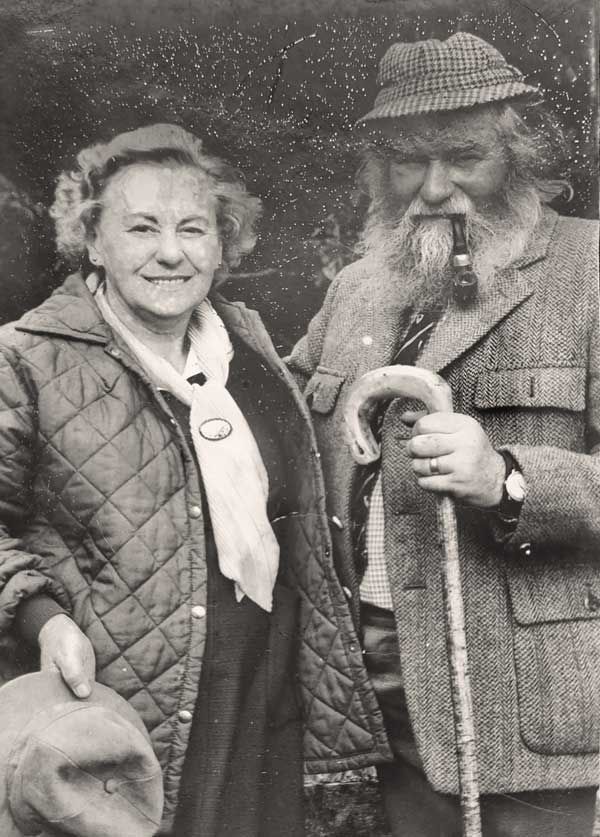
Swein MacDonald rose to fame in the 1970s for his mystical predictions, fueled by alcohol, darkness, and fiery emotions. MacDonald mesmerised audiences with his extraordinary gift of ‘second sight’ and a flair for controversy. With a glass of whisky in hand and incense burning in his darkened crofthouse in Kincardine, Ardgay, he offered psychic readings and foresaw major historic events for over 25 years.
By Elizabeth Lunardini
Swein MacDonald, born in Elgin in 1931, displayed psychic abilities from a young age. His daughter, Gaye MacDonald, recalls a moment when Swein, at just seven years old, predicted a tragic accident involving a local forester. This prediction proved accurate despite his lack of prior knowledge or connection to the event. When Swein’s mother asked how he knew, he simply said, “I saw it happen.”
Initially working as a stonemason, Swein MacDonald later joined the Ministry of Works’ ancient history branch. During this period, he suffered a severe head injury from a load of bricks, resulting in tunnel vision, loss of taste and smell and problems with balance. Despite these challenges, he became known as ‘The Highland Seer,’ first performing with his wife, then on his own, with his distinctive staff adding to his enigmatic image.
The Gift of Second Sight
Second sight, a term rooted in Scottish folklore, refers to perceiving events beyond the ordinary scope of human senses. Swein MacDonald described his visions as fleeting images, like scenes “flashing on a television screen,” though he did not always understand them. He explained that hearing a person’s voice was enough to trigger these visions; physical presence was not necessary. MacDonald viewed his abilities as a ‘chosen gift,’ best used wisely, and noted that his predictions were more accurate during heightened emotional states, especially anger. He believed his ability to see beyond a person’s physical presence allowed him to foresee future events, whether joyful or sorrowful. When asked about disclosing impending sadness, he replied, “It is not mine to keep. I have to tell the person what I see.” Swein MacDonald told Elizabeth Sutherland, author of Ravens and Black Rain: The Story of Highland Second Sight, that his gift required continuous practice, similar to strengthening a muscle. He believed that the more he exercised his abilities, the more effective they became.