

History of farming in Ardgay
Farming has evolved immensely in the last 200 years. Sheaves, stooks, ricks and manual threshing were gradually improved and finally replaced by the modern combine harvester. The following photos show the evolution of grain harvesting at some of the local farms.
By Gregor Laing
The grain harvest in 2018 was completed in record time as a result of the crops ripening early after the hot dry summer. The modern combine harvesters were able to work night and day -if conditions allowed- to gather in the crop and complete the harvest in some cases before they were able to start in previous years due to inclement weather, an indication how far the improvements in farm machinery have progressed in the past 200 hundred years when all the harvesting and threshing was done by hand.
Before modern-day harvesting machines were developed, agricultural workers had to harvest crops using hand-tools such as:
The Reaper
In 1826 in Scotland, the inventor Reverend Patrick Bell designed a reaper machine -which used the scissors principle of plant cutting– a principle that is still used today.
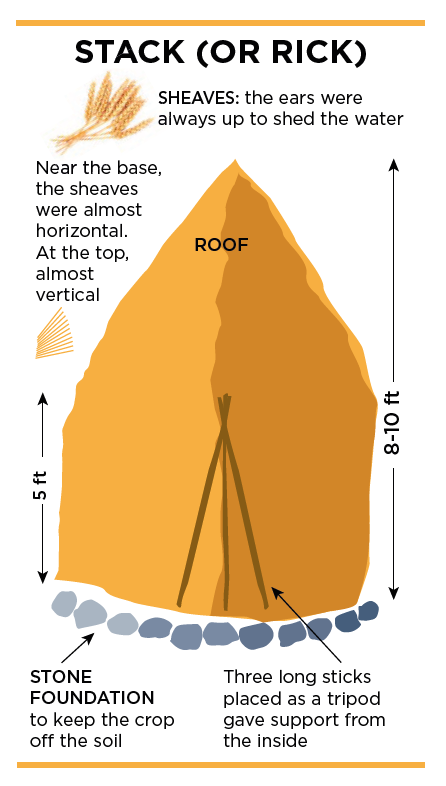
The reaped grain stalks were gathered into sheaves, tied with a twist of straw. Several sheaves were then leant against each other with the ears off the ground to dry out, forming a stook. After drying, the sheaves are gathered from the field and stacked, being placed with the ears inwards, this is called a stack or rick.
Ricks are made in an area inaccessible to livestock, called a rick-yard or stackyard. The corn-rick is later broken down and the sheaves threshed, to separate the grain from the straw.
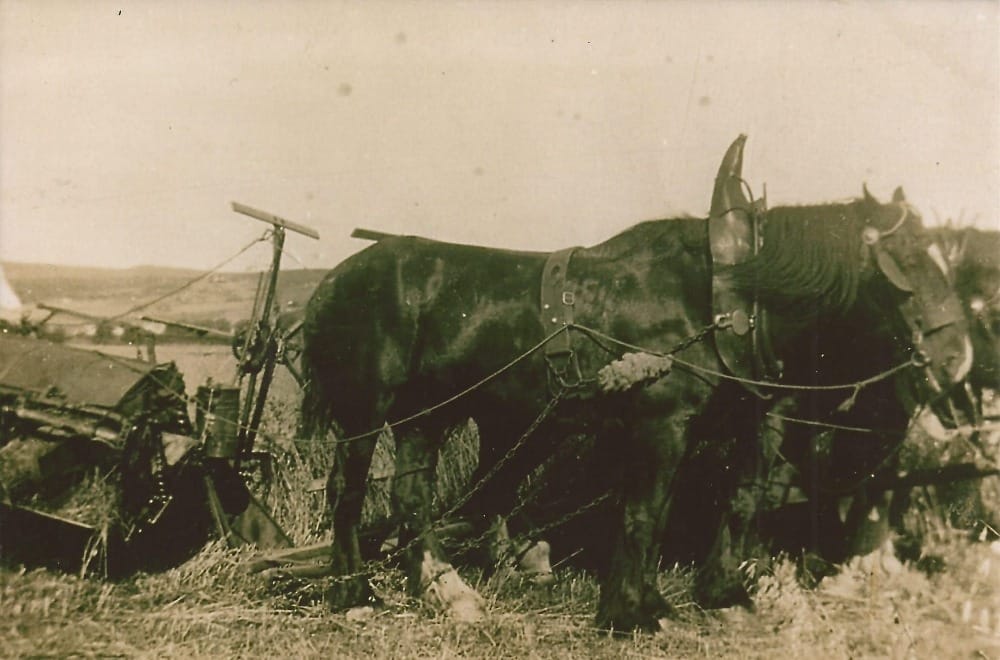
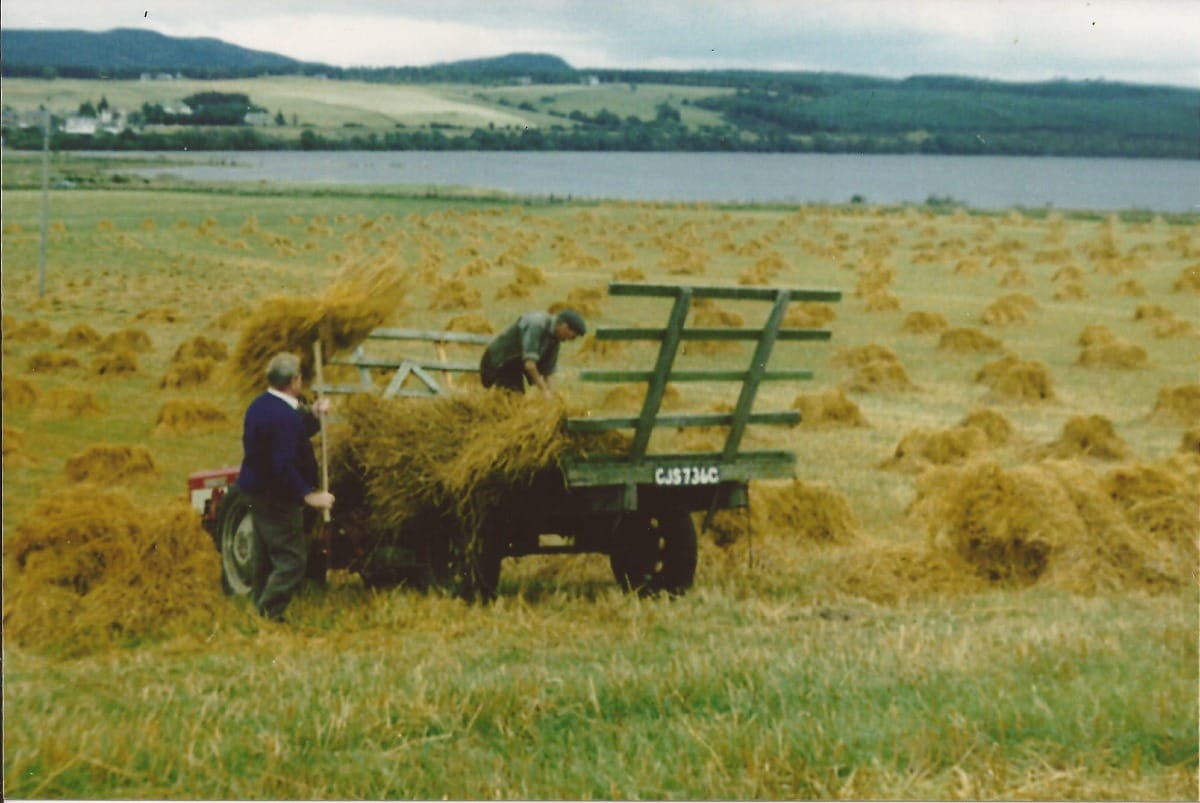
(Left) Bindering oats at Poplars Farm, Ardgay 1930-1933. (Right) Alister MacLaren and William Dunbar loading sheaves at the Poplars, Ardgay, 1960s. © Ian Mackenzie
The Binder
The reaper was later replaced by the binder which would also gather the crop and tie it into sheaves. Early binders were horse-drawn, their cutting and tying-mechanisms powered by a bull-wheel.
Later models were tractor-drawn and tractor-powered. Binders have a reel and a cutter bar like a modern grain head for a combine harvester. The cut stems fall onto a canvas bed which conveys the cut stems to the binding mechanism. This mechanism bundles the stems of grain and ties the bundle with string to form a sheaf. Once tied, the sheaf is discharged from the side of the binder, to be picked up by the ‘stookers’. Considered a huge step forward, the binder reduced the arduous task of manually cutting, gathering and binding the crop.
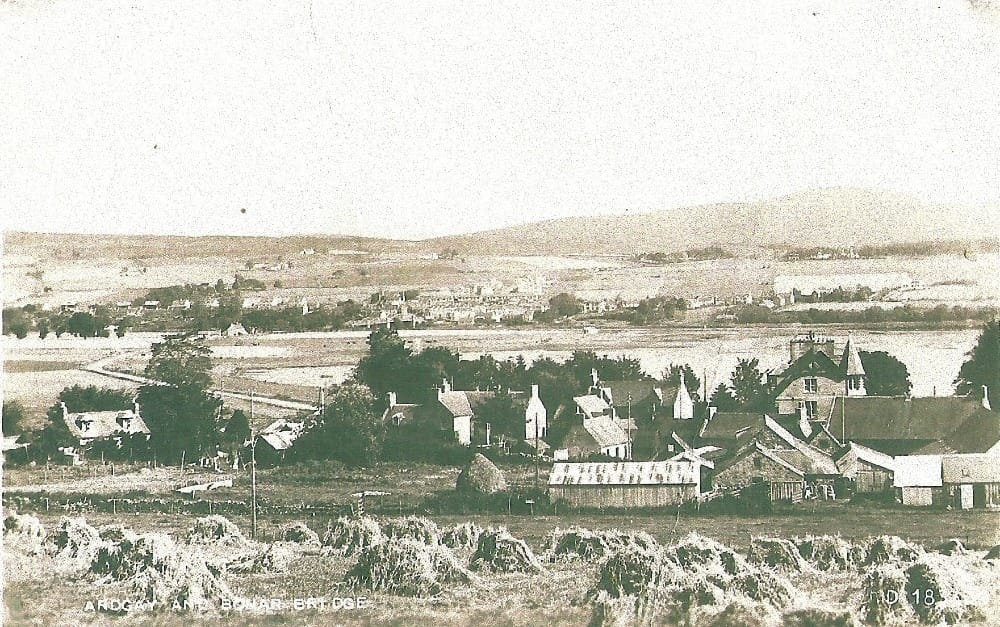
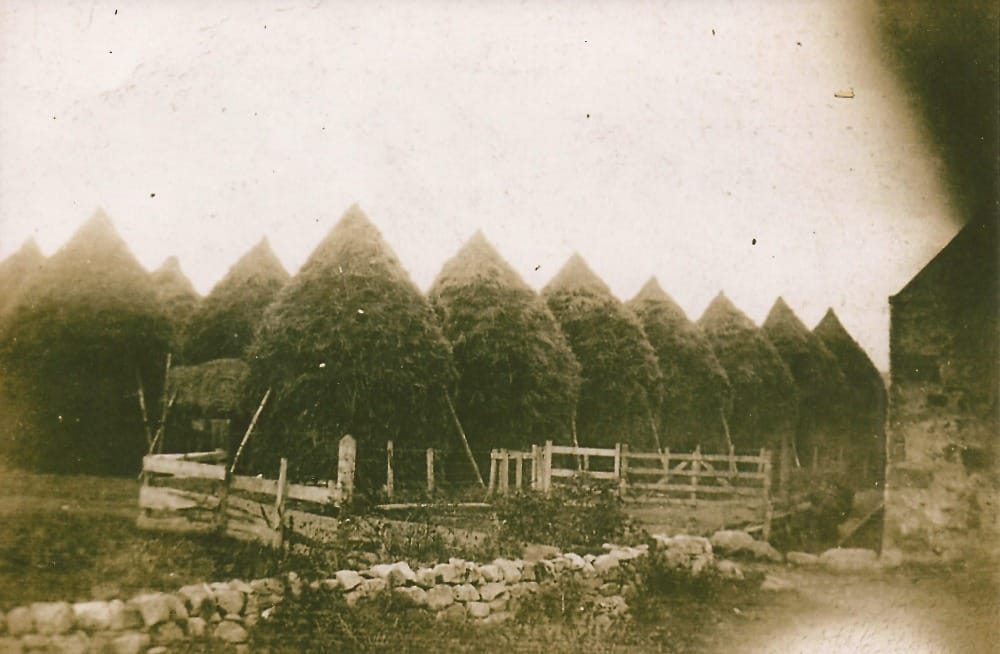
(Left) Stooks drying at Ardgay Farm, 1950s. The farm buildings can be seen where Carron Place now stands. The large roof behind the sheds on the far right of the photo is the old Ardgay Hall. © Donald Brown. (Right) Stackyard at the Poplars, 1930s © Ian Mackenzie.
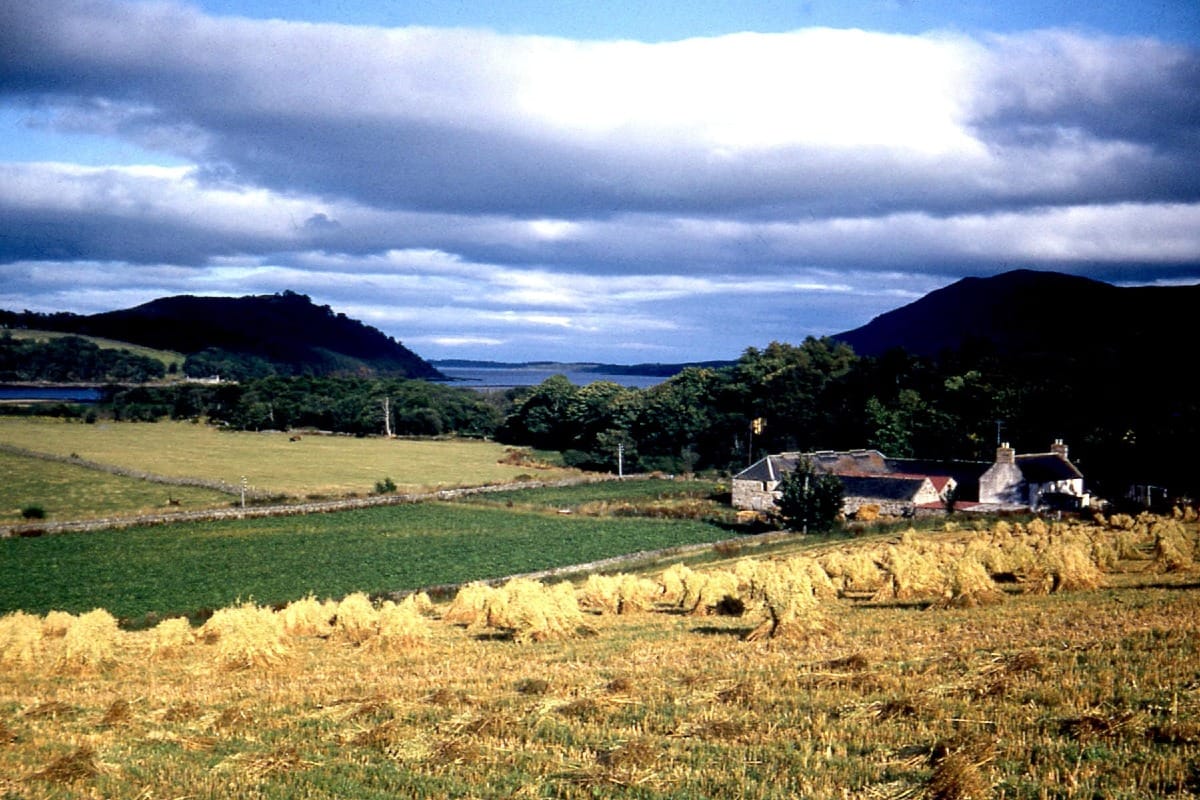
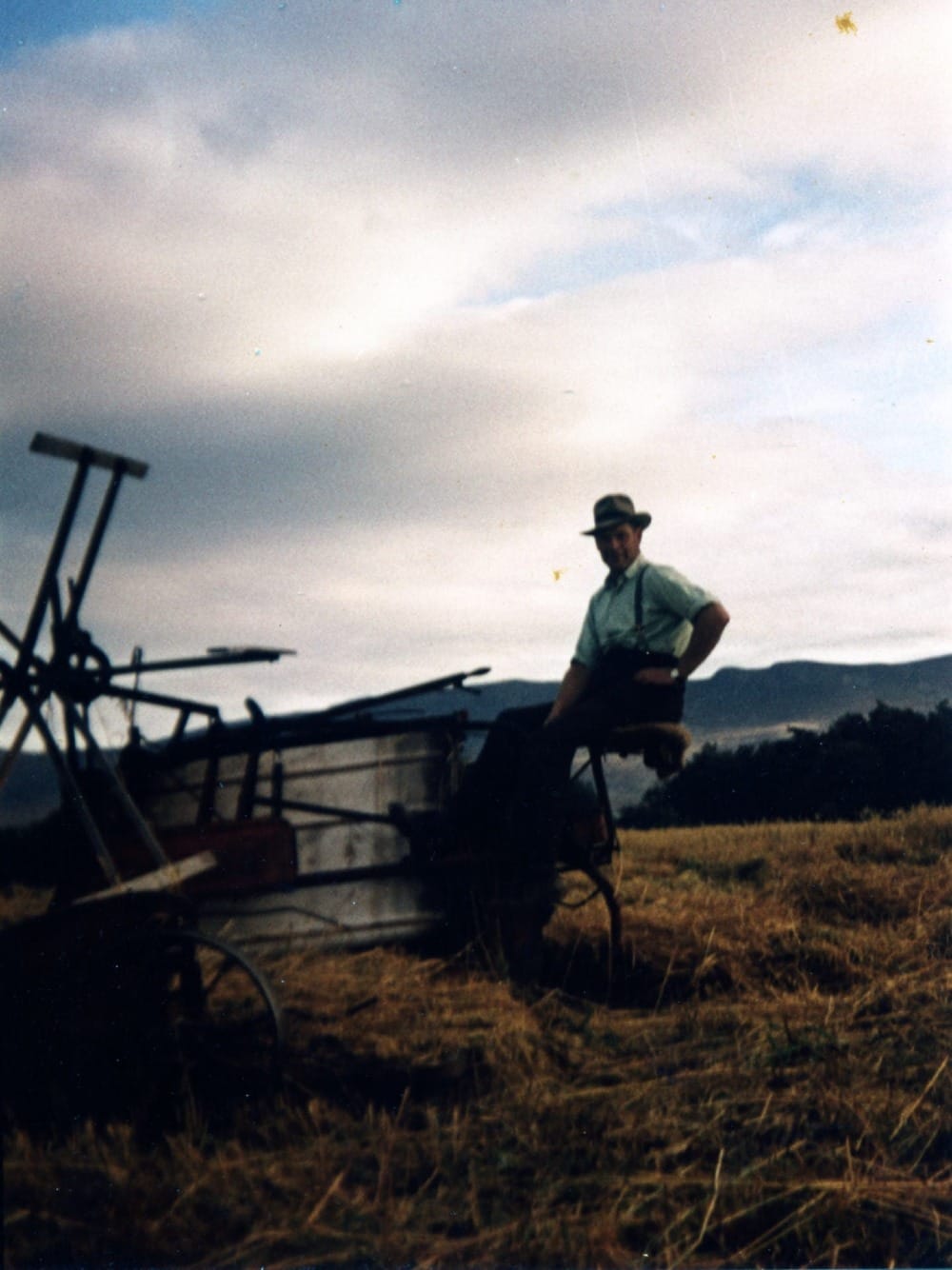
(Left) A harvesting scene: stooks and sheaves waiting to be stooked in the field above the road overlooking Western Fearn Farm, from 1971. (Right) Edward Laing sitting on his binder. © Gregor Laing
The Threshing Mill
A threshing mill or thresher is a piece of farm equipment that removes the seeds from the stalks and husks. It does so by beating the plant to make the seeds fall out. Before such machines were developed, threshing was done by hand with flails: such hand threshing was very laborious and time-consuming, taking about one-quarter of agricultural labour by the 18th century.
Mechanization of this process removed a substantial amount of drudgery from farm labour. The first threshing machine was invented circa 1786 by the Scottish engineer Andrew Meikle and the subsequent adoption of such machines was one of the earlier examples of the mechanization of agriculture.
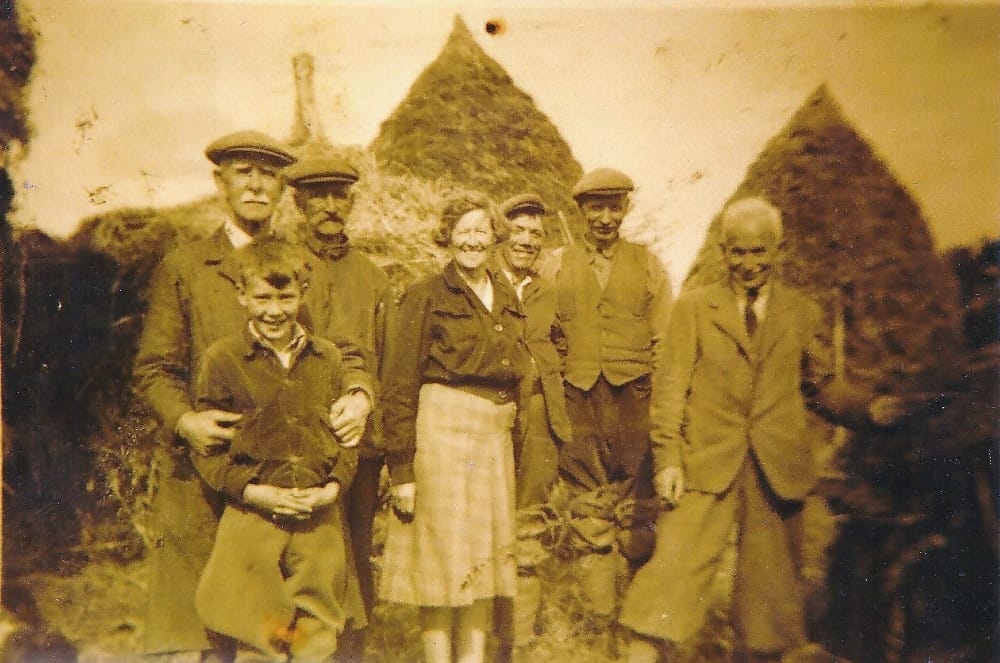
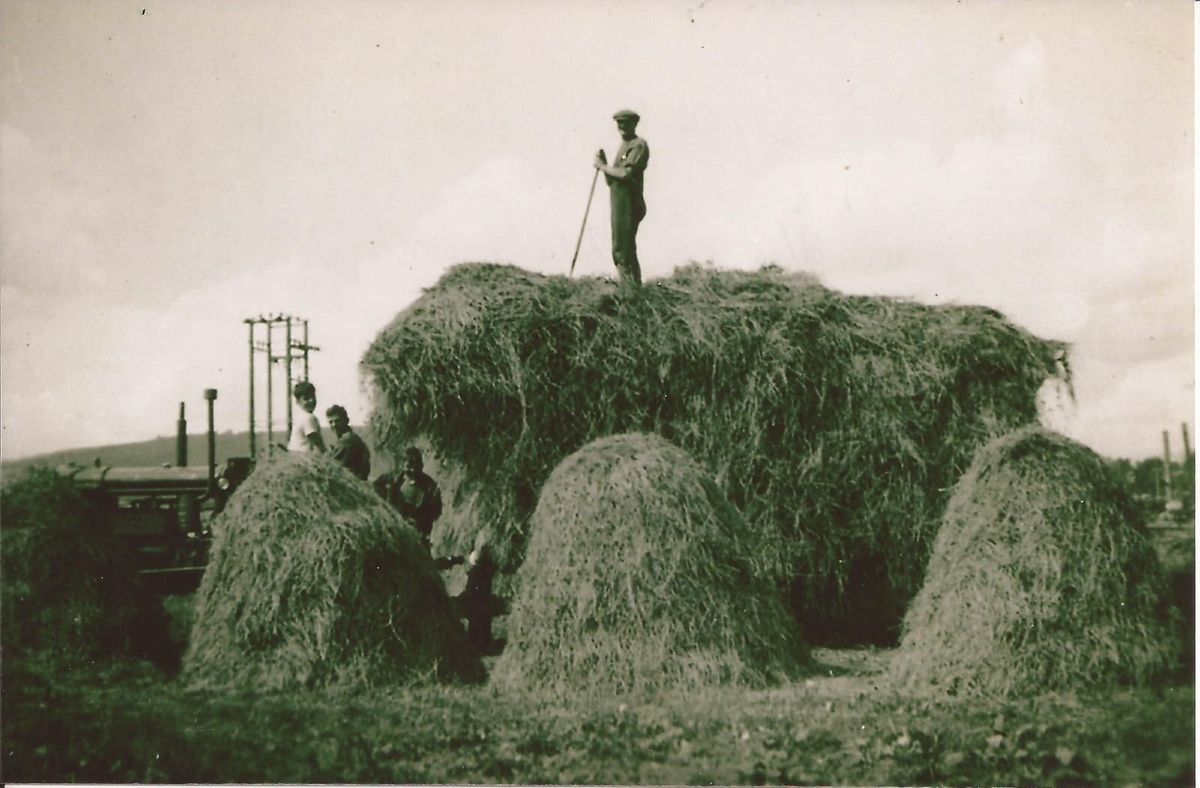
Stackyard at Ardgay Farm (connected with the old Balnagown hotel) in the 1940s. Left to right are Fergie Macleod (Balnagown hotel owner) holding on to his nephew Neil Anderson, Hugh Macgregor, Miss Heap, Sinclair Coghill, Jock Mackenzie (Dounie), David Mackay (postmaster). © Donald Brown.
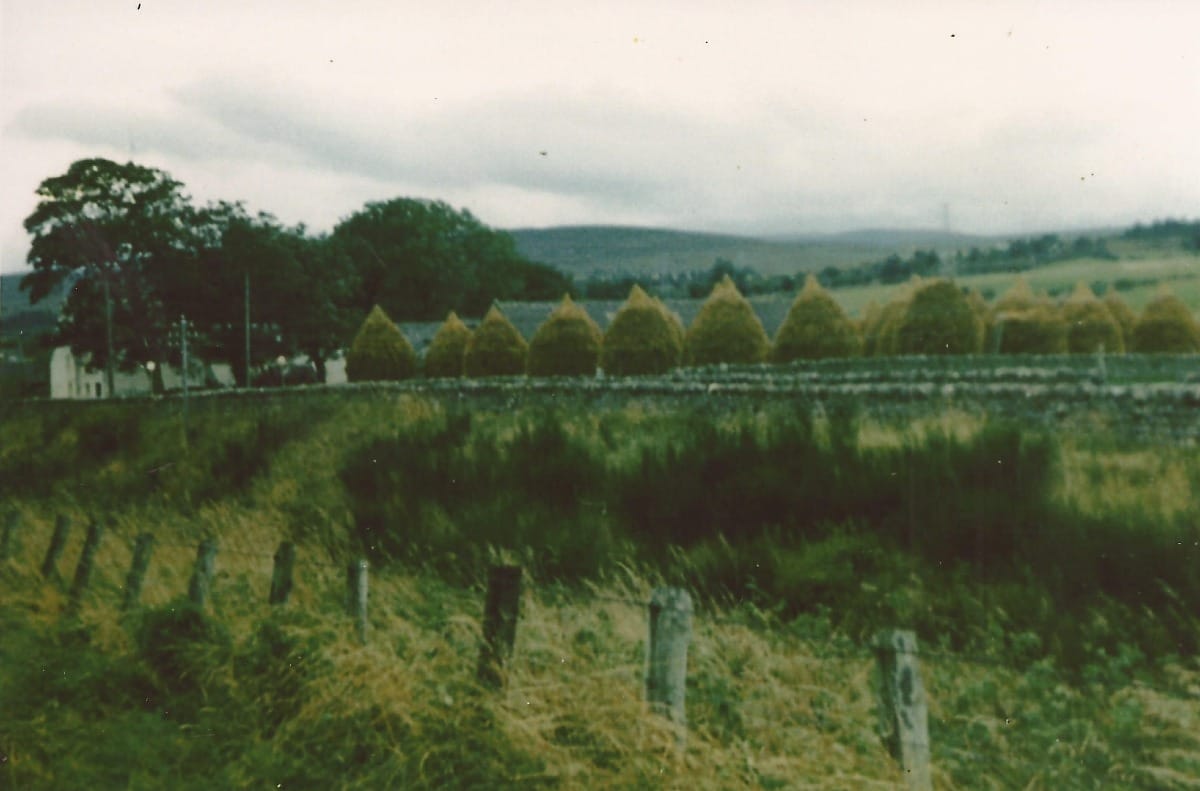
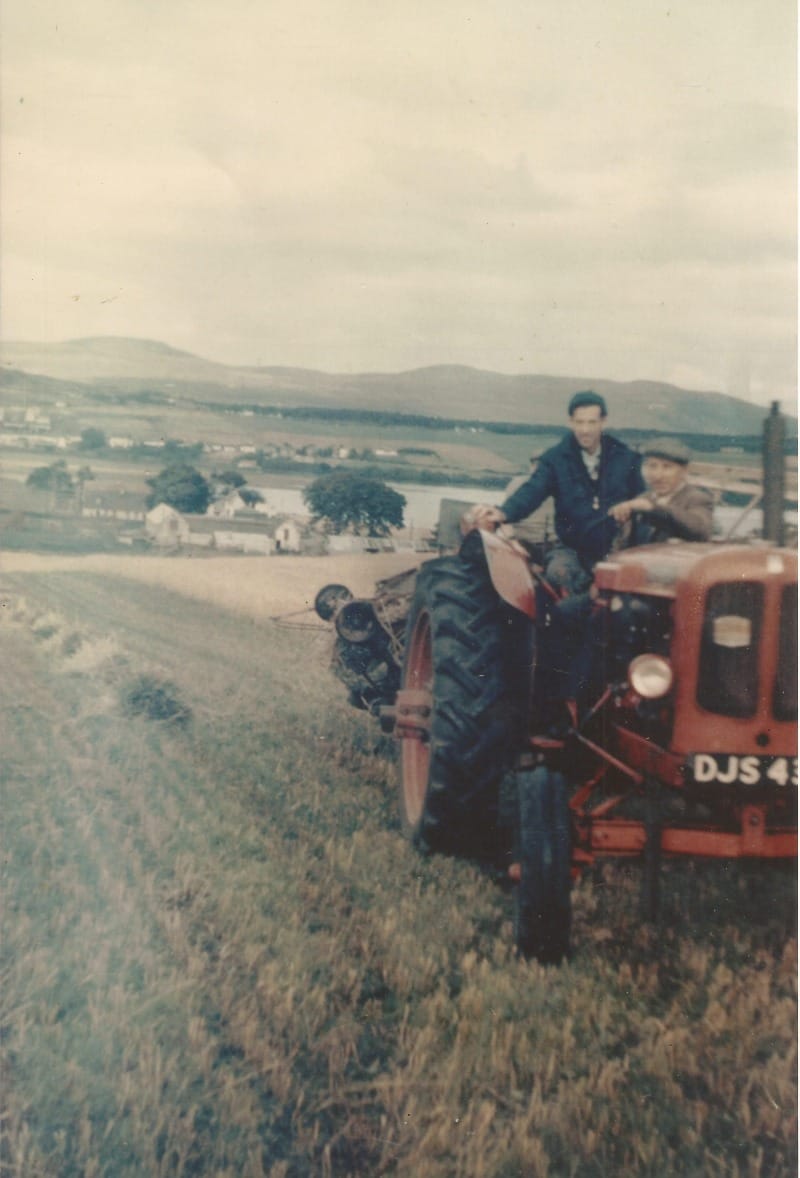
(Left) Stackyard at the Poplars, Ardgay. (Right) Alister and Peter MacLaren, and Ian Scott, binding oats in the late 1950s © Ian Mackenzie.
During the 19th century, threshers and mechanical and reaper/binders gradually became widespread and made grain production much less laborious. A crofter had neither the room nor the buildings to put in a large mill, nor the money. They had to make do with what they could afford, and the invention of a small hand-threshing mill would have been a great step forward from the flail. The earliest small one was the “Tiny” hand mill of George W. Murray, of Banff Foundry.
There is still one in the barn of ain the barn of a Strathcarron croft.
In his firm’s catalogue of 1878, he described his “Tiny” No 1 hand mill. Made entirely of iron, he stated that it was ideal for tropical countries as it would neither warp nor rot in the damp heat, nor be eaten by termites. Murray’s No 1 “Tiny” thresher was designed as a crofter’s mill, the cost in 1878 being £6.10/- for the basic machine. In 1949 the Strathcarron crofter converted his hand mill to be driven by a Lister petrol engine although it has been many years since it’s been in use.
The Combine Harvester Binders and threshing mills continued to be used well into the 20th century and it was not until after WW2 that combine harvesters become more widely used. As the name implies the bindering and threshing were combined into one operation, further reducing the labour requirement on the farms.
Since the 1950s the development of the combine harvester has been rapid into the sophisticated machines capable of ever greater output per day.
(This article was published originally in A&DCC Newsletter)
Comments ()