

The day the flood swept away the first Bonar Bridge
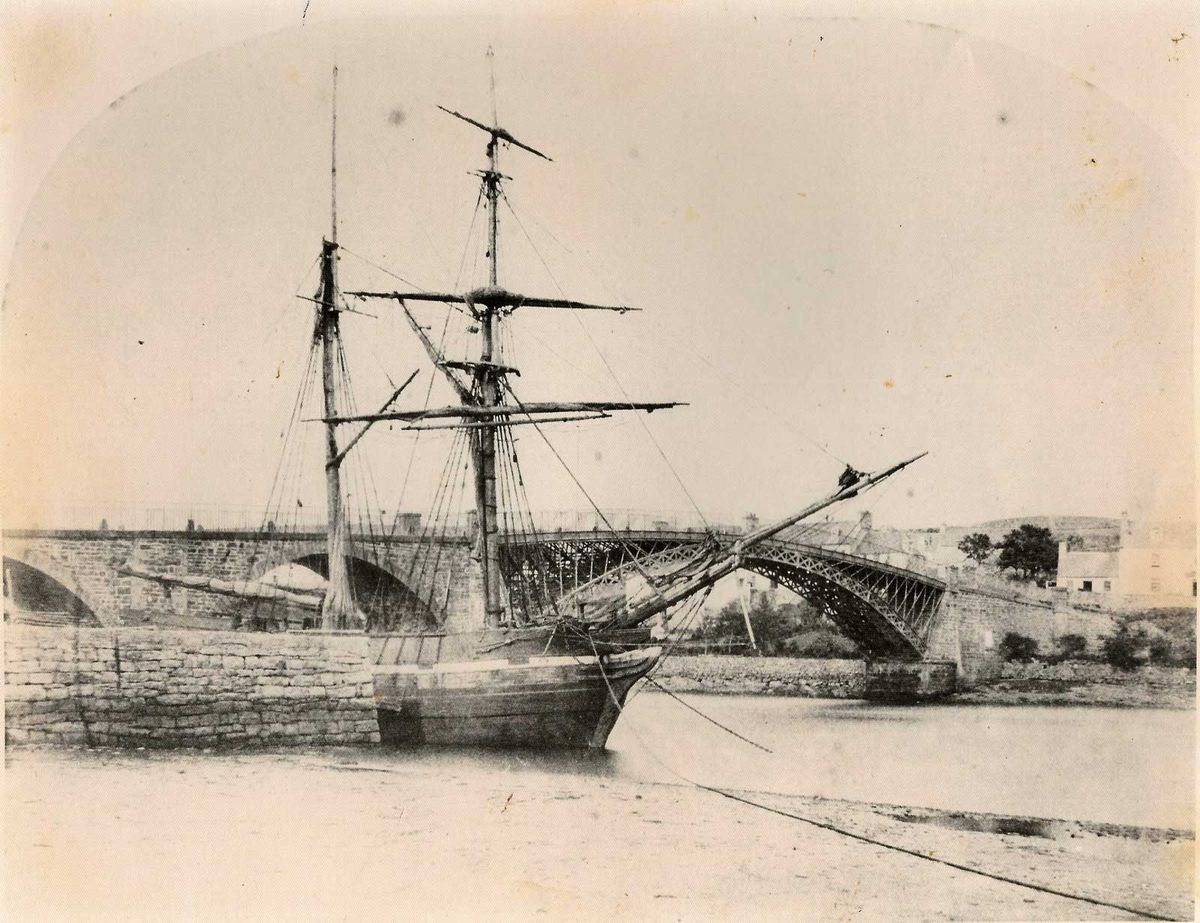
On the 29th January 1892, Gledfield Headteacher (George G. Macleod) wrote: “Attendance much improved for the first four days of the week, but on Friday an extraordinary flooding of the roads caused by rapid thawing reduced the attendance to 54 pupils. Bonar Bridge was swept away by the flood this afternoon.”
By Gregor Laing
The day after the disaster, The Dundee Advertiser reported that the sudden thaw along with strong south westerly gales and heavy rain caused serious flooding in the Highlands. In Perth, the Tay was higher than it had been for 30 years, and the Earn over-ran its banks and the whole strath was covered with water, carrying away a great quantity of grain and drowning many sheep. The Spey also was in high flood, submerging whole districts. At the mouth of the river Fiddich the water reached about 10 feet, submerging the haugh land and carcasses of dead sheep were seen floating down the river. Large parts of Garmouth and Kingston were submerged and at various points at Kingston people had to leave their houses.
In Ross-shire melted snow from the hills caused all rivers to overflow. At Garve, Contin, and Dingwall the houses are flooded to a depth of two to three feet. Large numbers of cattle, horses, and sheep have been destroyed. On the Dingwall to Skye railway three bridges were swept away, while the line and embankment have been badly cut up, and the traffic is indefinitely suspended.
The Kyle of Sutherland and its tributaries were in heavy flood. The farm steading at Invercharron was surrounded by water, while the road between Bonar Bridge and Ardgay was flooded to a depth of three feet. Ardross cottage [pink house] was flooded and the horses had to be removed from the stables. Anderson’s sawmill is flooded to a depth of four feet.
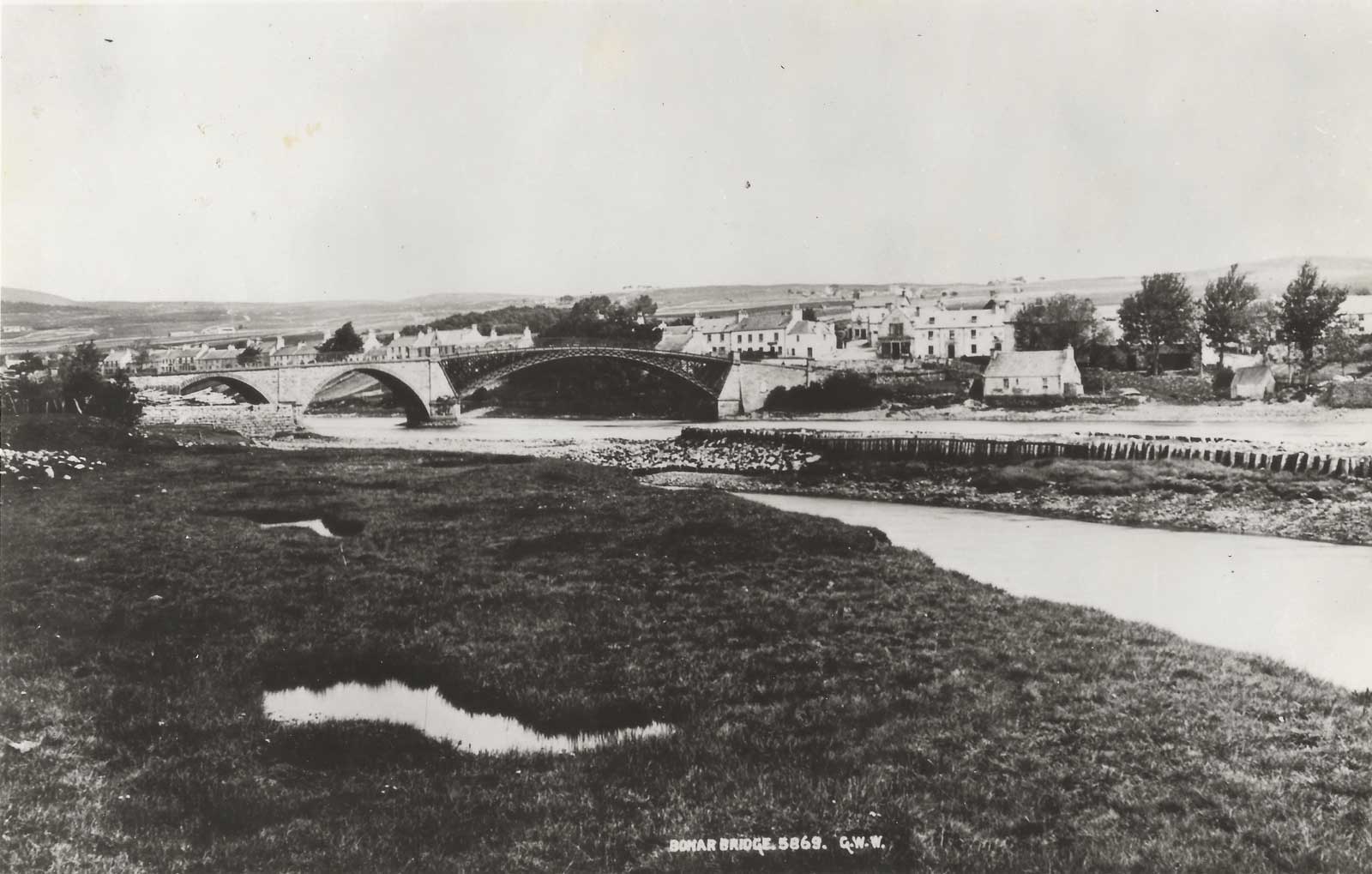
Four boats were carried down the Kyle, and later on six large cobles, the property of Mr Smith, lessee of Invercharron salmon fishings, were carried down the Kyle chained together. The whole of the wooden staging was washed away bodily and also a large wooden house, containing a large quantity of valuable fishing material, which floated intact out to sea. The schooner Columbine broke from her moorings, but was brought up against a bank, where she still holds. A ships boat was smashed. Large quantities of wreckage was floating past. Bonar Bridge erected in 1813 collapsed between 2 and 3 o’clock and was completely destroyed.
Aftermath
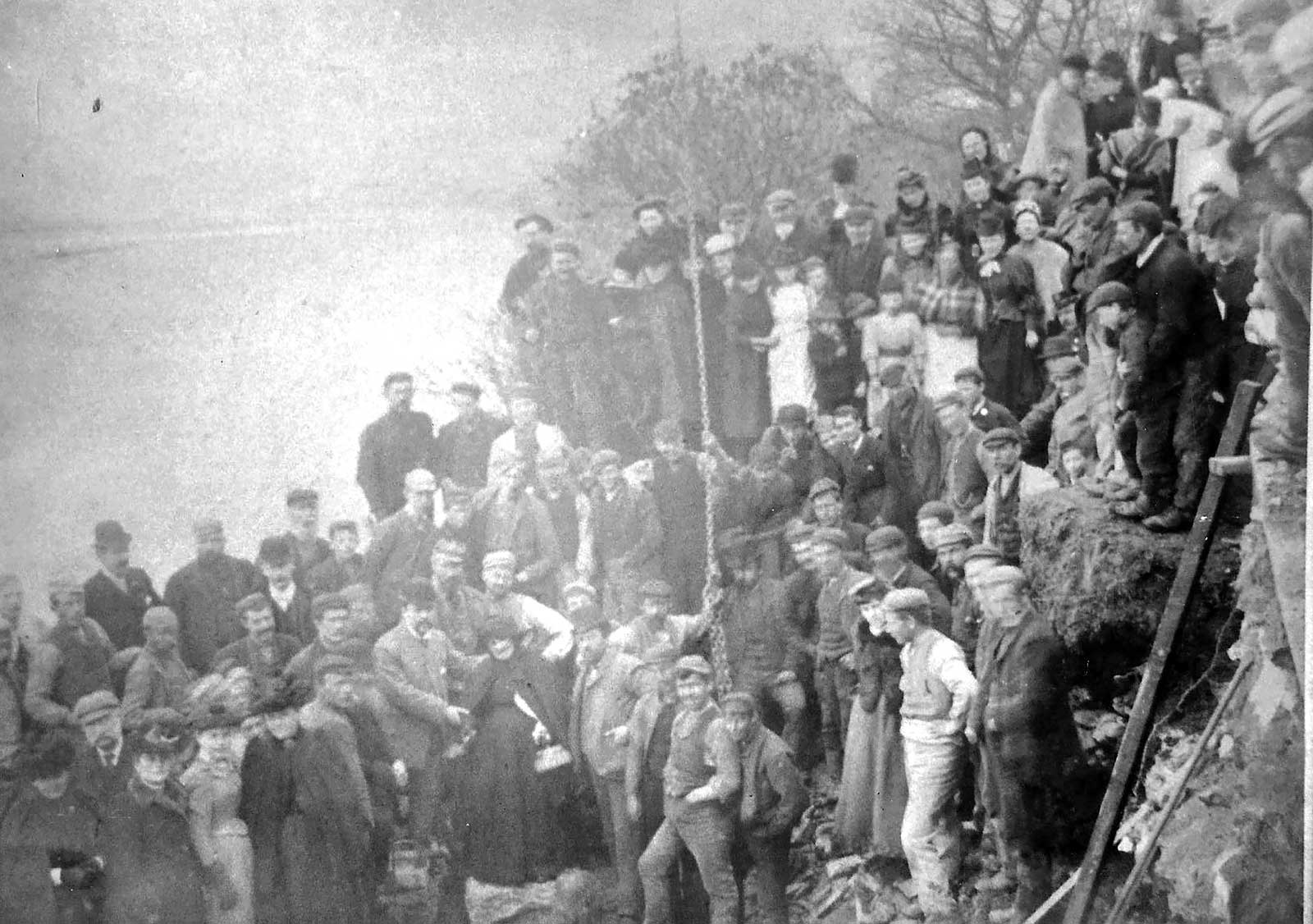
A few weeks later, on 17/02/1892 the Northern Chronicle and General Advertiser for the North of Scotland published an article headlined “THE RECENT FLOODS. PUBLIC MEETING AT BONAR-BRIDGE. It is now too evident that the devastations caused by the memorable flood of 29th Jan, were not by any means exaggerated by the newspaper reports published at the time. In many cases the destruction of property was understated. In the Ardgay district alone the wreck and ruin it has left behind is simply immense. The River Carron washed away many acres of soil from the crofts of Strathcarron, Amatnatua, &c., and in many places left an equivalent deposit of sand, gravel, or shingle in its place. One tenant declares that it will take at least five years to make his croft fairly productive. Great quantities of potatoes, turnips, manure, &c., were washed off to sea, and stack-yards suffered severely by being so submerged in 3 or 4 feet of water. The total value of livestock and farm produce lost or destroyed, along with damages to roads, bridges, buildings, fences, embankments, boats, and material, is estimated at upwards of £20,000; without speaking of the indescribable inconvenience caused to the populous district on both sides of the Kyle of Sutherland by the total demolition of the iron viaduct at Bonar. Traffic is, of course, quite paralysed, as the only communication is by private parties in the village, Mr Whyte.”
A well attended public meeting of the inhabitants of Creich and Kincardine was held in the Drill Hall in order to urge the County Councils of Ross and Sutherland to take immediate steps in the matter. Presided by Mr A. Polson, merchant, Mr A Mackay, and Mr A. Mackenzie, accountant, were appointed clerks to the meeting and to the committee formed afterwards. Addresses were delivered by Councillor Macbeath; Mr Macpherson, Bridge Hotel; Mr Macleod Hotel, Ardgay; Mr A. Mackay, Bonar; Mr A Ross, Seabank, among others. It was unanimously agreed to draw out a resolution and present it to the Sutherland County council. A joint meeting of the Ross and Sutherland Councils –five members from each– was to be held at Ardgay to discuss the matter.
How the Kyle of Sutherland monthly markets could be held under existing circumstances was a problem. A public meeting of the inhabitants of Creich, Sutherland, and Kincardine, Ross, was to be held in the Balnagown Hall, Ardgay, to discuss the serious position in which the people were placed and also to memorialise the Scottish Secretary, in order to strengthen the Councillors’ hands in their endeavour to get the Provisional Act sanctioning the erection of the new bridge passed as speedily as possible.
Letters to the editor
On the same paper, on 5th February 1892: “Sir I have just read in your columns about the disastrous effects of the recent flooding in the Highlands. As a native of Bonar Bridge, and one who, in my younger days, crossed the old bridge many times daily, might I say with what sorrow I received the news of its collapse. The bridge was the pride, and justly so, of every inhabitant of the village. Built of cast iron and spanning the Kyle of Sutherland with its beautiful arches, it seemed to lend an additional charm to the nicely situated village of Bonar. Many tourists and others who travel by the Highland Railway have been struck by the beauty of the bridge and its surroundings as seen from the Ross-shire side of the firth. There can be no question as to the important position which the bridge occupied, being the junction of the eastern part of Ross and Sutherland at a point where four roads meet and where the bulk of the road traffic between the two counties is carried on.”
“In replacing the old bridge with a more modern structure, the people of the village should see that beauty and design are not to be entirely sacrificed for the sake of durability, as all three qualities can easily be combined. An ugly bridge would be an eyesore for ever, and destroy the amenity of the village.” “In conclusion, I may say that my sole object in writing this letter is to express a hope that when a new bridge is erected, it will reflect credit alike on engineer and the two important counties which adjoin on either side. Yours Truly, Bonarian.”
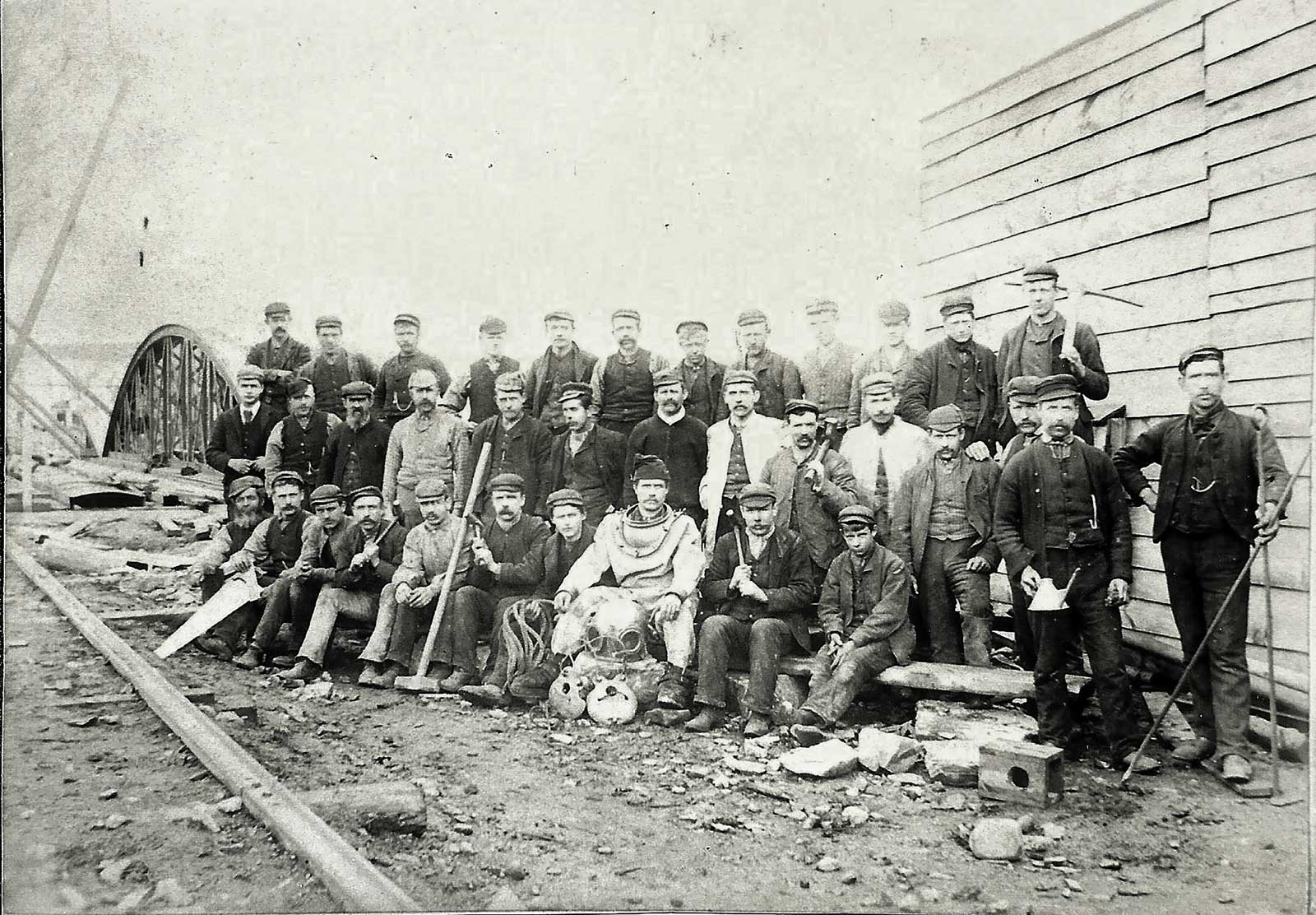
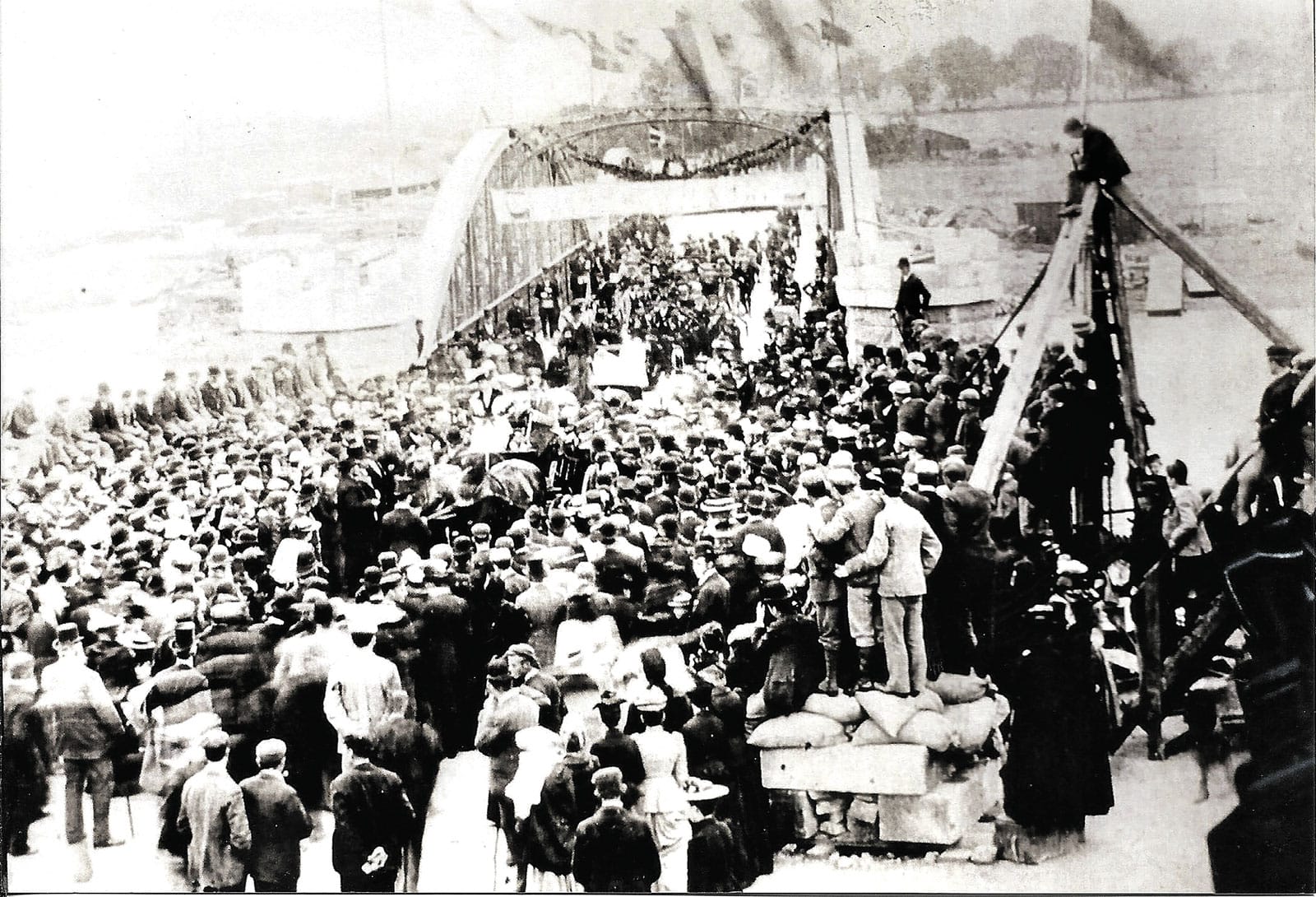
(Left)Workers posing for a photo during the construction of the second bridge. © Photo courtesy of Donald Brown (Right) The opening of the second bridge on 6th July 1893. © Photo courtesy of Donald Brown
And on 17th February, a reply from “Invershin”: “Sir–It is with no small amusement that I have read the plaintive letter of “Bonarian” in your paper. It is far from my purpose to disparage the engineering undertaking of 1812; but to consider its loss as an irremediable evil, as “Bonarian” does, shows the nonsensical and whimsical sentiment that characterises some people. Anyone could see that the bridge had outlived itself, and we must rather be glad than sorry at it has been forced to make way for a more substantial structure. “Bonarian”s letter would lead one to think that the bridge was one of those romantic and beautiful structures that a visionary might fancy existed in his dreams of Eastern grandeur; but it required only a look to disprove this pleasant idea. Let me, too, wish that a good, substantial nice bridge be immediately raised, and when that is to be done, let the convenience of the people further up the Kyle, and the interior of the county, be considered as much as that of the few straggling houses that go by the name of Bonar village- I am, Sir yours &c, Invershin.”
(With information from Silvia Muras)

Comments ()