

Rob Donn Mackay - 1714-1778
As important to Gaelic as Robert Burns was to Scots
By Neil Simco
Read this article in Gaelic
There is no doubt that Rob Donn was one of the most famous and important poets in the Gaelic world and he has had a great influence on the area where he lived for most of his life – The Mackay country in the north of the modern county of Sutherland. Rob Donn was born in 1714 at Allt na Caillich in Strathmore and died in 1778. Throughout his life, he only spoke Gaelic, augmented now and again with a few words in English. He was also illiterate, as was common at the time, but despite this, using the oral tradition of the time, he created poetry and songs of high standing, full of meaning and insight. His poetry was only written down towards the end of his life, and after his death, it was eventually published. Overall, many consider, including the Scottish Poetry Library, that Rob Donn was as important to Gaelic as Robert Burns was to Scots: There are over 200 poems and songs written by Rob Donn and his life’s work is nationaly significant.
In the 18th Century, poets were considered important members of the community, and it is true that the communities of the Mackay Country greatly respected Rob Donn. He was straightforward and honest and was able to create poetry and songs seemingly effortlessly in response to community events or about people in the community. There was also much satire in his work. Through his songs and poetry one can gain an understanding of ordinary life in the Mackay Country in the 18th century, as well as of the important events throughout Scotland and Britain including the Jacobites and Culloden. There is also an interesting connection between the life of Rob Donn and the Kyle of Sutherland.
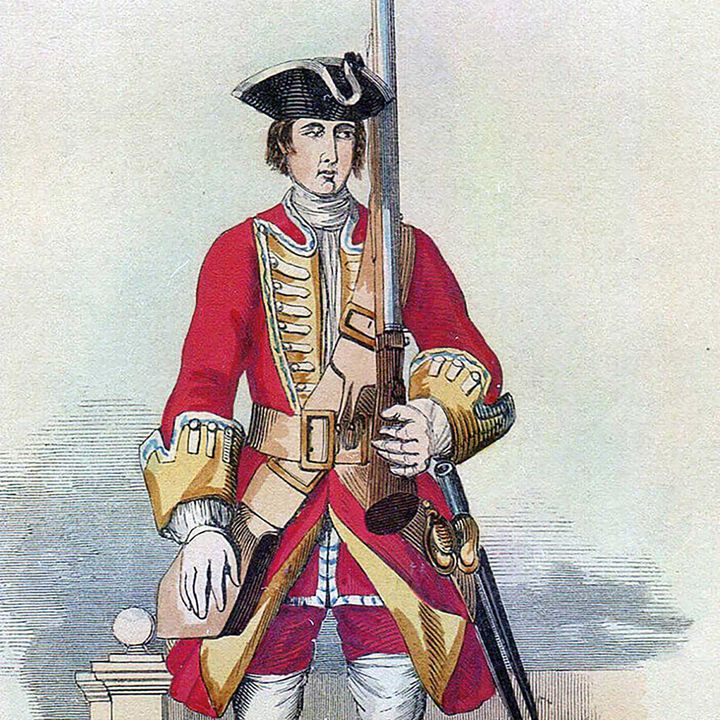
Rob Donn had no formal education but worked with Iain Mac Eachann from the age of 7 or 8. He was Rob’s mentor, friend and employer and because Iain was a drover and tacksman, Rob Donn travelled to many areas throughout Scotland. From this early expereince, and at different times, Rob Donn was a husband, a farmer, a soldier (in the First Sutherland Fencibles) and a hunter, but through his poetry, he often spoke truth to power. For example, although the Mackays did not support the Jacobites, Rob Donn was very critical of the events after Culloden, especially the attempts to destroy Highland culture and Gaelic.
The parish of Creich in our area is part of the story. But first I must say a word or two about ‘satire’. ‘Satire’ in the 18th century was not the same as ‘satire’ today. Essentially it was used as a way of criticising someone in the community, and because the poet is an important person in the community, the things he said had great influence. For example, in Tongue, there was a schoolmaster named Iain Sutherland. As young men, Rob Donn and Iain Sutherland did not have a good relationship or mutual respect, and Rob was always criticising Iain, using satire in various ways. In one piece of poetry, Rob criticizes Iain’s lack of skill with a gun:
As a young boy might do,
I have my suspicions,
That you took an unloaded gun
with you,
And put it to the head of the
white-faced ox.
Matters worsened between the two men, and because Rob Donn was the leading poet in the community, the fact that Iain was the object of Rob’s satire was a major blow to his reputation and ultimately, Iain Sutherland was unable to live in Tongue. He moved from Tongue to Creich and a new school. Satire was indeed very powerful at that time!
Rob Donn’s historical legacy is still important today, and you can experience ‘The Rob Donn Trail’, which visits interesting places on the north coast associated with the poet.
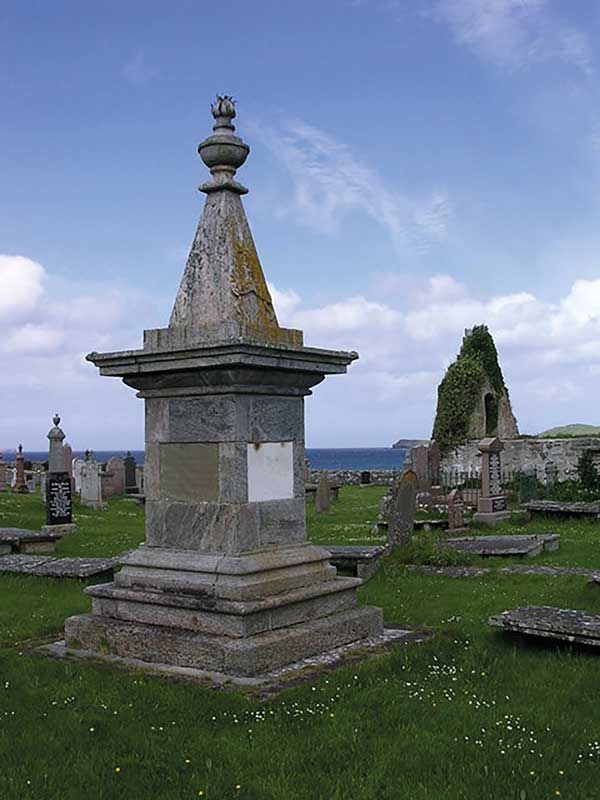
Rob Donn is buried in Balnakeil where a memorial to his life can be visited.
Comments ()