

Renewable energy and Crofting
You don’t have to venture far in the crofting counties before you spot wind turbines of all sorts of sizes. By its very nature, croft land is very rural and tends to occupy vast, hilly areas across the Highlands and Islands, making it prime territory for capturing our natural wind supply.
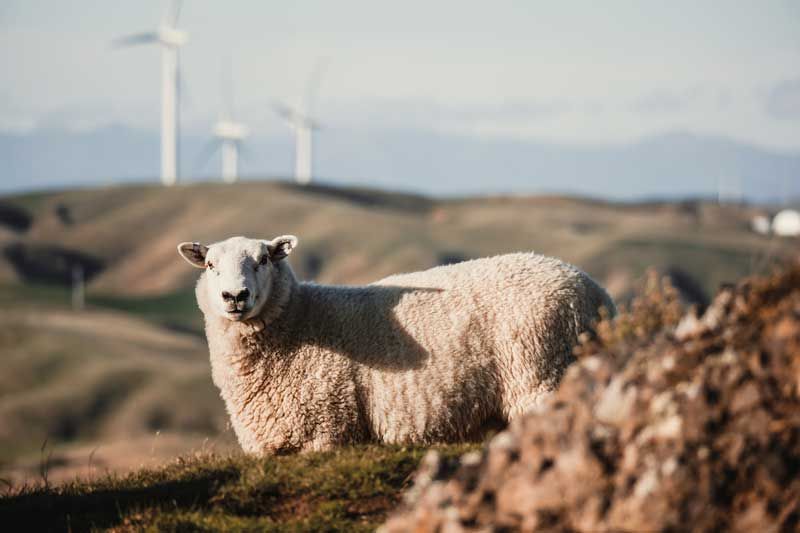
You don’t have to venture far in the crofting counties before you spot wind turbines of all sorts of sizes. By its very nature, croft land is very rural and tends to occupy vast, hilly areas across the Highlands and Islands, making it prime territory for capturing our natural wind supply.
By Donna Smith, Chief Executive, Scottish Crofting Federation
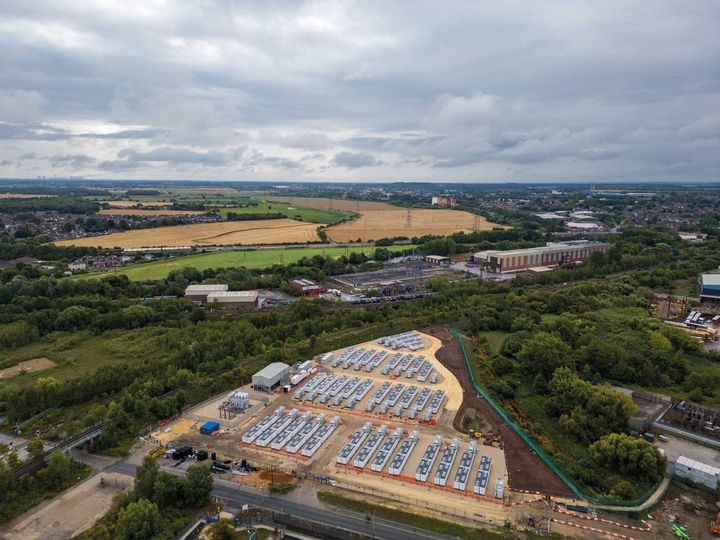
I think most accept that we need to transition away from fossil fuels and into more renewable energy, but many now feel that some crofting areas are just being used as a dumping ground for all the infrastructure that is required: turbines, substations and battery energy storage systems and don’t forget the tracks that have to run between them all.
So, where do windfarms sit within the crofting context and crofting law? Many windfarms are built on what is common grazings land, land that is owned by the estate, but over which crofters have certain rights such as to graze their animals, cut peats and perhaps do some form of development scheme.
There are two different sections of crofting law that govern what can happen on a common grazings, one is crofter-led development, the other is led by the landlord. Generally, windfarm developments are done when the landlord is approached by a windfarm development company.
Typically, there ends up being an agreement which sees any financial benefit shared 50/50 between the landlord and the crofters with a share of the impacted grazings, largely based on what happens when croft land is resumed for things like mobile phone masts, etc. So, windfarm developments can bring financial benefit and some crofting townships have done very well out of having them. We all know that making a croft pay its way through traditional crofting is nigh on impossible, so for many, the financial benefit derived from a windfarm allows them to perhaps develop the croft in ways that wouldn’t be possible otherwise. The tradeoff of course, is the loss of grazing area, and a scenic view that alters from open, rolling hills, to being interspersed with monolithic turbines and service tracks.
Before, these schemes were scattered around but now we are seeing an explosion across the area of new development proposals which seem to be popping up in almost every glen and on every hill, and the turbines are getting bigger, much bigger. When the first wind farms were built, they were typically around 140m, tall. The latest generation will be 250m tall, a height which then requires them to have red, aircraft warning lights on the top of them, meaning our hillsides will not only be scattered with visible turbines in daylight, but at night, what used to be relatively dark skies, will now be dotted with little floating red lights.
Another new aspect is the more recent trend of 3rd party companies approaching crofting communities about placing battery energy storage systems (BESS) on croft land. There have been several instances where crofters in a township have all been directly mailshotted asking if they have land that the company can use, presumably because the crofts themselves are nearer to the existing road infrastructure than the common grazings.
These approaches are speculative, not linked to either the wind farm developer or SSENT and many may end up going nowhere for either planning reasons or they may even be unable to secure a connection to the grid, but what they are in many places is damaging to the crofting community. The requests are often for the BESS to be placed on the inbye croft land, in the heart of the crofting township, in amongst houses, worked crofts, often on good quality land which would then be lost to agriculture and the only person benefitting is the individual crofter who says yes, whilst many others refuse the approach on principle.
This topic was explored recently in a Cross Party Group on Crofting meeting in Parliament. The meeting heard both from a crofter in one of the affected townships and from Highland Council’s planning lead and what became clear is that the Crofting Commission need to be developing a policy to deal with these situations which are likely to occur more and more.
The planners have to take into account the Highland Development Plan and the National Development Framework and the Crofting Commission could also input to any planning application.
The Crofting Commission will need to consider these issues in their Policy Plan, although a policy on these matters is not laid out in the current version of the plan.
It is clear, that some strategic thought is required on all fronts as to what will be considered sensible going forward.
And what of the environment?
There appears to be some conflict between our race to meet net zero and the path to get there. Currently crofters, and all in agriculture, are being guided towards a path of working more environmentally friendly, something that most crofters are doing anyway. Agricultural support payments are gradually being changed to be more conditional on nature friendly outcomes being achieved, peatland restoration is being pushed as essential and those who keep livestock are having to reduce their carbon impact, but the elephant in the room is the impact on our hillsides and rural communities of windfarm construction.
Each new phase of construction sees lorry after lorry travelling through our countryside delivering materials, tracks being created across our moorlands, and huge concrete blocks being sunk into the ground to host the turbines themselves. What is the carbon impact of these activities and how much peat is being dug up and replaced by concrete, emitting carbon along the way? Meanwhile we see crofters who are typically using extensive grazing practices with low inputs being asked to do a carbon audit in order to qualify for their support payments. To many, these two conflicting worlds do not stack up as just and fair, despite the Scottish Government’s insistence that they are working towards a ‘just transition’ to net zero.
Where does it all go in the end? It feels like we are at a precipice in crofting. Land and therefore croft prices have been increasing sharply, one of the drivers of this in crofting is increased tourism and of people leaving the cities for a better life with the advent of remote working, the other is a speculative look to the future and the potential financial gains to be had as a result of the drive to net zero, whether through using ground to host renewable energy infrastructure or to reap financial benefit through carbon credits. Are we going to surrender many more vast swathes of our beautiful, unspoiled landscapes to these vast turbines and their supporting infrastructure, or is the Scottish Government going to step in and actually take a strategic overview of the plans, something that does not exist currently?
One thing is for sure, if the current trajectory continues unchecked, the crofting landscape and activity in many places will be changed forever. Are we all going to stand by and watch it happen or are we going to stand up and be counted and ensure that whatever is done is fair and beneficial for all and does not destroy the Highlands and Islands that we love? Time will tell.

By Donna Smith, Chief Executive, Scottish Crofting Federation
This article is part of The Power Shift – a collaborative investigation by 10 independent, community-based publishers across Scotland, exploring the impact of the green energy transition on communities. Co-ordinated by the Scottish Beacon and supported by the Tenacious Journalism Awards, the project aims to amplify local voices, facilitate cross-community learning and push for fair, transparent energy development.
Comments ()