

The Power Shift magazine launch: Energy, democracy and how to give a voice to communities across Scotland
A new environmental journalism network and magazine was launched with the aim to tell better stories and explore how the renewable energy boom could better benefit communities from Shetland to the Scottish Borders.
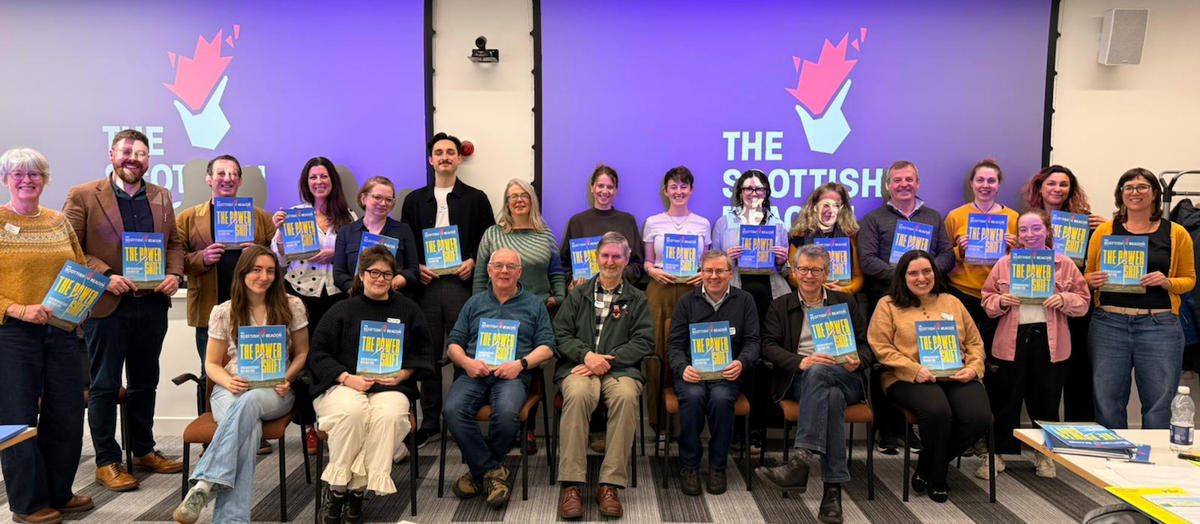
A new environmental journalism network and magazine was launched with the aim to tell better stories and explore how the renewable energy boom could better benefit communities from Shetland to the Scottish Borders.
‘The Power Shift: Live’ one-day event, organised by The Scottish Beacon and held at the University of Glasgow, gathered local journalists, community activists and researchers to celebrate the launch of The Power Shift magazine, product of a year-long collaborative journalism project led by Rhiannon J Davies and Mike Small, and supported by the Tenacious Journalism Awards and campaign group Uplift.
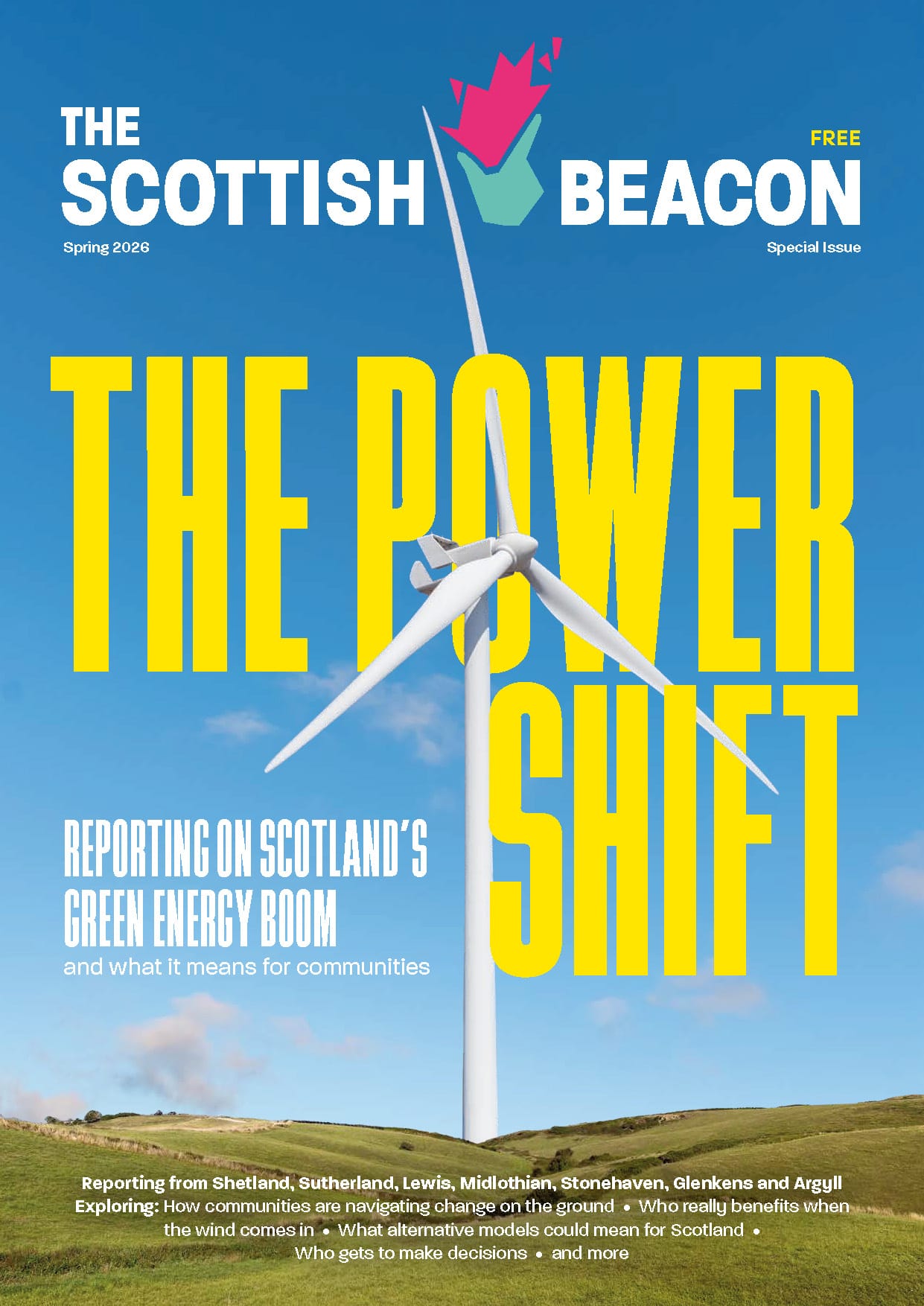
The Power Shift project started reporting in 2025 and has already published pieces on each partner news outlet, on The Scottish Beacon website and in a special co-published series with The Herald newspaper. The magazine is free of charge and will be available in local libraries across the Kyle of Sutherland area. Kyle Chronicle has some copies for our readers – please get in touch if you'd like to secure yours.
Opening the event, Rhiannon J Davies said, “We're here because we want to tell better, richer stories about our communities; not ignoring the difficulties and challenges, but leaning into those complexities.”
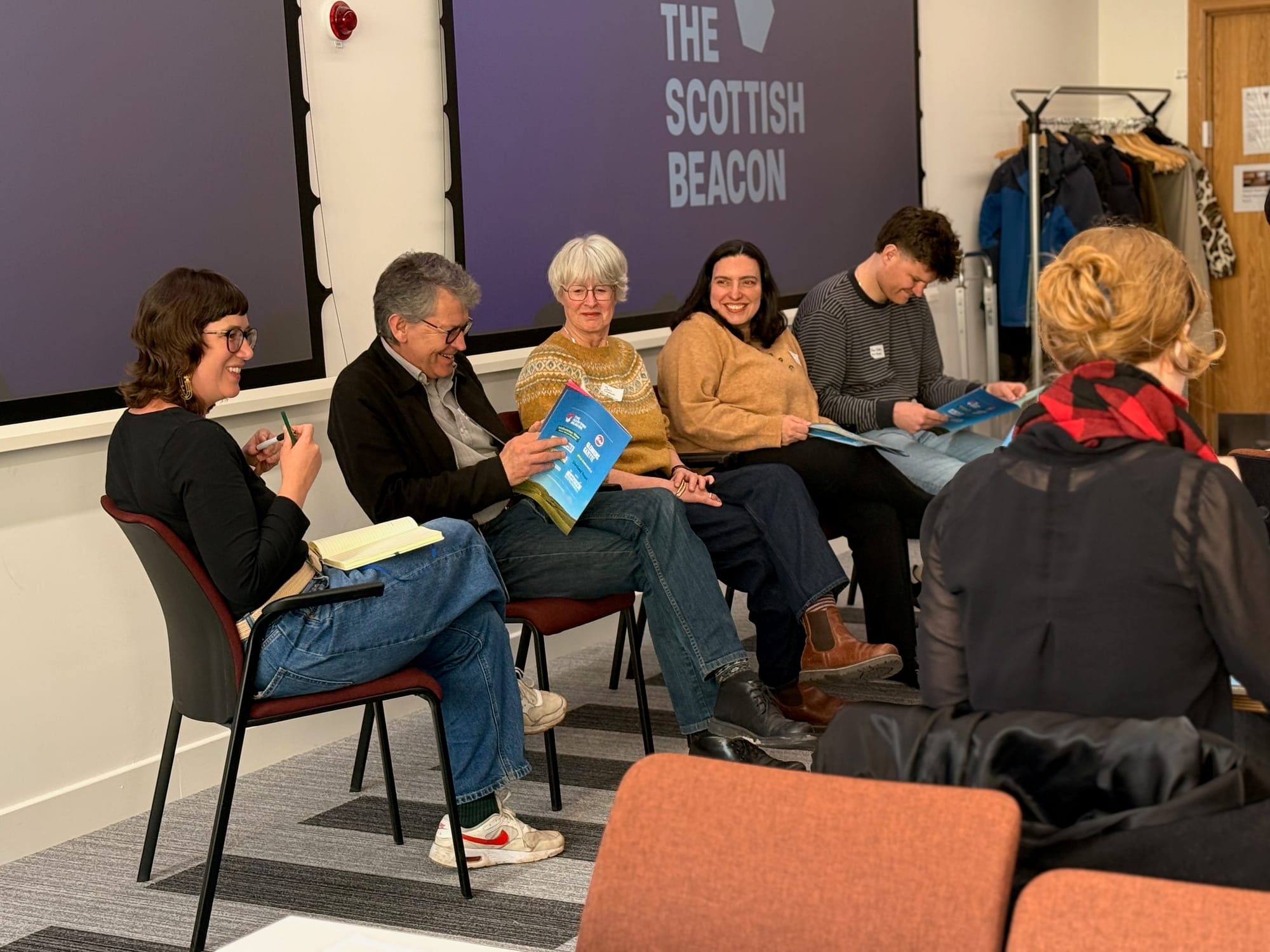
Through presentations, round-table exchanges, and panel discussions, the event sparked rich, nuanced conversations on a variety of topics, among them challenges and opportunities for communities hosting green energy developments, local democracy and decision-making, community wealth building, how to tackle misinformation and erosion of people's trust in the energy transition, and how to strengthen coverage of environmental issues in Scotland.
Telling better stories of the energy transition in Scotland
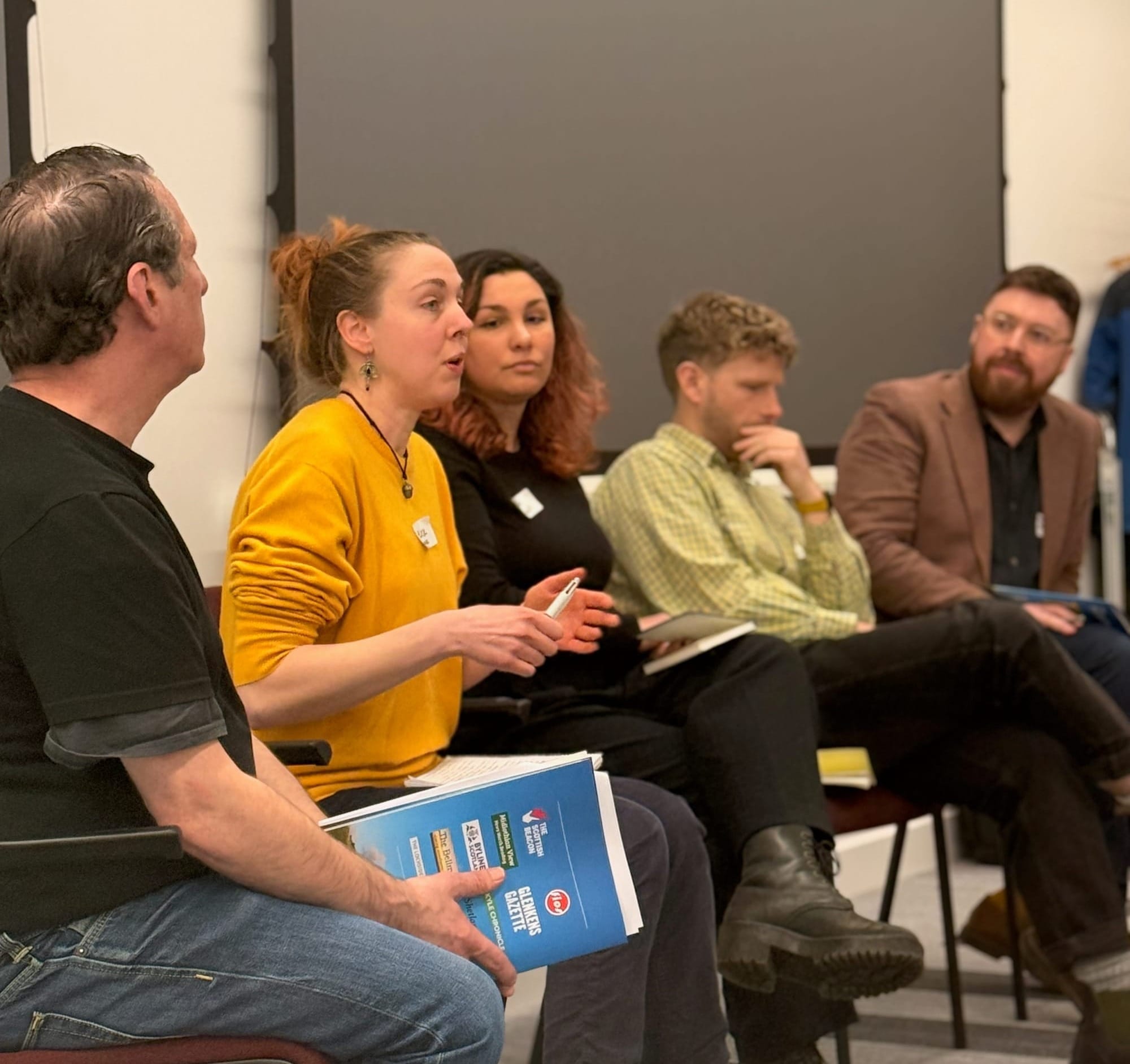
The first panel of the day featured journalists who each contributed stories to the Power Shift magazine.
Jane Cruickshank from The Bellman in Stonehaven reported on offshore wind farm substation developments in local forests.
“If it’s going to be done to us, which is how it feels at least, we should gain some community legacy,” said Cruickshank. “You have your own personal environment as well as the global environment. It’s perfectly feasible to have concerns for one and also the other – and they can be in conflict.”
Hans J Marter from Shetland News spoke about the piece he co-wrote with Erin Rizatto Devlin which compared the constitutional set-up of the Shetland Islands and the Åland archipelago, an autonomous region of Finland in the Baltic Sea, comparable to Shetland in size, population, and exposure to renewable energy projects. Through planning powers, leases and taxes, Åland receives stable revenues to the local government, and many Ålanders are able to buy shares in wind turbines.
Reporting from the Kyle of Sutherland, an attractive area for developers where more than 400 turbines have been projected or approved, Kyle Chronicle editor Silvia Muras said people felt exhausted and were asking “where is the limit?”.
“We are never able to see the full picture of what will be needed in terms of roads, pylons, substations […] it’s been done for years and people in my community are understandably overwhelmed,” she said.
Paul Dobson from The Ferret spoke of his investigative piece to establish to what extent community benefit payments are being paid. He said they found that more than 20 wind farms across Scotland had failed to establish the full £5,000 per megawatt community benefit payment as advised by the Scottish Government, with some delivering only about half of that figure.
This is “creating a huge shortfall for communities from developers failing to live up to expectations placed on them which are already not high enough,” he said.
Speakers also shared the difficulty of accessing clear and transparent information about new developments in their communities, with Cruickshank comparing her reporting experience to “putting a jigsaw together” and Muras highlighting the practice of ‘salami slicing’, where developments are systematically split into several parts for approval, obscuring the overall picture.
The panel was asked about misinformation, echo chambers and political opportunism. As Paul Dobson puts it: “How do you register opposition in a way that's impactful or meaningful? People feel it's way above them”.
“If you read about conspiracy theories that is one of the big driving forces, people don't feel they have any stake in the political system... community wealth building is a bulwark against this kind of thinking,” he said.
“Democratic muscle” and community wealth building
The next panel was made up of campaigners, each one working on different aspects of community empowerment, energy and wealth.
Flick Monk from Platform shared a preview clip from her new documentary film, aimed to highlight different voices of the energy transition, from the Community Councils convention in Highland to a young person who is able to live and work in her island community thanks to a renewable energy project.
“The crucial question is this new industry that’s emerging: how are we going to set it up in a way that learns the lessons of the past”, said Flick Monk, “Privatised oil and gas industries that saw profits go to very few people, pockets of the country very dependent on industries now facing job losses and economic uncertainty”.
Nat Gorodnitski from Uplift introduced the ‘Our Power’ campaign, a set of demands for the next Scottish Government aimed at ensuring people in Scotland get a fair share of their energy wealth.
Josh Doble of Community Land Scotland spoke about how their work is focussed on issues such as increasing community ownership of renewables, improving community benefits payments to at least £7.5K/MW, and a proposal to create a sovereign Scottish Community Wealth Fund, managed by communities to provide seed funding for community organisations.
Part of this Community Wealth Fund would be used to acquire more community revenue generation assets. “The principal challenge is how to get a long-term sustainable income stream,” said Doble.
If such a fund could be established and a mechanism for payments from onshore and offshore wind developments be agreed, for example as a percentage of turnover, then the hope was that by 2035 as much as £500 million could be paid into such a fund annually.
Daniel Gear from Voar started his presentation by providing a powerful insight:
“If you live in the central mainland of Shetland, you get up in the morning, open your curtains and see the largest onshore wind farm in the UK.”
“At the same time a letter comes through the door, it’s your electricity bill and it’s higher than it’s ever been before and you realise you’re almost certainly going to need help to pay it, you’re in poverty”.
“The newspaper is delivered, you see that the people who own the wind farm are reporting record profits and you realise that the same wind stripping heat from your home is the thing delivering the record profit to these shareholders who built something you didn’t really want in the first place”.
Daniel Gear also highlighted the need for a systemic change. The recently launched Local Power Plan is committing up to £1 billion to support clean energy, but communities who want to develop their own energy resources are grappling with a system that seems to prioritise private developers by design.
The panel discussed the need for local authorities to have greater planning powers, access to funding and the importance of community wealth and public ownership and control.
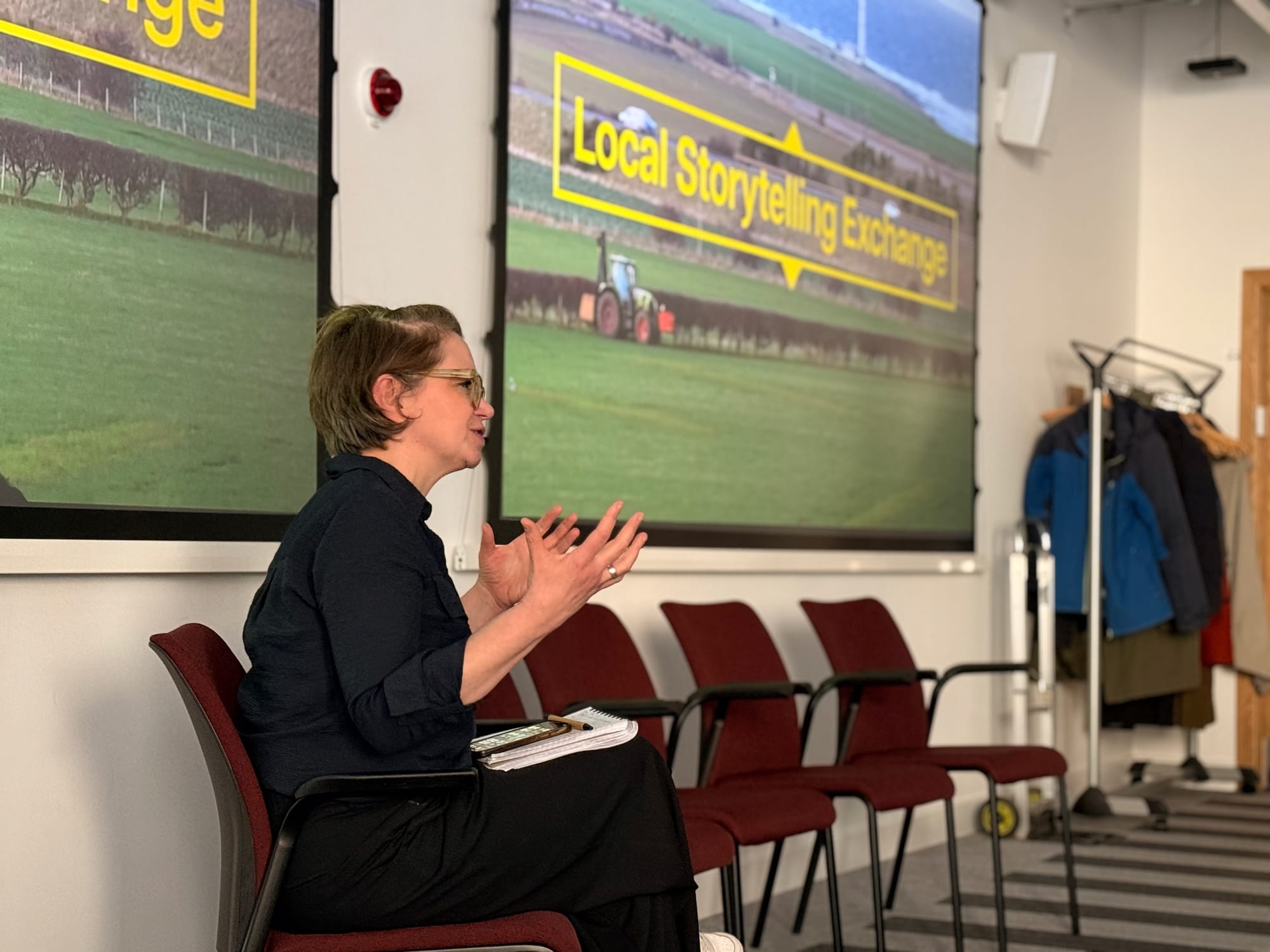
“Creating that safe space where people can find nuance”
In the afternoon Clare Harris from the Local Storytelling Exchange introduced the film Dispatches from the Grid Frontline, focusing on communities along the East Coast, on the line of the “Great Grid Upgrade”.
The film aims to “try and find middle ground and space we can inhabit together,” Harris said. Tackling polarisation is about making space for people to have challenging but constructive conversations. While the energy transition is widely discussed, far less attention is given to what might come afterwards.
The event continued with a series of round-table discussions, where attendees explored how to move away from polarisation, as well as a range of other questions including how to tell better stories; how to get people more interested in planning; how to amplify community voices; how to create a blueprint for local democracy; and how to strengthen our information ecosystems.
The attendees highlighted how the issue is also a generational debate, and the importance of meeting in-person as a way of empowering people, in addition to using arts and creativity to explore these complex issues in new “lightsome” ways, such as the ceilidh theatre at Celtic Connections by the Spring Consortium or the new tool for online debate and deliberation Pol.is.
Another issue that received attention throughout the round-table conversations was how the current planning system should be updated and improved to give more power to communities and the need for a better blueprint for local democracy.
Talking about the event, Daniel Gear from Voar said: “I’ve really enjoyed today - there’s been absolutely great, rich, nuanced discussion. There’s something about the ability to have this kind of discussion with no agenda other than to examine these complex issues in as nuanced a way as possible; I can’t think of any other space that exists to do that.”
Info and quotes provided by Eve Livingston and Hans J Marter
The Power shift is a collaborative investigation by 10 independent, community-based publishers across Scotland, exploring the impact of the green energy transition on communities. The project was launched in 2025 co-ordinated by the Scottish Beacon and supported by the Tenacious Journalism Awards. The Power Shift aims to amplify local voices, facilitate cross-community learning and push for fair, transparent energy development.
It seeks to collectively tell better stories of what is going on in Scotland from a local perspective and have better informed and less polarised conversations on all the aspects of the energy transition.
You can read more articles published by the Kyle Chronicle under The Power Shift banner here.
Comments ()