

Iverach, a supercentenarian from Glencalvie
The story of Alexander Campbell of Glencalvie, alias 'Iverach', who reached 117 years of age in 1816.
Ethel Caterham, 117 years old, is currently the oldest person in the world. But at the beginning of the nineteenth century, it is believed that Alexander Campbell of Glencalvie, known as Iverach, also reached 117 years of age. This is his story as it was told by the newspapers of the time.
Iverach was also known as the man who lived “the three hundreds”, being born at the end of the 1600s, and living throughout all the 1700s and the beginning of 1800s.
His nickname, Iverach, meaning ‘warrior’, is thought to derive from the Old Norse personal name Ivarr (in Gaelic Iomhar), the same as in the surname MacIver. ‘Iverach’ is also a given name in Scotland, Ireland and Wales.
The first article in the press published about Iverach’s extraordinary longevity appeared in the Inverness Journal and Northern Advertiser on Friday 4th March 1814 and it stated:
“There is now living in Glencalvie, parish of Kincardine, Ross-shire, a man named Alexander Campbell, alias Iverach, aged, according to accounts which may be regarded as correct, although no record existed then in the parish, 115 years old, being born in the year 1699.”
The article tells us that Alexander Campbell was a “stout lad” at the time of the death of Baron David Ross of Balnagown in 1711, “and was one of a Militia raised by William, Lord Ross, who succeeded.”
William, 12th Lord Ross was not of Clan Ross, but heir through a Lowland family, the Halkhead Rosses, that had purchased the Balnagown inheritance in 1711. In 1715, the Government appointed him as the Lord Lieutenant of Renfrewshire.
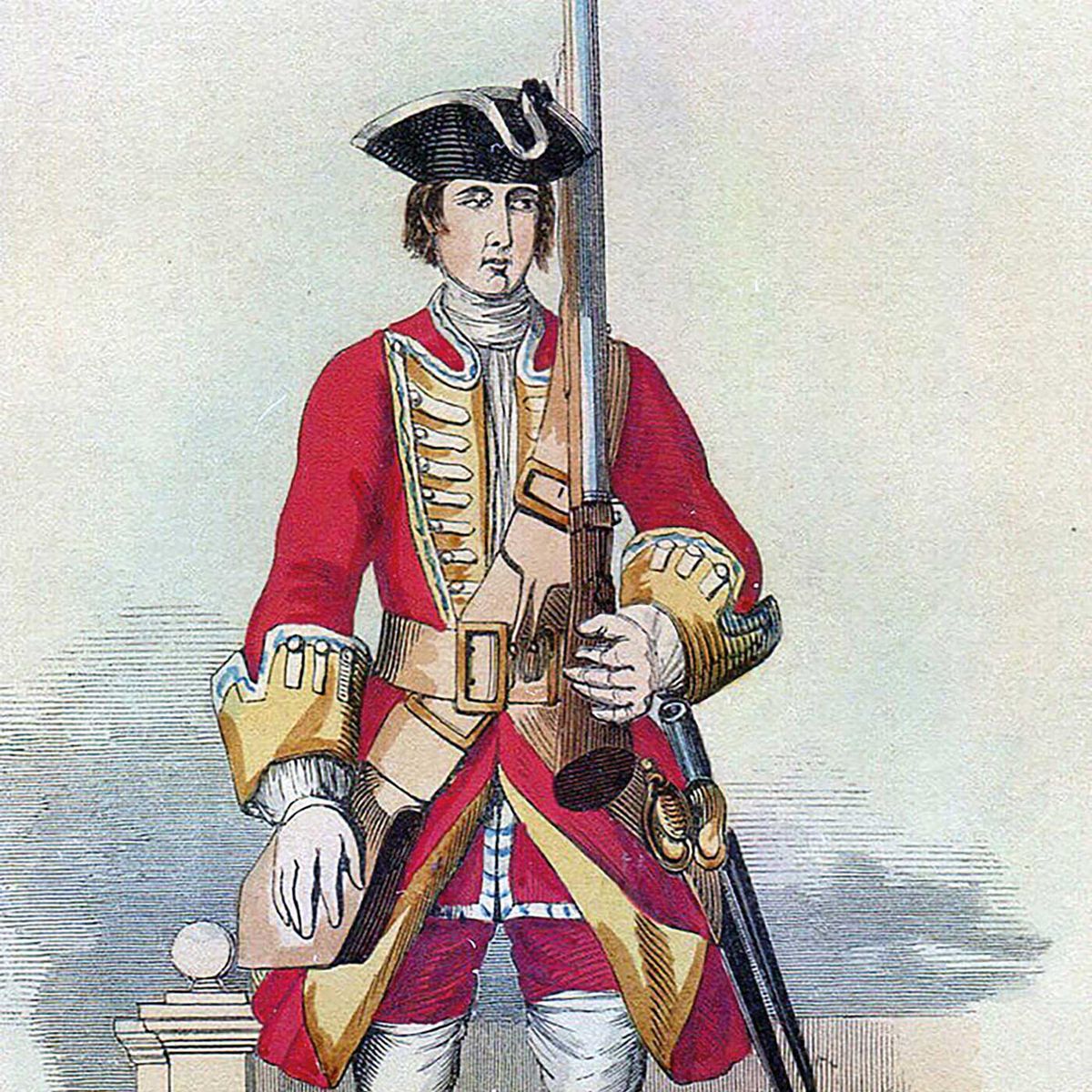
So Iverach was one of the circa 500 men raised by the head of clan Ross to fight the Jacobite rebellion. In this context, he might have taken part in the Skirmish of Alness, or the Battle of Glenshiel, or both.
At the time of the article, in 1814, when he was 115 years old, he was described as “vigorous still, in full possession of his faculties, and is highly entertaining with anecdotes of the exploits of his former years.”
“He walks in his kilt, hose, and plaid, and his staff across his breast, with as firm a step as many who are only half his age”
“He comes down occasionally to visit the Minister of the parish, and Mr Ross of Aldie, whose Lady is remarkably attentive to this hardy veteran, and can accomplish the journey (about 11 miles) with ease, in a day. Last year he went from his own house to Tain in one day (26 miles). His breast and neck are for the most part exposed to the blast, however cold, and he walks in his kilt, hose, and plaid, and his staff across his breast, with as firm a step as many who are only half his age. He is on the poor list, but the funds of the parish are not able to afford adequate support to this cheerful and hardy Highlander.”
Was his longevity due to his way of life - exposure to cold and regular physical activity? This remarkable piece of news spread far and wide, and in the following months, there were articles published in several newspapers from London to Madras in India!
The fame was beneficial to Iverach. On 24th February 1815, the Inverness Journal and Northern Advertiser reads:
“Six Gentlemen connected with Ross-shire, viz. George Gunn Munro, Esq. Younger of Poyntzfield; William Robertson, Esq. of Kiltearn; Hugh Munro, Esq. of Alness; William Munro, Esq. London; Henry Munro, Esq. Tain; and Lieut. William Mackenzie of Greenyard; meeting together on the 9th March last, in London, and reading the account given in this journal of the 4th of that month, of the Glencalvie veteran, Alexander Campbell, alias Iverach, then in his 116th year, contributed One Guinea each, to enable him to dress in tartan, and regale himself with a drop of his favourite liquor during the following year.”
“We are requested by Mr Macbean, the Minister of Kincardine, to return thanks in his name to the above-mentioned Gentlemen for their liberality to this prodigy of three centuries, and to announce Iverach’s receipt of their bounty. The veteran is quite well, and prays for as many days to each of his benefactors as he has seen, and an equal portion of health. He longs for the weather getting a little milder, that he may take a walk to see his friends at Gledfield and the Manse (10 miles only) and tell them of the tide of riches that has set in upon him. He danced two reels at the last Kincardine Cattle fair, and a few days ago entered as a scholar in the Gaelic school at Glencalvie. It is supposed he is the oldest Campbell alive.”
The oldest pupil
So Iverach wasn’t just able to walk over 10 miles and dance reels, he was also determined to learn how to read. A few days later, on Wednesday 20th March 1816, the Belfast Commercial Chronicle expands on his school attendance, citing the Fifth Annual Report of the Society for the Support of the Gaelic Schools:
“The Rev. A. Macbean describes a visit to the school at Glencalvie, where he found “a house crowded with 60 scholars, of all ages, from the Glencalvie veteran, Iverach, now in his hundred and seventeenth year, to literally speaking the infant in the cradle, for the mother of the infant is one of the scholars, and such was her ardour and desire to learn, that she brought the child and cradle to school.” [...] Iverach was a native of this parish, and his remarkable age is ascertained by the parochial register. In the year 1715, he enlisted, and in 1815 he went to school to learn his alphabet! So far he succeeded; nay, he had got the length of reading syllables or short words, but was arrested in his progress by an infirmity incident to far younger men - the failure of his sight.”
Sadly, only a couple of months later, he appears in the newspapers again, this time to record his death. The Hull Advertiser published on 18th May 1816:
“Lately, at Glencalvie, parish of Kincardine, Ross-shire, Alexander Campbell, alias Iverach, aged 117 years. He was born in 1698, carried arms in 1715 under William Lord Ross, and till his death showed the characteristic hardihood of a highlander. In the severest weather, he went with his neck and breast bare, and to the last walked perfectly erect; his dress the short coat, kilt, and plaid, and his staff generally across his breast. Till the uncommon storm of snow of last winter fell, he could walk down to Gledfield and the Manse in a day, the distance being about 11 miles. He entered as a scholar last year in one of the Gaelic Schools in the parish, actually learned the alphabet, and began spelling, when his further progress was arrested by the failure of his sight.”
The following day, The National Register (London), also published a short notice on his passing.
Grandson
A few decades later, Glencalvie would be very extensively talked about in the newspapers, due to the infamous Glencalvie Clearances, the events that led to over 90 people taking shelter at Croick cemetery.
John Robertson Esq. wrote for The Witness on 4th September 1844 “The Glencalvie Rosses”, on his visit to Glencalvie the previous June, shorty before the Glen was cleared for sheep. In his article, we find one of Iverach’s descendants, who was one of the four main tenants cleared from Glencalvie estate:
“Alistair Iverach, or Alexander Campbell, told me his grandfather lived there in three centuries. To use his own expression, his grandfather “saw the three hundreds.” “[...] This old man never had a pair of pantaloons, but wore all his days or centuries the kilt or philabeg. [...] Alistair Iverach knew nothing of his great-grandfather, as may be supposed, but had heard that he had always lived in Glencalvie.”
The grandson Alistair Iverach was described as “a wild-looking wiry Highland kerne, dressed in the woollen drugget of the country” and had been present in 1842 during a confrontation of about 200 women and men and the Tain Sheriff and officers, when the latter were trying to serve the summonses. In that occasion, he is recorded to have said - “What do you mean to do with us if you turn us out! Am I to take my sick wife and children and lay them in there!” (pointing at the black flood beneath the bridge).
A group of strong men
Iverach wasn’t the only prodigy born at Glencalvie. During the mid 1840s journalists pondered endlessly the character of the Glencalvie residents, some praising their bravery, others criticising their resistance. One of the articles in their defence, from the Liverpool Courier, and signed by “Echo M’Mountain” was republished by the Inverness Journal and Northern Advertiser on 19th February 1847, and tells the story of some remarkably strong men native of Glencalvie:
“In 1790, there were five young men of the name of Walter Ross resident in this ill-fated glen, whose aggregate height was 32 ½ feet, being 6 ½ feet each! They weighed 85 stones in the lump, and the circumferences of the calves of their ten legs measured 180 inches! A regiment of such formidable fellows would be no bad body-guard to her Majesty in case of a civil war!”
Although not as extraordinary as Iverach’s age, they were indeed strong for today’s standards.
This is the first of a series of articles about the people of Glencalvie.
Comments ()