
Ian Hamilton Finlay at Gledfield Farmhouse
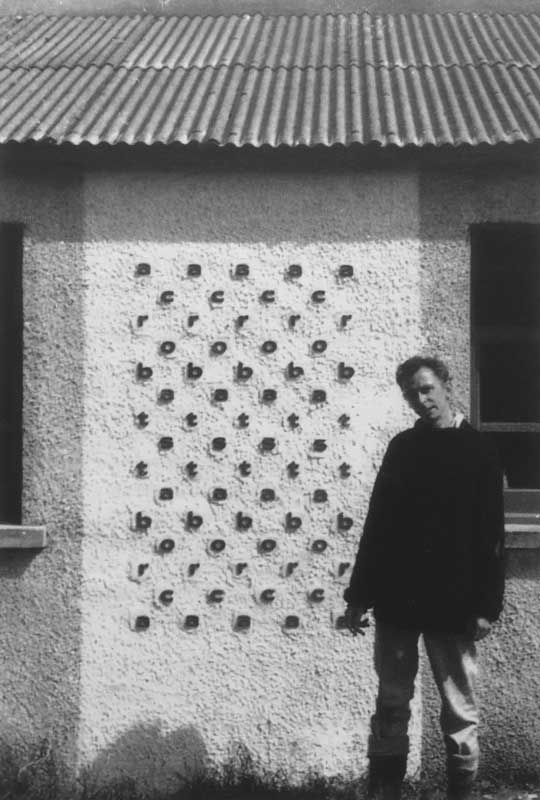
Internationally recognised as one of the greatest artists of his time, Ian Hamilton Finlay (1925-2006) spent a year living at Gledfield Farmhouse in the mid 1960s, shortly before moving to Stonypath in the Pentland Hills, where he produced his greatest work of art,“Little Sparta”, a sculpture garden, created alongside his wife Sue Finlay in the span of four decades.
The first time I learned about the poet, visual artist, writer, and gardener Ian Hamilton Finlay was at a university lecture in Madrid in 1995. Many of us were captivated by his work Little Sparta. So, last year, it was a very pleasant surprise to come across the book The Gledfield Effect by Alistair Peebles. In his essay “One has to work at a place...” Peebles explores the relatively unresearched period Finlay spent at at Gledfield Farmhouse, notably finding some traces of his poems on the building walls.
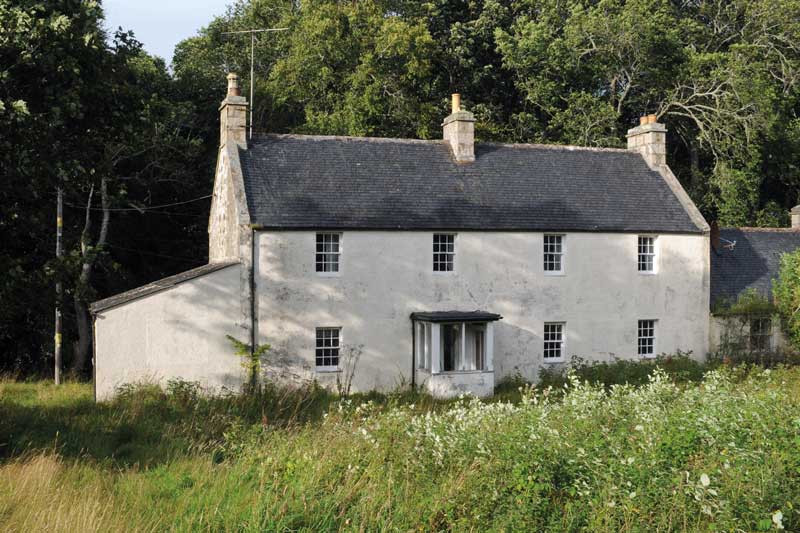
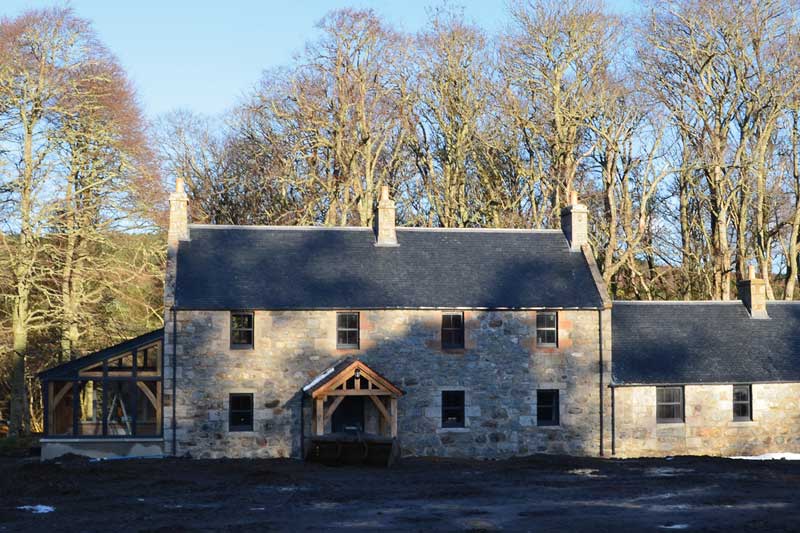
(Left) Gledfield Farmhouse in 2020, at the time of The Gledfield Effect. © Alistair Peebles (Right) The Farmhouse in November 2024, after extensive renovation works. © Silvia Muras. In June 1966, Ian Hamilton Finlay had taken down and destroyed almost all the work he had created and installed there. The falling out with his landlord Captain Richardson, who had acquired Gledfield Estate in 1958, was very sudden, with the Finlays giving notice in mid April. Ian and Sue’s first child, Alec, had been born in March. Rather dramatically, Finlay compared his predicament with the clearances at nearby Glencalvie.
Ian Hamilton Finlay was born in Nassau, Bahamas, but at age 6 he was sent to boarding school in Scotland. He attended Art School in Glasgow and did his national service between 1944 and 1947, visiting post nazi Germany. The following eight years he lived in rural Perthshire with his wife Marion, painting and writing short stories for the Glasgow Herald and Scottish Angler, while working as an agricultural labourer and shepherd to make enough money to live. He spent the winter of 1955-56 in Rousay, Orkney, a place he felt a strong attachment to. The landscape and literature of north Scotland, and the literature and visual art of northern Europe, Scandinavia and Russia, held a strong fascination for him at that time.