
History of the Highland Games
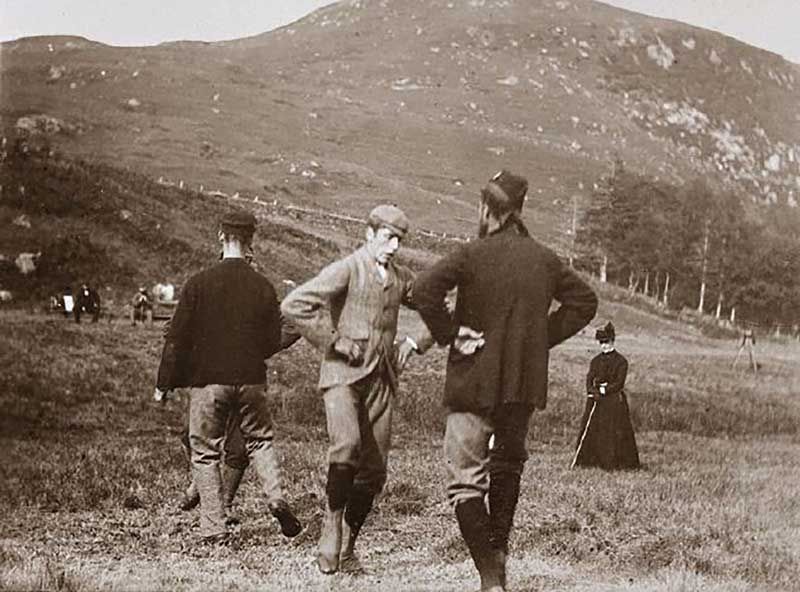
Alasdair MacDonald, Historian for the Royal Scottish Highland Games Association, explores the rich history of Highland Games in and around the Kyle of Sutherland area.
By Alasdair MacDonald
The Oxford Dictionary gives ‘Highland Games’ the following meaning: Highland Games noun [plural] - A Scottish event with traditional sports, dancing, and music. Highland Games are events, Celtic in nature, which have evolved into modern day social gatherings, exhibiting traditional, competitive, and entertaining events, with a Scottish diaspora. They serve as a living tradition, which connects past and present.
The fact that Highland Games have a plural meaning suggests that more than one event, or event type, must take place, before it can be defined as such. One alleged ‘event,’ taken on its own, cannot be considered as the true root of Highland Games. Across the world, people have always thrown stones, but it is unreasonable to say that in doing so, irrespective of the weight involved, that the first stone thrown, was the birth of Highland Games.
Origins
Online checks to find the history of Highland Games do not necessarily give true facts. Some say that the first Highland Games ever to be held, were in the 11th century, when King Malcolm III of Scotland, a.k.a. Malcolm Canmore, held a hill race up Craig Choinnich, Braemer, to identify a good gille-ruith, or foot messenger. Others claim that the oldest Highland Games took place in the Fife village of Ceres, in 1314, following the Battle of Bannockburn. Burntisland, also in Fife, claim that in 1652, they held the second-oldest Highland Games. In more recent times, the Perth-shire village of St Fillans, is reputed to have held the first ‘modern’ Highland Games in 1821.
According to the author’s research, it is clear that not all of those claims, if any, are factually correct. Importantly, there is no known evidence to substantiate such claims, which the Internet unfortunately perpetuates. Indeed, he has documentary proof which questions their veracity. Perhaps the true history of Highland Games lies elsewhere...
The first Tailteann Games were held as a funeral ceremony for a Celtic queen. They were held annually for many centuries until the Norman invasion of Ireland
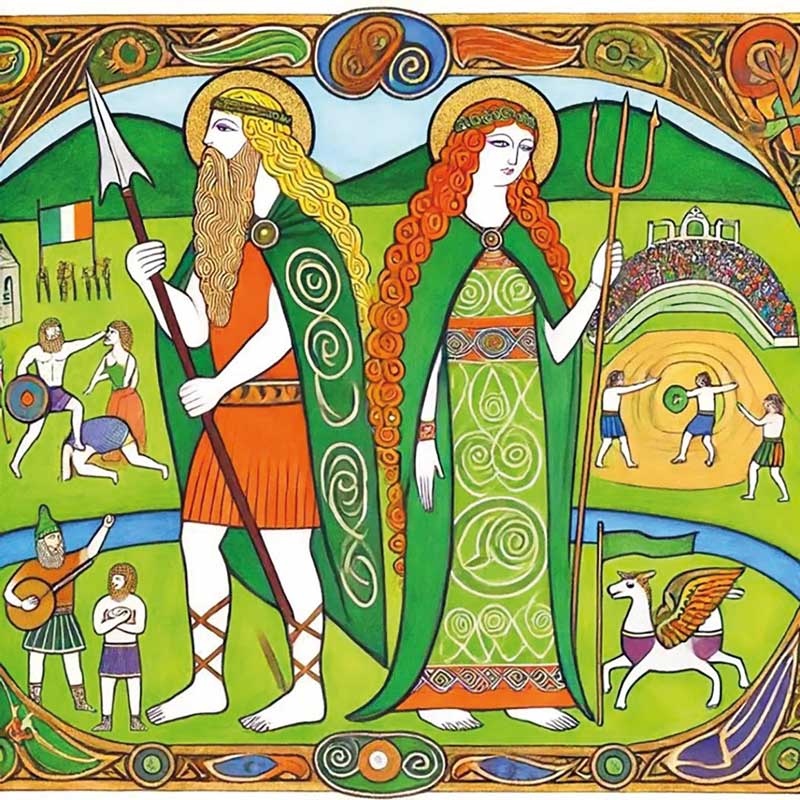
The first known existence of events that are now universally recognised as being similar to typical ‘Highland Games,’ were events that first occurred in Druid times, in Ireland. They were called Aonac Tailteann, or Tailteann Games. They were founded as a public mourning or funeral ceremony for Queen Tailltiu a.k.a. Queen Taillte. It is claimed that the Tailteann Games started as far back as 1829 BC. Importantly, the Tailteann Funeral Games, were held annually until 1169 AD, when they died out following the Norman invasion of Ireland. They had three functions: to honour the dead, to proclaim laws and to entertain, by holding funeral games and festivities. People came from all over Ireland and even from Scotland, to attend the Games.
It is thought that the first people to populate the west of Scotland, had travelled from Ireland. We share a common prehistoric history, as evidenced by our similar archaeological buildings, standing stones and Celtic art. Both Celtic nations share Gaelic as a common language. They also share the same culture and play the similar ball and stick game of hurling/shinty. They also share bagpipe and harp playing, wearing of kilts and tartan, and of course, they share an affinity for whisky distilling.
In medieval times, sports were the privy of royalty, nobility and the military. The sports included horse racing, jousting, wrestling, archery, sword fighting, quoits and throwing the bar and hammer. It is well known that King Henry VIII was a good hammer thrower. Ordinary people were not allowed to compete in aristocratic sports. They could choose to be soldiers, or to work as a peasant or serf. They had little time or energy, for recreational activities.
Royalty, Aristocracy, Clan Chiefs, Landowners, and their rich shooting/fishing guests, used to financially support Highland Games. Some took part and some judged them.
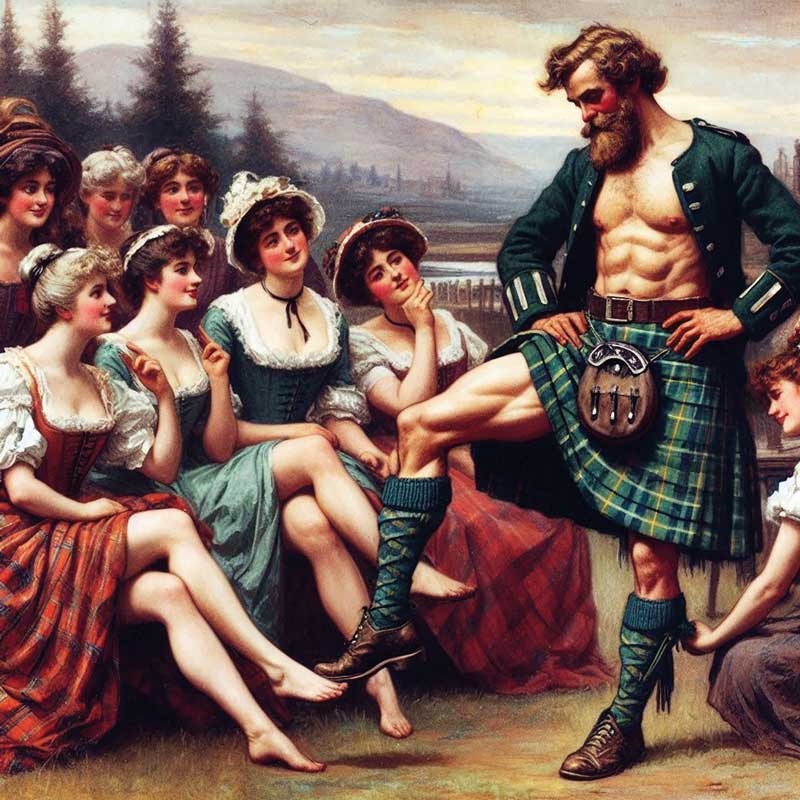
An ‘interesting’ event that was held in 1884, obviously prior to political correctness, was a competition for the “Strongest and Best Shaped Leg”. The venue for that particular Games was adjacent to the local “Lovers’ Walk”. Presumably, there was another competition, as to who would judge it!
Another interesting event that was previously held at a north Highland Games, was a Washing Competition, sponsored by Messrs Lever Brothers. Each competitor was provided with a pail of water, half a bar of “Sunlight” soap, two clothes pegs and a soiled handkerchief. Three minutes were allowed to complete the task.
Many of the individual events that took place in early Highland Games, no longer take place, such as an unusual “Washing Competition” sponsored by Messrs Lever Brothers!
Many of the individual events that historically took place in early Highland Games, no longer take place and many newer events have now been adopted. The core events which people may now expect to see at Highland Games, are traditional athletic competitions, comprising of Heavy and Track and Field events, coupled with Highland Dancing and Bagpipe Playing. However, not all Highland Games include those four perceived core events and many also include cycle races. Other things to see may include food, alcohol and market stalls, side-shows, clan tents, various displays (static or athletic), and other localised forms of entertainment.
Within the Kyle of Sutherland area
The author has identified and researched the history of over 1500 different Highland Games, including over two hundred within the Highland area. Of these, 13 Games more or less lie within the Kyle of Sutherland area. Chronologically listed, they are: Lairg 1872, Ardgay 1875, Bonar Bridge 1879, Migdale 1881, Spinningdale 1882, Edderton 1882, Culrain 1883, Gruids 1884, Clashmore 1885, Rosehall 1886, Invercharron House 1887, Inveran 1887, and Invershin 1978.
Lairg, Edderton, Gruids and Clashmore are not within the Kyle of Sutherland catchment area but are geographically close and have many ties to the area. As such, they have been included in this report.
The oldest Highland Games in Sutherland, were held in Dornoch in 1835. They are the oldest Highland Games north of Inverness. The following Games are in chronological order.
On Monday 22nd July 1872, to celebrate the Majority (21st) Birthday of the Marquis of Sutherland, Highland Games were successfully held in a field adjacent to the Lairg Hotel.
The events were: Putting a 16lb and a 22lb Stone, Throwing the Hammer, Tossing the Caber, Running High Leap, Running Long Leap, 200 Yards Short Race, Race for Boys under 12 years of age, Sack Race, Race for Boys under 16 years of age, 400 Yards Long Race and Dancing. The successful competitors came from: Balnadeilson, Culmailly, Shinness, Terryside, Lairg Mill, Balcharn, Lairg Hotel, Linside Croy, Lairgmuir, Saval, Dalmichie, Torroble, Rhianbreck, Achany, Balloan and Lairg.
The next Highland Games to be held in Lairg, took place on Tuesday 11th April 1876, in a field beside the railway station. They were held to celebrate the return of the Duke of Sutherland, who had just returned from India.
On Wednesday 12th January 1881 (Old Style New Year), traditionally dated Highland Games were held in a field beside the Lairg Hotel, owned by Mr Crawford. Despite it being frosty, with several inches of snow on the ground, the games were successful, and it was recorded that no injuries had been sustained.
Lairg & Gruids games
1884 was a memorable year for Highland Games in Lairg, as three separate ones were held in the village that year. On 5th January 1884, (Old Style Christmas Day), a knotty (shinty) match, was held in Lairg, along with celebratory Highland Games. A week later, on January 14th (Old New Year), another Highland Games were held in the village. Unbelievably, also on January 14th 1884, a separate Games were held nearby, at Gruids, a mere two miles away. The land owner, Mrs Matheson, had contributed ‘a handsome sum of money’ towards the Gruids Games, but being in some way misled, she sent her ground-officer to withdraw the money, as she wanted her tenants to go to the Lairg Games and to compete there instead. The Gruid tenants felt very reluctant to go to the Lairg Games and preferred to hold their own event. They said that at some of the best games that ever came off in Lairg, the Gruids people did not get permission to compete there. On 25th October 1884, a third Highland Games was held in Lairg. It was held to celebrate the marriage of the Marquis of Stafford and Lady Millicent St Clair Erskine.
First Ardgay games
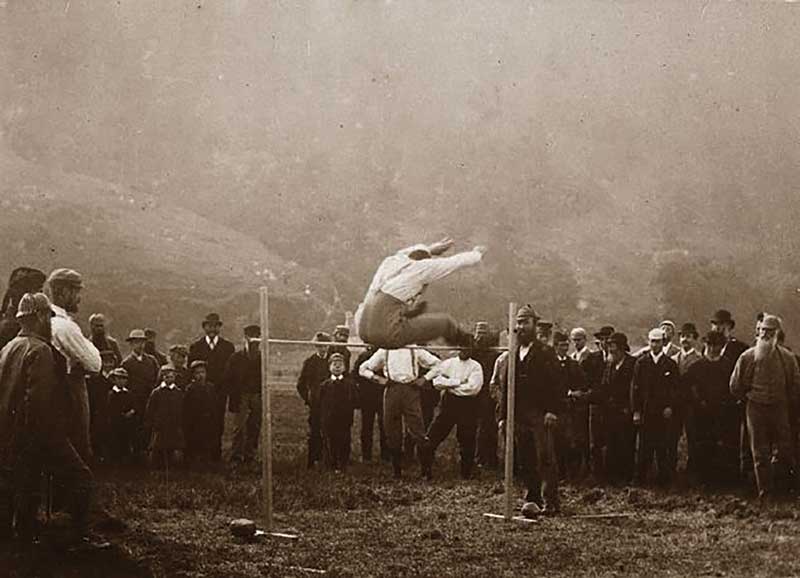
On 12th January 1875 (Old Style New Year) the residents of Ardgay held Highland Games. They were open to competitors from the parishes of Kincardine and Creich and were held in a field owned by Mr G. Anderson. Though the ground was wet and slippery, the weather was good. The events were: Putting the Heavy Stone, Throwing Heavy Hammer, Short race, High Jump, Hurdle Race, Long Leap, Long race, Three-Legged Race and Sack Race. For Juniors: Short Race, Long Jump and Three-Legged Race. The successful competitors came from Gledfield, Ardgay, Bonar Bridge, Ardgay Hill and Tulloch.
On 12th January 1876, the Ardgay Games were held in a field near Bonar Bridge, owned by Mr J. M. Ross, Postmaster, Ardgay. The weather was dry, but the ground was wet. New to the programme was Highland Dancing and Piping. High Jump was added to the juvenile events.
Bonar Bridge games
Not to be undone by their close neighbours, a Highland Games was held in Bonar Bridge, on January 1st 1879. The events were: Heavy Stone, Light Stone, Throwing Hammer Long Race, High Leap, Short Race, Long Leap, Three-legged Race, Boys’ race, Boys’ Long Leap, Boys’ Three-legged Race, Boys’ Race, Big Boys’ Race, Sack Race and a Tug-of-War. Of all the events entered into, the Tug-of-War was the one which had the most attraction. Ten men from each county - Sutherland and Ross-shire - were chosen, and the pull was then begun. For a time none could say who were to be the victors. At length, after a hard pull and with deafening cheers, the Sutherland men were declared the winners. On the day, the successful competitors had come from Creich, Bonar Bridge, Tulloch and Kincardine.
On 3rd January 1881, the residents of Bonar Bridge held their customary Highland Games. The events were: 1st Class (Men over 16) — Putting the Heavy Stone, Putting Light Stone, Throwing Heavy Hammer, Light Hammer, High Leap, Long Jump, Long Race, Short Race, Three-Legged-Race. 2nd Class (Older Boys under 16) — Putting Stone, High Leap, Long Leap, Short Race, Long Race. 3rd Class (Small Boys) — High Leap, Small Boys’ Special Prize Race, Boys’ Three-Legged-Race, Girls’ Race and a Dancing competition.
Games at Migdale
On 12th January 1881 (Old Style New Year), despite a week of hard frost and a heavy snowdrift, Highland Games were held on a field in Migdale, Creich, owned by Mrs Matheson. The events were: 1st Class — Throwing Heavy Stone, Throwing Hammer (16 lbs.), High Leap, Long Leap, Long Race, 2nd Class — Throwing Stone, High Leap, Long Leap, Long Race and a Three-Legged Race.
To confirm how the residents of Bonar Bridge liked their sport, after a meeting in the village on 12th November 1881, a new football club was formed and a committee appointed. Mr J. M. Ross, the Postmaster, donated one of his level fields for the pitch.
On 1st January 1882, Highland Games were held in a field behind Bonar Bridge. Mr Sutherland, Skibo and Mr Littlejohn, Invercharron each gave £1 towards the prizes. New to the programme was a 56lb Weight for Distance, a Girls’ Race, Highland Dancing and a Piping competition.
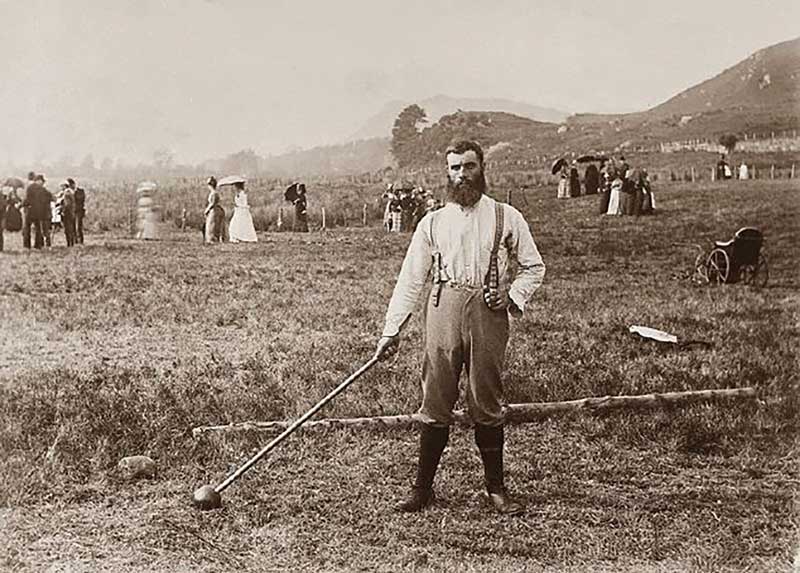
On 12th January 1882 (Old Style New Year), the customary Highland Games and a shinty match, were held on the field of Cnoc-na-Deamhan (Fairies Hill), Migdale, kindly granted for the occasion by Mrs Mackenzie. The proceedings were enlivened by the music of the bagpipes, played by Mr Alexander Gunn, Balchraggan, assisted by Mr John Macdonald, Balchraggan, and Mr John Macleod, Culnara.
January 1st 1883, was a big sporting day in Ardgay and in Bonar Bridge, as on that day both villages held their own Highland Games.
The 1883 Ardgay Games were held in a field granted by Mr Davie, Balnagown Arms Hotel. The weather was described as excellent and the events were: Putting the 18 lb. Ball, Throwing Heavy Hammer, High Jump, Long Race, Boys’ Long Race, Long Jump, Three Legged Race and a Boys’ Short Race.
The events at the rival 1883 Bonar Bridge Games were: 1st Class — Putting Stone, Hammer, Short Race, Long Race, Long Leap and Girls’ Race. The games were conducted by Messrs Mackay and Black. Pipe music was supplied by Mr A. Mackay.
On 12th January 1883, the annual Highland Games and Shinty Match, were once more held at Migdale. New to the programme, was a blindfolded race. The prize winning competitors came from Badcall, Migdale, Tulloch, Bonar Bridge, Ardens and Kinloch.
Also on 12th January 1883 (Old Style New Year), Highland Games were held in the neighbouring villages of Culrain and Spinningdale. Fuller details on those and for Highland Games held at Edderton, Gruids, Clashmore, Rosehall, Invercharron House, Inveran, and Invershin will be the subject of a following Kyle Chronicle article.
As a finale to this article, and by way of a teaser to highlight how Highland Games have spread across the world, also in the next issue, will be details of a Highland Games which were held in Punta Arenas (Straits of Magellan), Chile, on New Year's Day 1897, organised by the son of an Ardgay resident.
Comments ()