
Andrew Carnegie's legacy
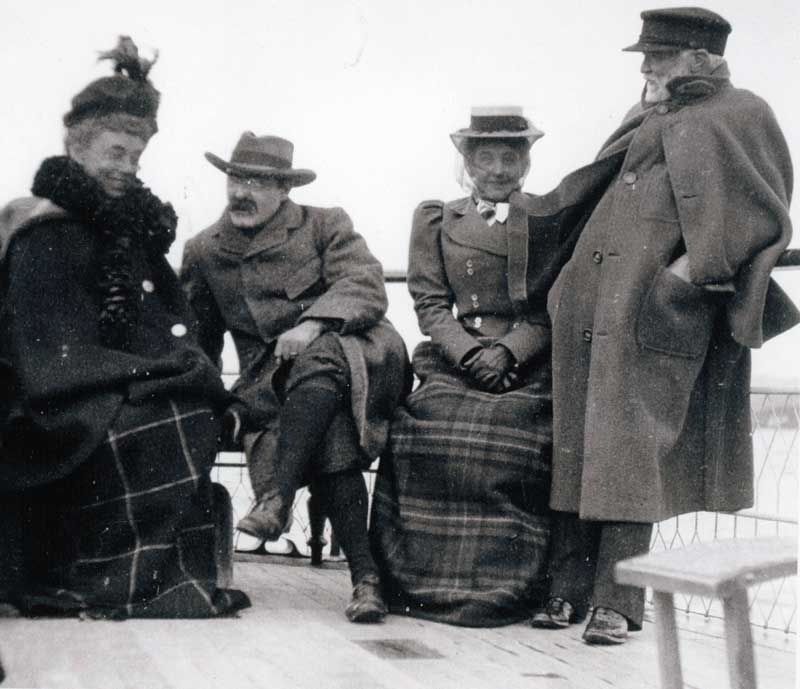
The “richest man in the world” at the turn of the century, Scottish-born American industrialist Andrew Carnegie purchased his beloved Skibo castle in 1898 and turned it into one of the finest private residences of its time. Considered the father of modern philanthropy, he gave grants to create 2509 free public libraries around the world, with three of them in the Creich Parish.
By Silvia Muras
Born in 1835 in a weaver’s cottage in Dunfermline, along with his parents and younger brother he emigrated to Allegheny, Pennsylvania, United States, in 1848 for the prospect of a better life. He started working as a bobbin boy in a cotton mill at age 13, then as a messenger for a local telegraph company, where he was promoted to telegraph operator. He was a voracious reader. A retired merchant, Colonel Anderson, loaned books from his small library to local boys, including Carnegie, with books providing most of Andrew Carnegie’s education throughout the years.
He became the private secretary of Thomas A. Scott, and at age 24 he succeeded him as superintendent of the Pennsylvania Railroad. Carnegie’s first investment came when Scott alerted Carnegie to the impending sale of ten shares in the Adams Express Company at $60 a share. His mother raised $500 by mortgaging their home, while Scott lent him the remaining $100, and soon the dividends began rolling in.
By age 30, Carnegie had amassed business interests in iron works, steamers on the Great Lakes, railroads, and oil wells. He was subsequently involved in steel production, and built the Carnegie Steel Corporation.
Philanthropy
In 1868 Carnegie wrote himself a letter outlining his plans for the future. He was determined to resign from business at age 35 and live on an income of $50,000 per year. In his autobiography, Carnegie remembered that, as a child, “I resolved, if wealth ever came to me, that it should be used to establish free libraries.” He started giving grants for libraries, making the adoption of the Public Libraries Act a requirement to access his donations. Known as the ‘Carnegie formula’, town councils had to demonstrate there was a public need for a library, that they could provide a suitable site and that they could maintain, furnish and stock them. The first of his free libraries opened in Dunfermline in 1883.
In his 1889 essay The Gospel of Wealth he wrote: “The man who dies thus rich dies disgraced”