
Community-centred energy policy would solve Sutherland renewables tensions
Dr Josh Doble, Director of Policy, Community Land Scotland writes about the Scottish Community Coalition on Energy work and their vision for a more democratic energy system.
Opinion
By Dr Josh Doble, Director of Policy, Community Land Scotland
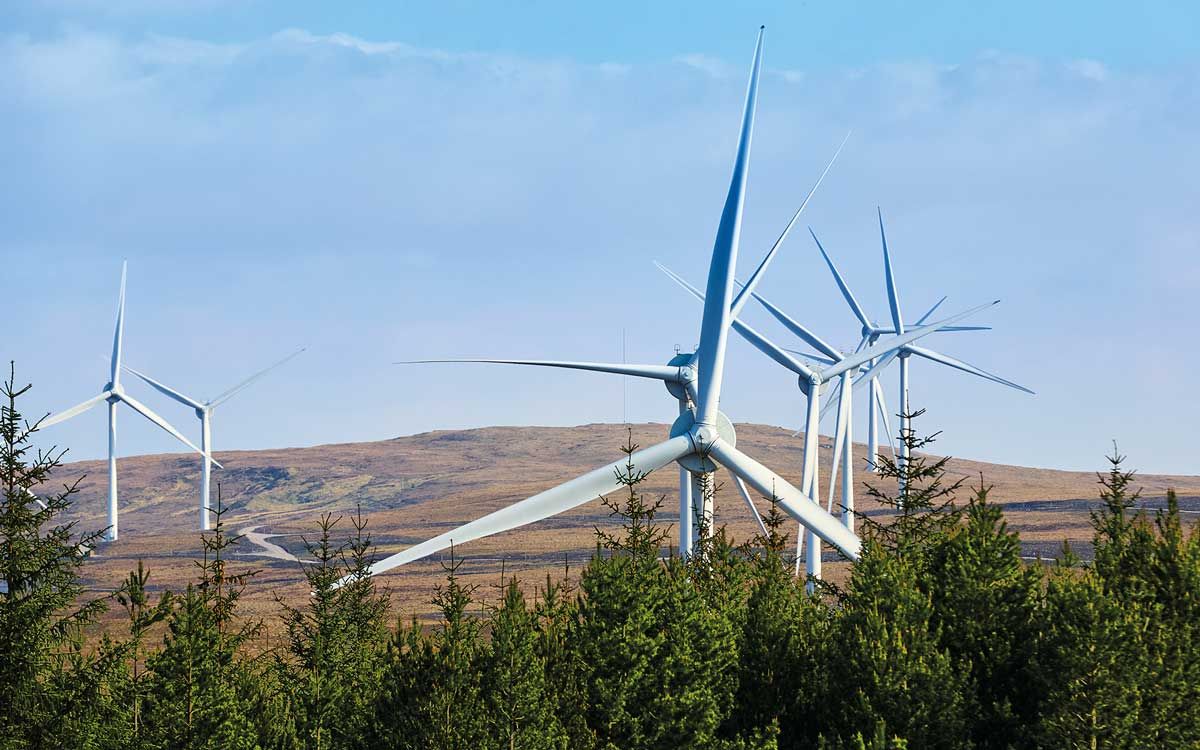
It is very obvious that areas like the Kyle of Sutherland are shouldering the weight of renewable energy developments within the UK. There is a similar burden of renewable developments being seen across the rural areas of the Highlands - as well as Moray, Aberdeenshire, Argyll and the south of Scotland.
These developments are undoubtedly divisive, not least because these areas are often suffering from high energy prices, inadequate housing stock and a chronic lack of investment.
The concerns run deep in Kyle of Sutherland villages - such as Bonar Bridge, Ardgay, Spinningdale, Rosehall, Culrain, Invershin - where there are currently no fewer than 400 wind turbines approved or applied for in the area.
The lack of strategic planning, a balancing of competing land uses, and a lack of economic opportunity being shared and locally owned are the structural issues underpinning this.
No significant wind farm community-owned
It is striking that whilst the renewable developments of Sutherland accelerate, not one significant wind farm in the area is community-owned and economic business as usual sees the profits extracted by corporations and private equity firms.
In fact, recent research by the Centre for Local Economies (CLES) has shown that capacity over the five financial years from 2019-20 to 2023-2024, 49 per cent of Scotland’s installed onshore wind developments made a total of £2.83 billion in post-tax profits, nearly 90 per cent of that profit - £2.49 billion – was paid as dividends to corporate shareholders. This is not a just transition, nor is it maximising the radical, decentralising potential of renewable energy or spreading the wealth that this economic opportunity presents. More corporate-led development is not what we need.
Community Land Scotland (CLS) is part of The Scottish Community Coalition on Energy (SCCE). We represent hundreds of member organisations across Scotland. Our policy recommendations are based on what our members tell us they need to overcome barriers and unlock benefits for the climate, communities, and local economies across the country.
There is a critical need to decarbonise our economy to combat the climate emergency. Expanding renewable energy generation and transmission is a vital way of helping achieve this.
But this is not an excuse for business-as-usual economics, which sees decision making, wealth and power concentrated in the hands of corporations and large landowners, rather than shared with local people. We believe there is a clear, viable and transformational solution to this challenge.
There must be a fair deal for communities, backed by wealth-building principles and with local economic development prioritised. Crucially, the system must be focused on a significant increase in community ownership of wind farms and other renewables.
The simple truth is that wind farms and renewables are financially lucrative, as the CLES has demonstrated. Communities that usually host these developments should have a fair share of the economic benefit, ranging from full community ownership, to shared ownership and meaningful community benefit payments.
“New framework to promote community ownership”
Surprisingly perhaps, onshore wind in Scotland initially led the way in agreeing good practice on community benefits, including a voluntary benchmark figure for payments to local community funds. However, given decades of inflation, large profits and the increasing volume of developments and concern from communities, the existing community benefit framework is no longer fit for purpose.
The Scottish Government’s new proposal of £6,000 per MW as best practice for community benefit is simply inadequate and paltry compared to recommendations from Highland Council, the Liberal Democrats and the UK Parliament’s Scottish Affairs Committee who variously recommend 5% of revenue or up to £12,000 per MW.
A refresh of this framework is desperately needed to ensure that on-shore developments fund local rural development in areas like the Kyle of Sutherland.
Too often, opportunities to host on-shore projects are controlled by the small number of private landowners who own much of Scotland, with the possible returns from renewable projects driving land prices to ridiculous levels, such as with the case of Griffin Forestry Estate in Perthshire selling for £145 million.
While a handful of corporations enjoy exceptional power over renewable development, their contributions to revitalising the areas in which they operate needs to be strengthened.
Huge support for community-owned renewables
There needs to be considerably more community ownership of renewable developments. Research shows that, in Scotland, 64% of people would support a community-owned energy development in their area, but only 40% support a private enterprise.
This could be because, on average, community-owned turbines generate 34 times more income for local communities than privately-owned ones. Also, community-owned turbines mean empowerment, with local people making decisions that work for their local area, whilst contributing to the wider energy system.
The importance of community ownership of renewables is why the Scottish Community Coalition on Energy (SCCE) came together in 2024 to promote our community-owned energy sector.
Nationally, we need to see a dramatic increase in community-owned renewable energy to 1GW (1,000MW) by 2030 (it currently sits at 110MW).
The income from the proposed 1,000MW of community energy would be two and a half times greater than the community benefit payments from all the onshore wind farms in Scotland today. Achieving 1GW would be transformative for the green economy in Scotland.
The SCCE recognises that communities across Scotland are shouldering the burden of higher bills whilst seeing few benefits from hosting vast renewable developments.
This has led to the proposal for a Scottish Community Wealth Fund, which would sit alongside local community benefit arrangements for communities hosting developments, and would take additional contributions from developments for use in a strategic national fund.
This Fund would seed fund revenue-generating community ownership projects around the country. This would enable communities anywhere, to have a stake in renewable energy and secure long-term income for their local area.
We need a just transition to Net Zero that actually delivers just outcomes for local people across the country, but particularly for communities in areas like the Kyle of Sutherland that are carrying the burden of development. This means expanding community ownership, enhancing local community benefit arrangements and shared ownership opportunities, and the establishment of an independent national fund for communities so that everyone in Scotland can be part of the energy transition.
“Renewables versus communities is a fallacy”
The simplistic depiction of renewables versus communities is a fallacy. It has the potential to be dangerous if this debate is co-opted by politicians looking to sow division and draw attention away from the failings of our economic system.
We cannot allow regressive politics to undermine opportunities for a fairer economic system and transformational rural development, nor damage our drive to decarbonise and protect the planet.
But it is essential that politicians and developers accept that communities must receive more to secure the future of renewable energy in Scotland.
The debate about current renewables development comes down to how we want our economy to work: should it continue as an extractive, corporate-led economy, or should we make it work for local people.
We need to decarbonise and find more sustainable ways of producing energy. We also need to empower communities in areas like Sutherland and reduce glaring inequality and power imbalances.
Community-owned energy is an established model which can help achieve all of this.

Find out more about Dr Josh Doble and the work of Community Land Scotland here
This article is part of The Power Shift – a collaborative investigation by 10 independent, community-based publishers across Scotland, exploring the impact of the green energy transition on communities. Co-ordinated by the Scottish Beacon and supported by the Tenacious Journalism Awards, the project aims to amplify local voices, facilitate cross-community learning and push for fair, transparent energy development.
We are now running as a volunteer-led fully independent newsroom, and we are very grateful to the local community councils who have subsidised our printing costs for 2026. But we’ll need your help to keep the project sustainable and free for everyone. Please consider purchasing a subscription clicking on the button above, it would make a tremendous difference.
Comments ()