
Who benefits from the resources of a place?
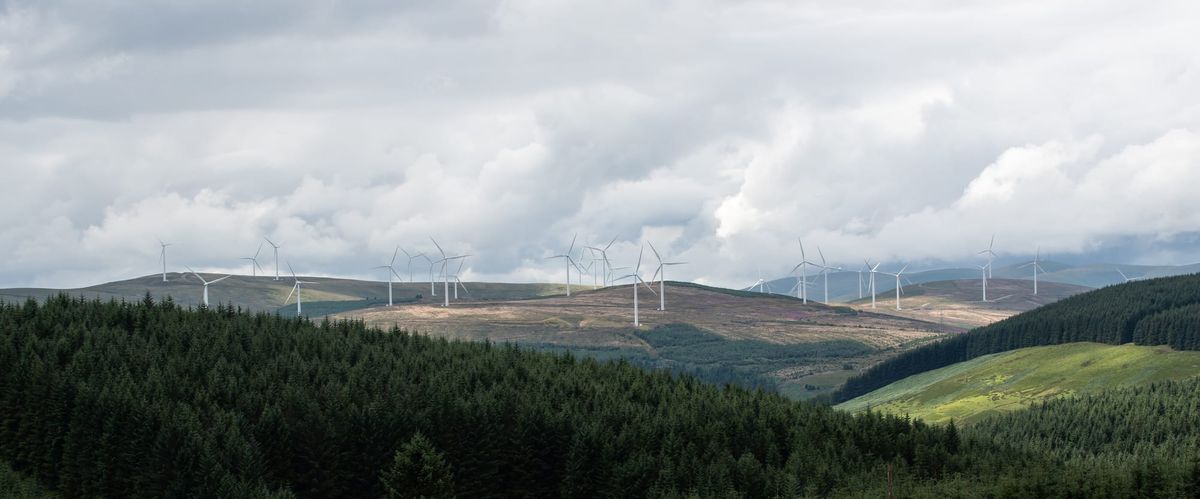
Resistance to renewables will continue to grow unless the communities hosting these projects can retain a fair share of value.
by Tom Wills, Equitable Energy Research
As the scale and pace of new energy developments increases, the question of what constitutes a fair share for communities hosting these projects is becoming ever more critical.
Across the globe we are generating more and more electricity from wind and solar, yet most of our energy still comes from fossil fuels: gas for heating, oil for transport, coal for making steel and concrete. We need more renewable energy to decarbonise these areas - but it matters who benefits.
Al Gore’s inconvenient truth was that climate change is real, and we’re not acting fast enough to prevent the worst outcomes. There is another, related one, which is that renewables require vastly more space to produce the same amount of power as fossil fuel generation – and there is a limit to how much development locals will accept, particularly when they are struggling to heat their own homes and seeing limited benefit from nearby projects. Opposition to renewables is not necessarily or always nimbyism: it can be a question of physics and fairness.
“Opposition to renewables is not necessarily or always nimbyism: it can be a question of physics and fairness”
The physics dictate that for the same energy output, onshore wind projects can require 175 times more space than power plants fuelled by natural gas. The political reality in places like the north of Scotland is one of increasing opposition to net zero developments, on the grounds of unfairness. In June of this year the Power Shift initiative reported on a meeting of over fifty community councils representing over 72,000 residents of Highland region which produced a unified statement opposing the “unjust and unnecessary industrialisation” of the Highlands and called for an inquiry – and pausing all planning applications relating to major energy projects.
The graphics in the report Social value from renewables in the Highlands and Islands show the scale of what is coming in the Highlands and Islands. Whilst not all these projects may necessarily be built, the trend is clear. And if you think renewables are controversial now, wait until total generation capacity doubles – and then doubles again.
There are ways to mitigate and reduce much – though admittedly not all – of the growing opposition to net zero. These include bolstering local democratic processes and ensuring that projects are undeniably in the interest of host communities and wider society, by retaining a share of value and using the proceeds from energy projects to tackle longstanding social problems.
As things stand, it is all too easy for reactionary forces to weaponise the climate debate by arguing that the net zero agenda is a con. For those living in fuel poverty, it feels like one.
Some in the industry will argue that a better deal for communities means holding renewables to a higher bar than other sectors and could slow climate action. There is some truth in this – but the physics and the political facts on the ground mean that telling communities to get out of the way, or just take what they are offered, seems guaranteed to backfire.
It may be inconvenient that renewables rile up locals when they don’t see the benefits, but it is a truth all the same – and in a healthy democracy, community consent should matter.
This article is part of The Power Shift – a collaborative investigation by 10 independent, community-based publishers across Scotland, exploring the impact of the green energy transition on communities. Co-ordinated by the Scottish Beacon and supported by the Tenacious Journalism Awards, the project aims to amplify local voices, facilitate cross-community learning and push for fair, transparent energy development.
Comments ()