

Understanding BESS
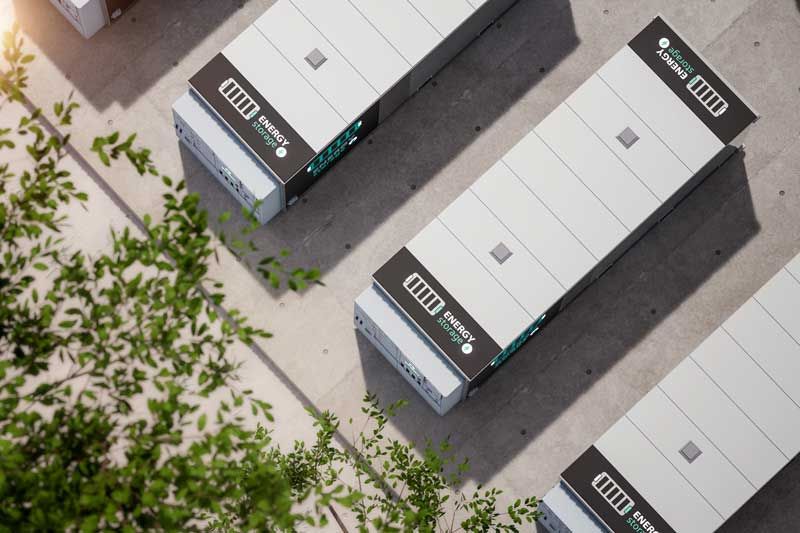
Battery Energy Storage Systems (BESS) store electrical energy and release it when needed, playing a crucial role in modern energy infrastructure. They can eliminate constraint payments and help achieve net zero by avoiding the need to switch on gas plants. But with fast evolving technology and an ever increasing number of developments in the pipeline, are best practices applied?
By William S Lockyer
How bess work
The most prevalent battery chemistry in BESS at the present time are Lithium-ion (Li-ion) batteries. There are a large number of rechargeable Li-ion battery variants. The most common in BESS are Lithium Nickle Manganese Cobalt Oxide (NMC) and Lithium Iron Phosphate (LFP). The older BESS are usually NMC, but the newer BESS installations are now much more likely to be based on LFP batteries.
For BESS, power is measured in megawatts (MW) and the MW rating typically refers to the maximum amount of power that the system can deliver at any given moment. Energy is measured in megawatt hours (MWh) that is, the total amount of energy that the system can store. A BESS rated at 5MW:20MWh can, theoretically, deliver 5MW of power for 4 hours.
Battery cells in a BESS are arranged in modules, racks and cabinets (sometimes containers), typically configured with 104 cells in a module, 8 modules in a rack and 5 racks in a cabinet, rated at 1MWh in each rack. So a cabinet has an energy rating of around 5MWh, with around 4,160 battery cells in a cabinet.
BESS are used to provide flexible energy storage to manage fluctuating supply and demand. Li-ion batteries can, compared to other battery chemistries, be speedily charged and discharged when power is needed in the grid. These batteries have a life of around 10,000 cycles. A cycle is one charge and discharge, with typically two cycles a day. So batteries for a 40 year system will need to be replaced at least twice during the lifetime of the BESS.
The Risks
The major risk in a Li-ion BESS is Thermal Runaway (TR).
According to a report commissioned by the UK Government Department for Energy Security and Net Zero (1) “Effective assessment of potential risks is central to management of health and safety at the outset of a project.” “The (risk) assessment should consider the total energy stored in the BESS and the population which may be affected by particular hazards”[...] “With Lithium-based technologies, TR is a key failure mode which can lead to hazards to the nearby environment.”
These hazards can lead to fire, explosion and release of toxic and combustible gases, vapours and fumes and toxic water run-off.
So what do developers do to address the risks of TR? So far, in the Environmental Impact Assessment Reports (EIAR) that I have seen, very little; and in some, precisely nothing. Sometimes TR is not even mentioned.
So what is TR and how is it caused? The first thing to state is that TR is a low probability incident. But the impact from it can be absolutely catastrophic. TR can be caused by a number of factors, including but not limited to, manufacturing faults, mechanical abuse, thermal abuse, electrical abuse and degradation through use and ageing. The crucial factor is breaching or penetrating the separator between the anode and cathode within a battery cell, thus allowing a short circuit to happen.
Breaching the separator starts an internal short circuit and any short circuit in a battery cell produces excessive heat. If that heat cannot dissipate or be removed by a cooling system, the battery cell will overheat and potentially start a TR by setting off battery cells above and below it in the battery module.
There are two sources of heat in a TR, it is all about heat, not flame or fire: the electrochemical energy within the battery cell being released as heat (based on the state of charge of the battery cell) and the heat of combustion of the off-gases, vapours and fumes from the decomposition of the anode, cathode and electrolyte within the battery cell. The energy from the combustion of the off-gases etc can be up to 20 times the rated energy capacity of the battery. There will undoubtedly be fire when a TR starts but possibly not until a source of ignition is met by the combustibles or the temperature reaches a sufficient level to set off spontaneous combustion. Once in TR a battery cell cannot be put out, it needs to burn out until all the electrochemical energy within the battery is depleted and all the combustibles have been consumed. It can however, be contained to stop it propagating to other battery cells within the module or rack. Containment is by way of cooling and the best medium for that is water, and lots of it. Thus a reliable water supply at the BESS site should be seen as a requirement.
LFP batteries are more thermally stable than NMC batteries, however, when in thermal runaway, LFP batteries show greater toxicity than NMC batteries. LFP is more toxic at lower state of charge and LFP off-gases have a greater flammability hazard (2) .
So what do developers do to address the risks of thermal runaway? So far, in the EIAR that I have seen, very little; and in some, precisely nothing. Sometimes TR is not even mentioned
Many toxic gases are produced in a Li-ion battery in thermal runaway. A major contaminant is Hydrogen fluoride gas which poses a risk to human health and life at 30 parts per million (ppm). Exposure at this level for 30 minutes will result in death. Hydrogen fluoride has been measured in smoke from a TR at up to 600ppm. Very low concentrations 0.1 to 0.5 ppm can injure or kill vegetation. Birds are especially susceptible due to their high respiratory rates. Fish and other aquatic life forms can be affected by a very low Fluoride concentration in water.
Carbon Monoxide and Hydrogen Cyanide are particularly dangerous as they are chemical asphyxiants: they interfere with the transportation of Oxygen to the body’s organs.
Other gases, fumes and vapours, Hydrogen, Carbon Monoxide, Methane, Ethylene and Hydrogen Cyanide are combustible and also pose risks of deflagration (flash fire) and explosion. They should be vented to prevent such risks, but that begs the question as to where they will end up, along with the toxins released with the combustibles into the atmosphere and the environment.
Regulatory Position
Both the Scottish and UK Governments state that there is a robust regulatory regime on the safety of BESS. I do not see that in practice, all the Environmental Impact Assesment Reports I have seen rarely mention thermal runaway.
The chemicals within a battery cell are considered as dangerous substances or articles under the regulations that govern the transportation of grid-scale BESS (3). Yet no EIAR that I have seen mentions the application of these regulations. The issue of TR during transportation is more critical as not all safety processes and procedures during operation of a BESS can be in place.
Thus one would expect other regulations that cover health and safety and planning to also apply. The Health and Safety Executive considers that Li-ion battery cells within a BESS are articles, not substances (4) and because of this, those regulations that would normally apply pre-planning are considered not to apply.
Those regulations are The Control of Major Accidents Hazards Regulations 2015 (COMAH) and The Town and Country Planning (Hazardous Substances) (Scotland) Regulations 2015
The purpose of the COMAH Regulations is to prevent major accidents involving dangerous substances and limit the consequences to people and the environment of any accidents that do occur. What is a TR in a Li-ion BESS but a major accident, that can have catastrophic consequences?
The Town and Country Planning (Hazardous Substances) (Scotland) Regulations 2015 relate to the way hazardous substances consents operate and the way in which the planning system should reduce the likelihood and impact of major accidents. Many of the risks that should be identified and managed at the design phase of any development should also serve to eliminate or reduce the risk of major accidents, and therefore environmental consequences, occurring during construction, commissioning, operational and de-commissioning phases.
The Health and Safety Executive (HSE) Dangerous Substances and Explosive Atmospheres Regulations 2002 apply to all chemical reactions which will release energy as heat. Therefore the HSE does accept these regulations apply to a thermal runaway in BESS Li-ion battery cells. However, I have not seen one EIAR that mentions these risks and applies these regulations to mitigate the risks of explosions, deflagrations and vapour cloud formations.
Environmental Impact Assessment Reports
The Electricity Works (Environmental Impact Assessment) (Scotland) Regulations 2017 govern the preparation of Environmental Impact Assessment Reports (EIARs) in Scotland in relation to wind farms, grid-scale BESS etc. They require competent experts to prepare the report and those experts’ experience and/or qualifications should be set out in the EIAR. Those regulations also require the consideration of various subjects and/or topics such as air quality, population and human health and major accidents and disasters, amongst others. I have yet to see an EIAR that shows the experience and/or qualifications of the persons who prepared the EIAR in respect of a BESS. What do the developers do in their EIAR on these three topics? They ask the ECU (in effect Scottish Government Ministers) to scope out (i.e. omit) them, as they have researched these issues and do not consider that a significant environmental effect exists in relation to any of them. They provide no information on what they may have researched and certainly do not provide any scientific evidence in support of their views.
There is no regulatory oversight pre-planning consent of the dangers posed from a Li-ion BESS. No requirement for thermal containment, no mandatory fire suppression or gas detection systems and no clear guidance for planners
The Scottish Environmental Protection Agency (SEPA) informs me that it does not regulate BESS. The Scottish Fire and Rescue Service (SFRS), which is not a statutory consultee, refers any developer to the National Fire Chief Council’s guidance on BESS, with little additional involvement. The fire service has no legal powers to enforce specific safety measures at battery sites.
I am also informed that the Health and Safety at Work Act 1974, The Electricity at Work Regulations 1989, The Health and Safety at Work Regulations 1989 and The Management of Health and Safety at Work Regulations 1999 apply. All these apply to a going concern that is after planning consent has been granted.
Thus there is no regulatory oversight pre planning consent, of any of the dangers posed from a Li-ion BESS. There is no requirement for thermal containment, no mandatory fire suppression or gas detection systems and no clear guidance for planners whether or not those planners are local or the ECU.
There have been four thermal runaways in the world this year alone. At Moss Landing in California on 16th and 17th January, at Thurrock in Essex on 19th and 20th February, at Rothienorman in Aberdeenshire on 21st February, and at Cirencester in Gloucestershire on 28th March. The California BESS used NMC batteries and reignited over a month later. The Thurrock and Rothienorman BESS were still under construction, and the Cirencester BESS was connected to an operational solar array. I am unaware of the battery chemistry of the three TR events in the UK this year, but most likely they were LFP batteries.
No regulator to my knowledge has taken responsibility for ensuring the risks mentioned are actually dealt with in the pre-planning phase of developments which include a BESS. It is just left up to the developer to self-regulate after planning consent has been granted or consent given by Scottish Ministers. In my opinion this is just not good enough, surely any community is entitled to know how it will be protected from life threatening risks from infrastructure developments prior to those developments being given the go ahead.
The Scottish Government has commissioned consultants to prepare BESS planning guidance to aid planning authorities in assessing BESS applications. However as developers do not follow all the guidance that exists at present why would they comply with any new guidance? Who is to enforce compliance with any new guidance and what would be the consequences for not following the guidance?
Notes:
(1) Health and Safety in Grid Scale Electrical Storage Systems, Frazer-Nash (13/04/2024)
(2) Journal of Energy Storage 87 (2024) 111288
(3) Carriage of Dangerous Goods and Use of Transportable Pressure Equipment Regulations 2008
(4) Classification Labelling and Packaging Regulations 2008

This article is part of The Power Shift – a collaborative investigation by 10 independent, community-based publishers across Scotland, exploring the impact of the green energy transition on communities. Co-ordinated by the Scottish Beacon and supported by the Tenacious Journalism Awards, the project aims to amplify local voices, facilitate cross-community learning and push for fair, transparent energy development.


Comments ()