
Report highlights the imbalance of who benefits from the green energy boom
By Hans J Marter, Shetland News Editor
A new report on the social value of the renewable energy boom in the Scottish Highlands and Islands has confirmed what most people living in the area had already suspected: there is a wide disparity in how host communities benefit from such projects.
The report, written by Tom Wills and Erin Rizzato of Lerwick-based Equitable Energy Research, and commissioned by social change campaigners Platform London, makes the point that community and local authority-led renewable projects “consistently return substantially more value to local people than entirely commercial ventures”.
Wind power now produces enough electricity to power 10 million homes, yet many communities near these developments remain in fuel poverty. The Social value from renewables in the Highlands and Islands report has already sparked renewed calls for a shift toward community and public ownership. A number of case studies from the around the area reveal that community-owned projects are generating as much as 100 times more wealth for local people than privately-owned wind farms. Yet, just 0.5 per cent of these projects – around 85 MW in capacity – are owned by local communities.
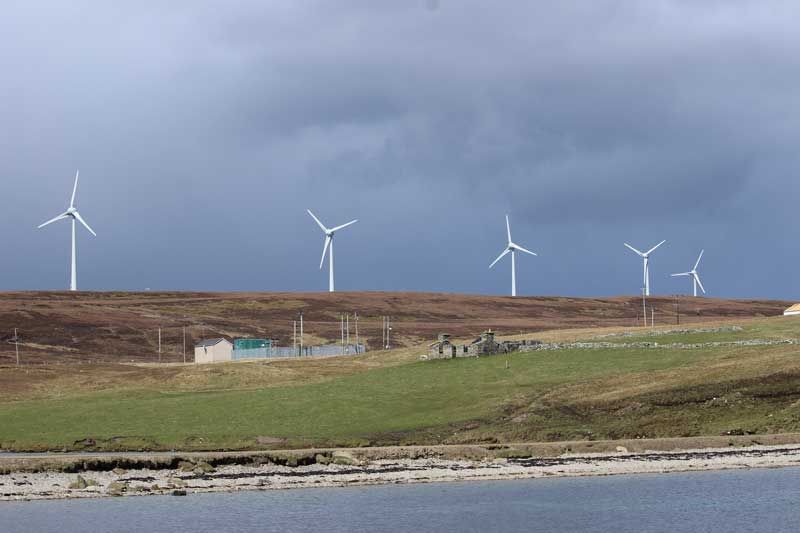
- The 4.5 MW Garth wind farm in Yell, owned by the North Yell Development Council (NYDC) and generating around £2 million annually for the small community of around 250 people, is showcased as one example of how a different ownership model can create wealth and transform lives for local people.
Other examples are:
- Tilley, the Tiree Community Wind Turbine, returns over 100 times more economic value to the community than the privately-owned Beinn An Tuirc 1-2 Wind Farm, despite being around one per cent of the size.
- Orkney Community Wind Farms, wholly-owned by Orkney Islands Council, are set to deliver £5.5 million in revenue each year, helping to support public services across the islands.
Public energy campaigner at Platform Flick Monk said: “There’s a staggering imbalance in the distribution of profits generated by renewables. It’s imperative that we join the dots and realise community ownership at scale. Local people deserve the lion’s share of wealth generated on our doorsteps and real control over our vital energy infrastructure.”
Community projects officer at Tiree Community Development Trust Emmie Martin added: “Tilley – our community-owned wind turbine – has been the cornerstone of our community for over 15 years. The wealth she generates goes straight back into the island through our Windfall Fund, which has awarded more than £1.3million to local projects. Tilley is proof that when renewables are community-owned, they create real power for local people — not just electricity, but money to fund vital services where they’re most needed.”
Co-director of the Future Economy Scotland think tank, Miriam Brett, said: “The Highlands and Islands are undergoing a rapid growth in renewable energy generation. But we risk replicating fault lines embedded in the fossil fuel era by funnelling disproportionate benefits to shareholders. Instead, we must reimagine the ownership and operations of renewables. This means embracing community stakes, community ownership and local authority-led renewable development so that we can share the wealth and democratise our energy industry.”
Equitable Energy Research is a consultancy founded last year to provide advice on renewables to communities with the aim to help negotiate a fair deal for all. Their report can be downloaded here.
This article is part of The Power Shift – a collaborative investigation by 10 independent, community-based publishers across Scotland, including KYLE CHRONICLE, exploring the impact of the green energy transition on communities.
Co-ordinated by the Scottish Beacon and supported by the Tenacious Journalism Awards, the project aims to amplify local voices, facilitate cross-community learning and push for fair, transparent energy development.
Comments ()