
Long winter nights
A fascinating insight into life in the Inuit settlement of Qaanaaq, in Northwest Greenland, by Arctic specialist Bryan Alexander.
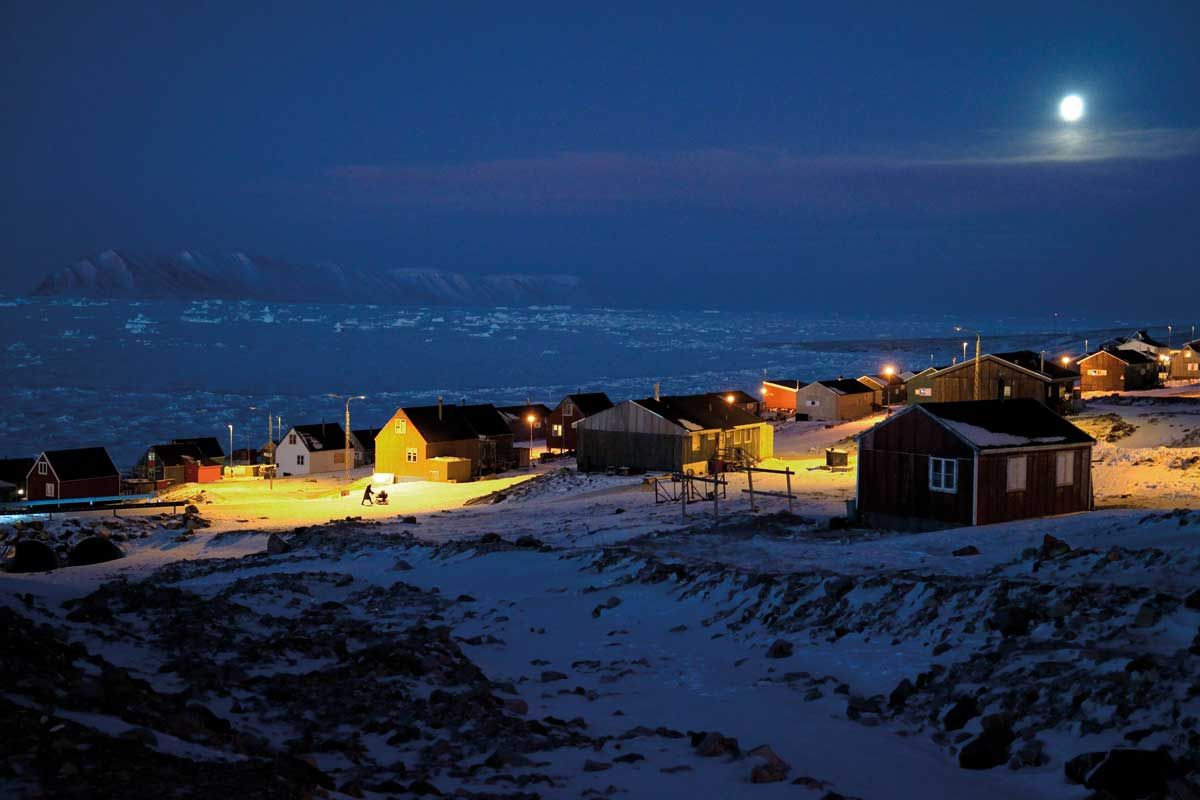
Greenland has often been in the news lately, but what does day-to-day life look like there? Photographer and writer Bryan Alexander who, for the past 50 years, has travelled to the Arctic every year living and photographing in remote communities, shares his fascinating insights into Qaanaaq, in northwestern Greenland, an Inuit village that is one of the most northerly towns in the world.
Text and photos by Bryan Alexander
As winter approaches in the Kyle of Sutherland, the days become gradually shorter until by the winter solstice, on the 21st December, the sun only remains above the horizon for around six and a half hours a day. These short days can be gloomy especially when the weather is bad, but we don’t have to wait too long before the days start to lengthen again. Some 1,600 miles northwest of the Kyle of Sutherland in the north of Greenland lies Qaanaaq, a small Inuit village that is about the same size as Bonar Bridge. There the winter and its light are very different; the sun sets on 24th October and doesn’t re-emerge above the horizon again until the following 17th February. These four months of polar night are what the local Inuit call “Kaperlak”. It’s not totally dark all the time, there is a dim twilight in the middle of the day, and when the moon is full and reflects off the snow and ice it can seem quite bright. Despite the darkness, life for the villagers carries on as there is enough light for people to go about their traditional hunting and fishing activities.
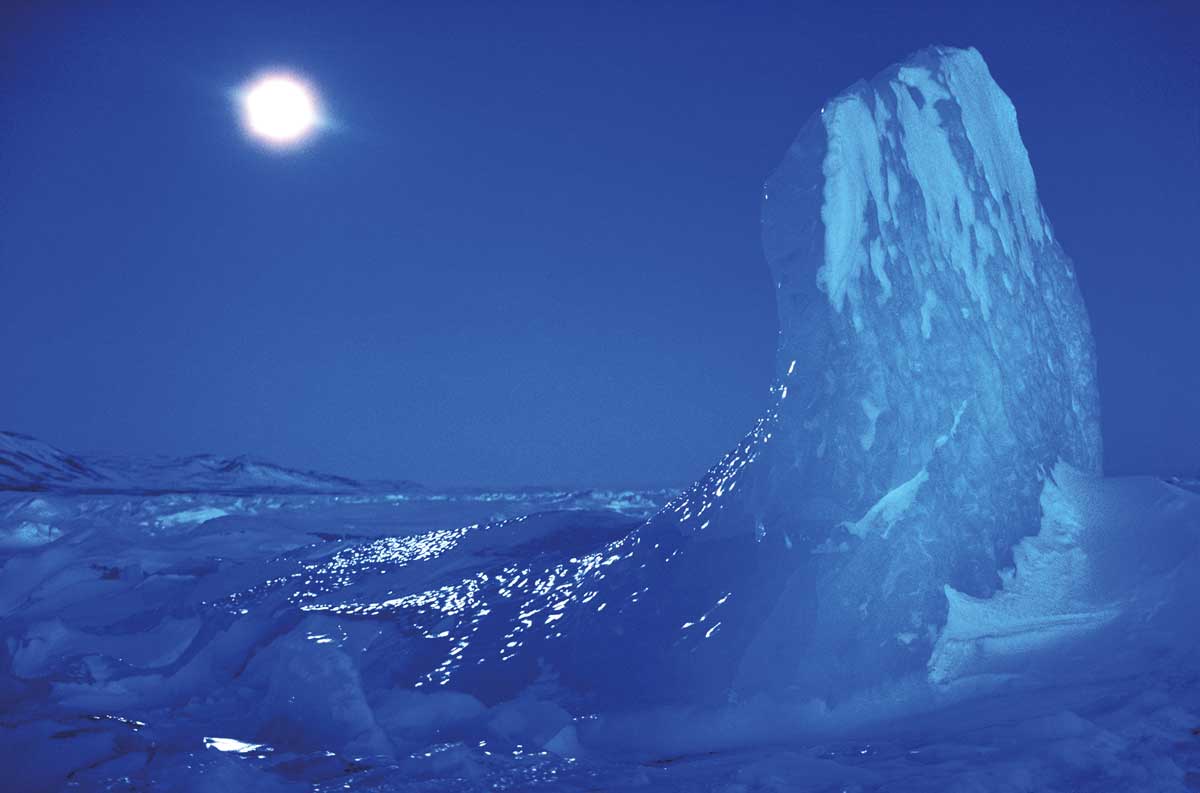
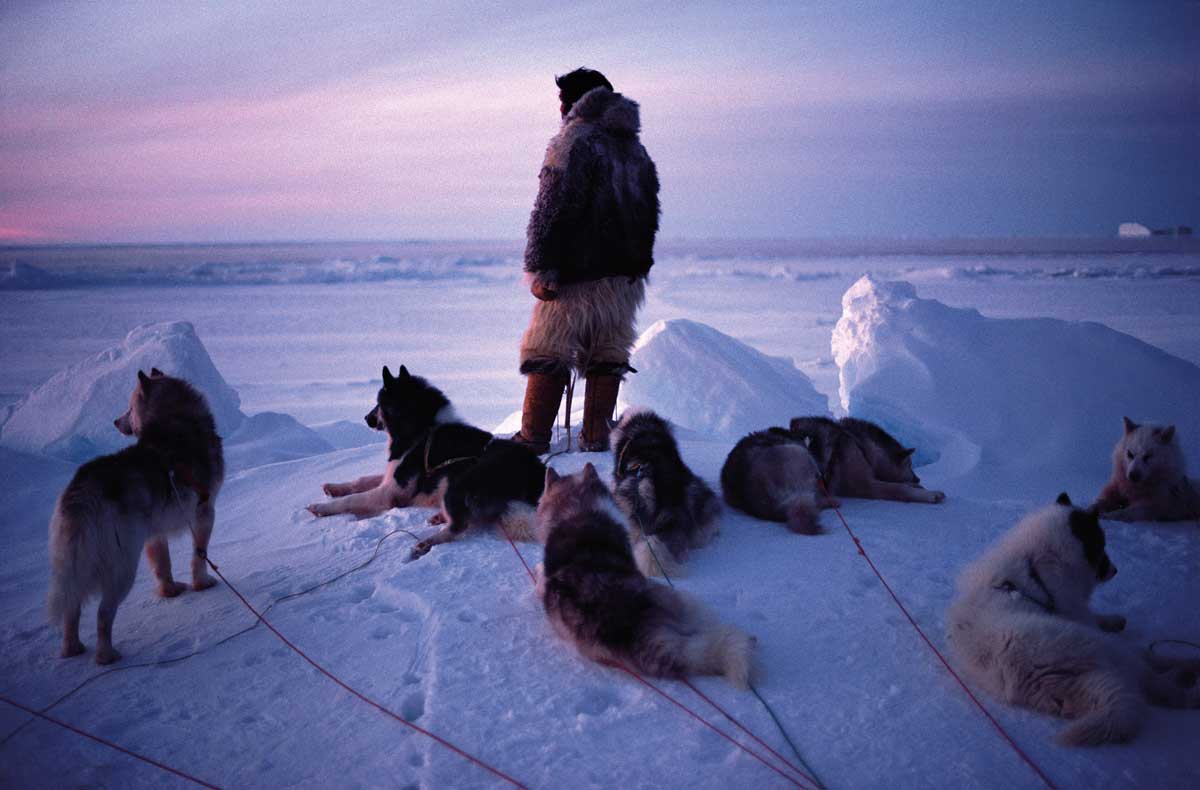
(Left) Moonlit iceberg taken at midday during the polar night. The ice is polished by the wind. (Right) In the twilight of a January day during the 4 month polar night, Ituko, an Inuit hunter, stands on the sea ice with his dog team near Cape Parry, Northwest Greenland. Bryan Alexander - © Arctic Museum / Bowdoin College
For people living in Scotland and other northern countries the short dull days of winter can lead to some people feeling depressed as well as causing other ailments like Seasonal Affective Disorder (SAD syndrome) and sleep problems. Although some Inuit living in Qaanaaq also suffer from these seasonal ailments, it’s far less common in the Arctic’s native communities.