

It’s time for decisions on energy planning to be taken locally
Kat Jones from APRS (Action to Protect Rural Scotland) makes the case for decisions on all planning applications to be made by local authorities, now that ECU will be incorporated into the Planning Directorate.
Opinion
By Dr Kat Jones, Director of APRS (Action to Protect Rural Scotland)
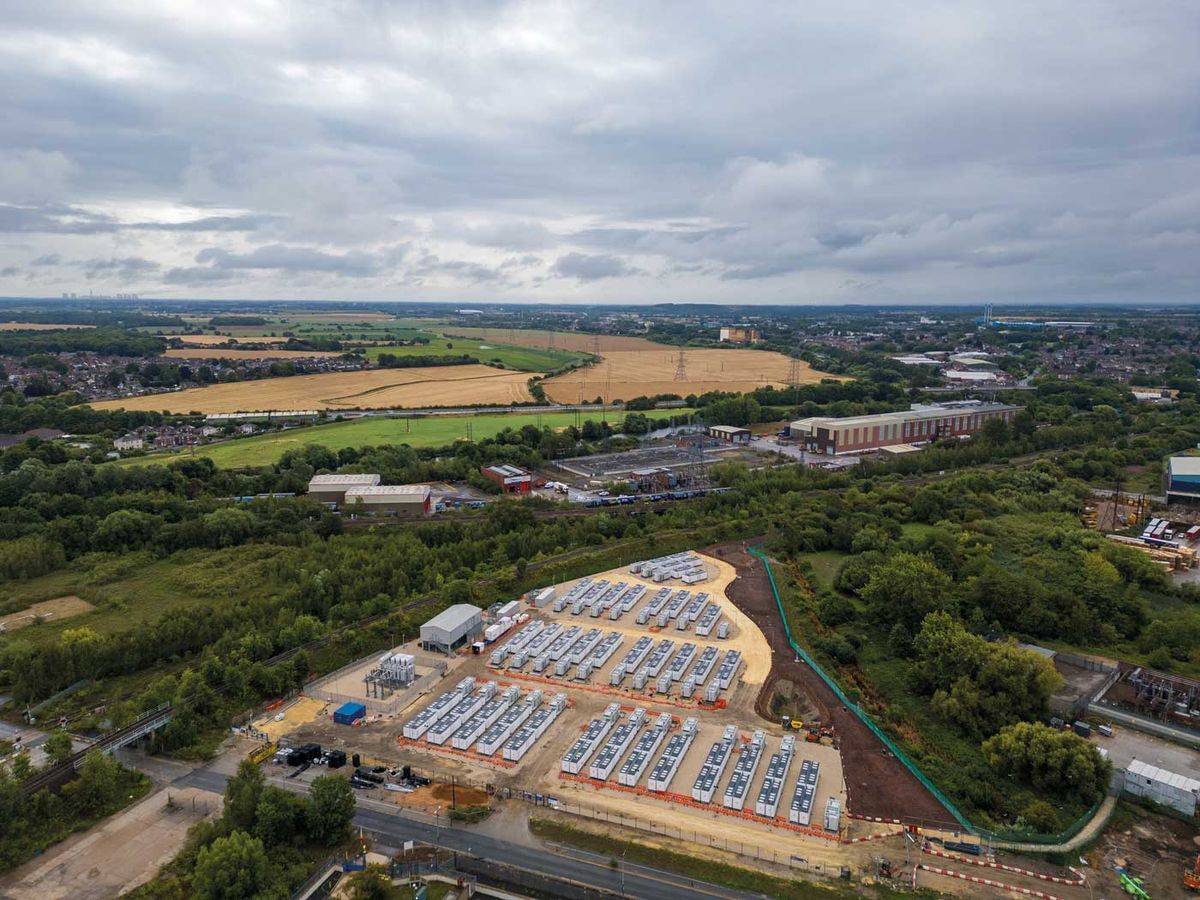
When we started writing our report on battery storage in Scotland we knew that there was a problem. We had heard from many community members that they were getting the go-ahead on greenbelt land, on woodland sites, and right next to heritage sites, including neolithic rock art.
However we didn’t realise how bad the situation was until we started to look into it in detail. Our Battery Storage and Planning report found that planning permission for large battery storage installations (decisions for installations over 50MW are made by the Scottish Government’s Energy Consents Unit - ECU) were always granted. A large BESS, up to that time, had never, ever been turned down. We found that decisions routinely disregarded National Planning Framework 4, including not incorporating planning conditions for biodiversity enhancement even when the local authority had requested them (p23 of the report). We wrote to the Chief Planner along with Scottish Environment LINK, the coalition of the Scottish nature charities, to raise our concerns about this.
And on the other side of the demand-supply equation, it was evident that there was a huge oversupply. By the time our report was published in December 2025 calling for a moratorium and a rethink, there were six times more in the planning pipeline than needed by 2050 for Net Zero, and three times more already had planning consent. Four days after we launched our report and recommendations, NESO’s long-running work on grid reform was published and they put a moratorium on battery storage entry to the grid queue (and onshore wind).
Environmental NGOs and communities have been calling for nearly two decades for the Scottish Government to put in a strategic approach to energy and produce a spatial plan for onshore wind, but this has always been ignored. Despite NESO waking up to the dire situation of the oversupply on batteries and onshore wind, this does not seem to have fed through into energy consenting.
But we are hoping this could now change.
The Scottish Government should soon report the results of a consultation on amending the Electricity Act (1989). This is a once-in-a-generation opportunity to revisit and update the Act and the thresholds for decisions on energy consents. Everyone agrees that 50MW, a figure decided in an era when developments were large and centralised thermal power stations, is not fit for the current shift to renewables. But where to put the threshold to trigger an application to go to Government rather than local authorities?
We responded to the consultation back in March saying that the threshold should be set at a high enough level for all energy planning applications to be decided at local authority level. This is not just about local democratic decision making, and aligning decisions with the needs and character of the area, including incorporating community ambitions for energy. It also gives an obvious route to strategic spatial planning: making energy developments part of the Local Development Plans (LDPs). This would mean that NESO and the power transmission companies could be asked to input to the LDP to ensure plans for energy infrastructure and demand tie in with electricity networks. But also it means that communities could have a meaningful up-front input to the plans for energy developments in their area, rather than having to react to the scores of applications coming in piecemeal. We also believe that this approach would provide important information back to NESO in managing the over-inflated grid queue and provide more funding to planning authorities, as the cost of a planning application increases markedly after the 50MW level.
Scottish Environment LINK, RSPB and many others agreed with us and also put in their responses on this basis, and we also heard from many communities who agreed and said they would also put in a response.
Once that consultation report is published, which I hope will happen in the next month or so, I hope that we will see these views coming out loud and clear in the report from the Scottish Government.
We have already had the news that ECU will be incorporated into the Planning Directorate, rather than operate completely independently of Planning, as has been the case up to now, which seems like a good start. And we hope that our pleas have been heard about ECU’s lack of adherence to our National Planning Framework, and ignoring of local voices.
So this is hopeful news for a reset, but I hope we can see a move towards consenting at a local level and with a spatial plan when we hear the report from the consultation. Local planning authorities are, at this moment, writing ten-year Local Development Plans and this is a critical opportunity to actually plan for our energy needs, and do it in a way that consults local communities, prevents the overwhelm of scores of applications coming in and the lack of oversight of cumulative impacts. It will be for communities and the environmental NGOs to hold the government to account over the coming months and demand the changes we want to see.

Dr Kat Jones is a director of APRS (Action to Protect Rural Scotland), Scotland’s longest established environmental charity – founded in 1926 in order to protect Scotland’s world renowned landscapes and the amenity of the countryside. Visit aprs.scot for more info.

Comments ()