

Convention of Community Councils at Holyrood
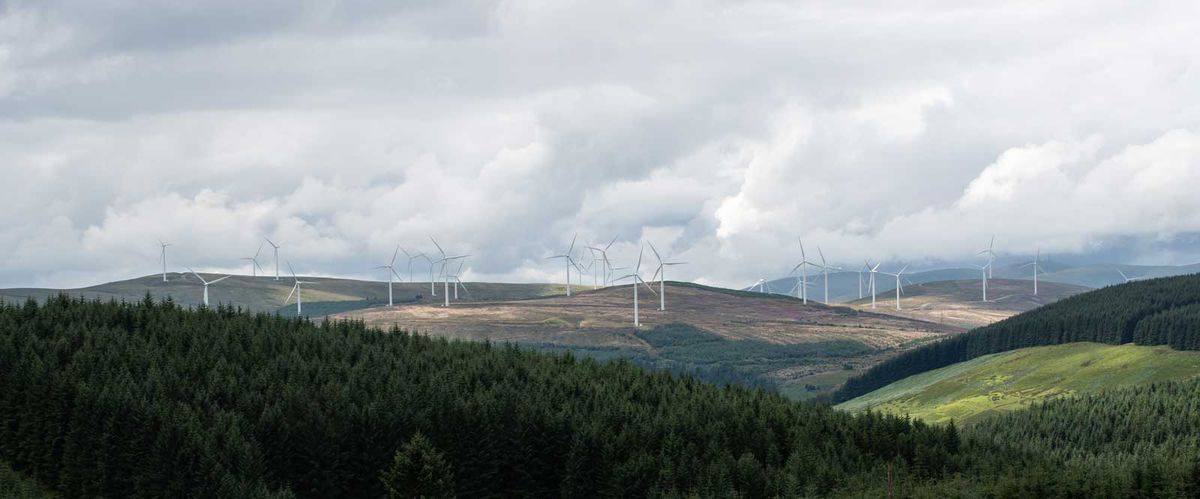
William Lockyer gives a first-hand account of the Community Councils Convention at Holyrood.
By William S Lockyer
I attended this convention on Tuesday 24th February 2026 (1-3pm) representing Creich and Ardgay and District Community Councils (CCs).
It was arranged by Highland Councillor Helen Crawford to discuss the Unified Statement arising from the previous convention on 14th June 2025 in Inverness. The Unified Statement calls for our elected members to protect our communities from unjust industrialisation, calls for a planning inquiry commission to address all cumulative impacts and calls for a pause to all major applications for such infrastructure until a clear national energy policy is in place.
There were 65 delegates from CCs present, not just from the Highlands, but the Borders, Dumfries and Galloway, South Lanarkshire, Ayrshire, East Lothian and Aberdeenshire amongst others.
The convention was chaired by Helen Crawford, with Gillian Martin, the Scottish Government’s Cabinet Secretary for Energy and Climate Change and 11 other MSPs in attendance.
Helen opened with an explanation of our position on the Unified Statement, to which Gillian Martin responded that the best way was to include everyone in the transition, with a Strategic Special Energy Plan (SSEP) to ensure renewable energy wealth creation is shared, with communities owning a stake in the renewable energy. Helen asked Gillian for a planning stakeholder seat on the SSEP for the CC Convention, as this was after all, the first tier of democracy in Scotland. No firm commitment was given that the Community Council Convention would be such a stakeholder.
The Cabinet Secretary went on to remark that she would like pre-planning engagement to be mandatory using good practice principles, and to make community benefit compulsory whereas at present it is voluntary.
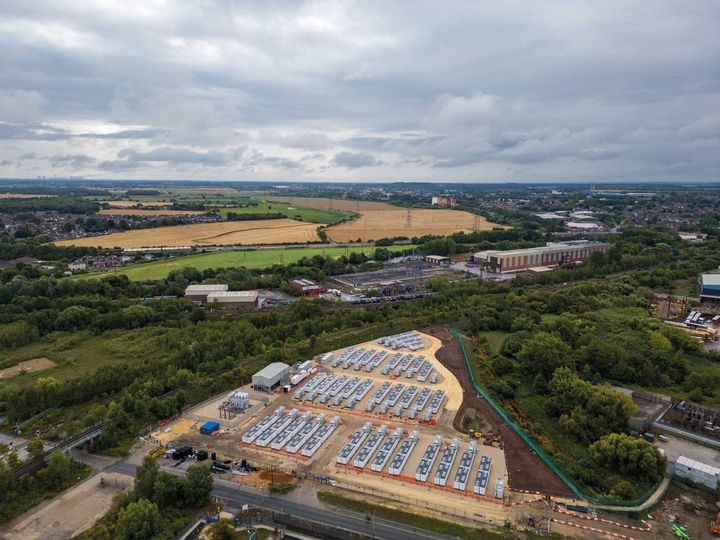
Two speakers were invited by Helen to speak and made points on the oversupply of battery storage report from the National Energy Systems Operator (NESO) and the lack of an energy plan. Where Scotland has four times the maximum battery energy storage needed by 2030 and 3.4 times more than the maximum needed by 2050, the NESO report calls for a moratorium on new battery storage projects to address overcapacity issues and ensure a more balanced energy system.
Ms Martin said that there was no way a moratorium on renewable energy production or battery energy storage would happen. The Scottish Government would be required to deal with any applications made. In addition there were no plans for a planning inquiry commission, but she was prepared to listen to how the planning process could be improved. Ms Martin said a great deal of work goes into Environmental Impact Assessment Reports and she thought she had been invited to hear solutions on how to make the process better so communities could benefit from these developments.
I was disappointed that Ms Martin only stayed for 30 minutes and at her lack of engagement with the convention.
Parliament was sitting so MSPs came and went throughout. All who spoke supported the ideas of a moratorium on such infrastructure developments, and the creation of national energy policy.
I did get called to speak for the allotted 3 minute slot and commented upon the fantasy of the developers’ carbon-saving calculations, traffic movements on abnormal indivisible loads duration of impacts on a particular location, and contaminants i.e. heavy metals, Cs-137, sedimentation and those from an out-of-process BESS.
Disappointed as I was at the engagement at a senior level from the Scottish Government, there is a groundswell from community councils wishing to take part in the convention to influence the current renewable energy free-for-all that is presently taking place.
Helen’s closing remarks were that it was easy to pick off isolated rural communities, but here the south, northeast and The Highlands had combined with more to come. We are not going away. The Scottish Government needs to get a grip and deal with it.
Comments ()