

Budgerigars
Allan Michael, member of Budgerigars Societies Judges Panel, shares with our readers a decades-long journey dedicated to keeping the passion for these remarkable little birds alive.
By Allan Michael
In the 1950’s, 60’s and 70’s many households up and down the country would have a Billy or a Joey in a small cage in the corner of their living room which invariably would have been taught to repeat their names or “Whose a pretty boy then”.
Unfortunately this is no longer the case, with a few people now having a small aviary in their garden containing a few birds, either canaries, foreign birds or budgerigars.
I started keeping budgerigars almost by default back in 1970 when I was an apprentice in Cleethorpes Park Department. While visiting a local park I found one of the gardeners euthanising quite a number of budgerigars due to there being too many. He still had four unfortunate birds left in a cage waiting to meet their maker. It must have been their lucky day as I placed them in a cardboard box and took them home. Quickly constructing cages, and so my career in breeding, exhibiting and judging the wonderful little bird that is the budgerigar began.
The wild budgerigar (Melopcittacus Undulatus) is found in Australia in very large flocks mainly in the Northern Territories. They are known as grass parakeets as they follow the grass growing season, and they consume the seeds produced by those grasses. Incidentally the indigenous Australians (Aboriginal people) call the birds Bettcharigah which means good to eat.
The Budgerigar was introduced from Australia in 1840 by John Gould, an explorer who brought birds into the UK. He gave the first birds to the Zoological Society to commence their breeding program. These birds were only about 5 inches in length and a beautiful grass green colour. All of the many varieties and colours of budgerigars today have evolved from those original green birds introduced by John Gould all those years ago.
I dipped my toe into keeping exhibition birds in 1974 when I purchased a few pairs of the much larger exhibition birds. I was shocked to know that I had to spend twenty or thirty pounds for a bird. This was quite expensive at that time. However, now exhibition budgerigars change hands for hundreds or even thousands of pounds.
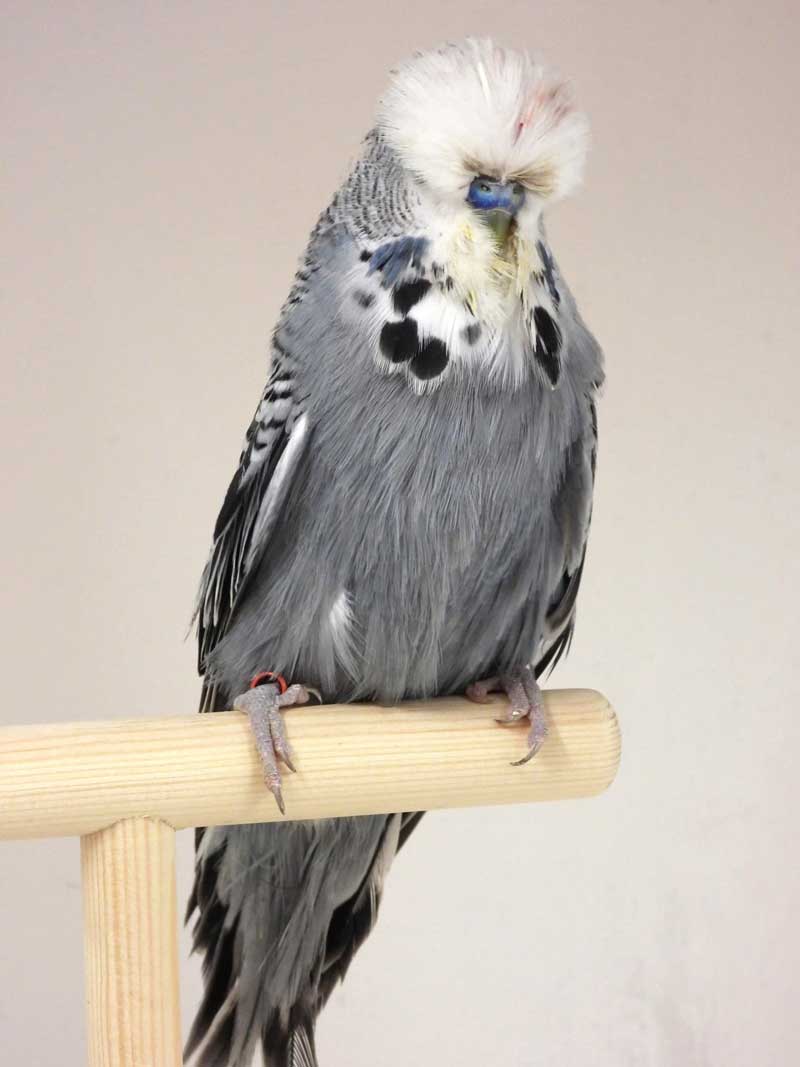
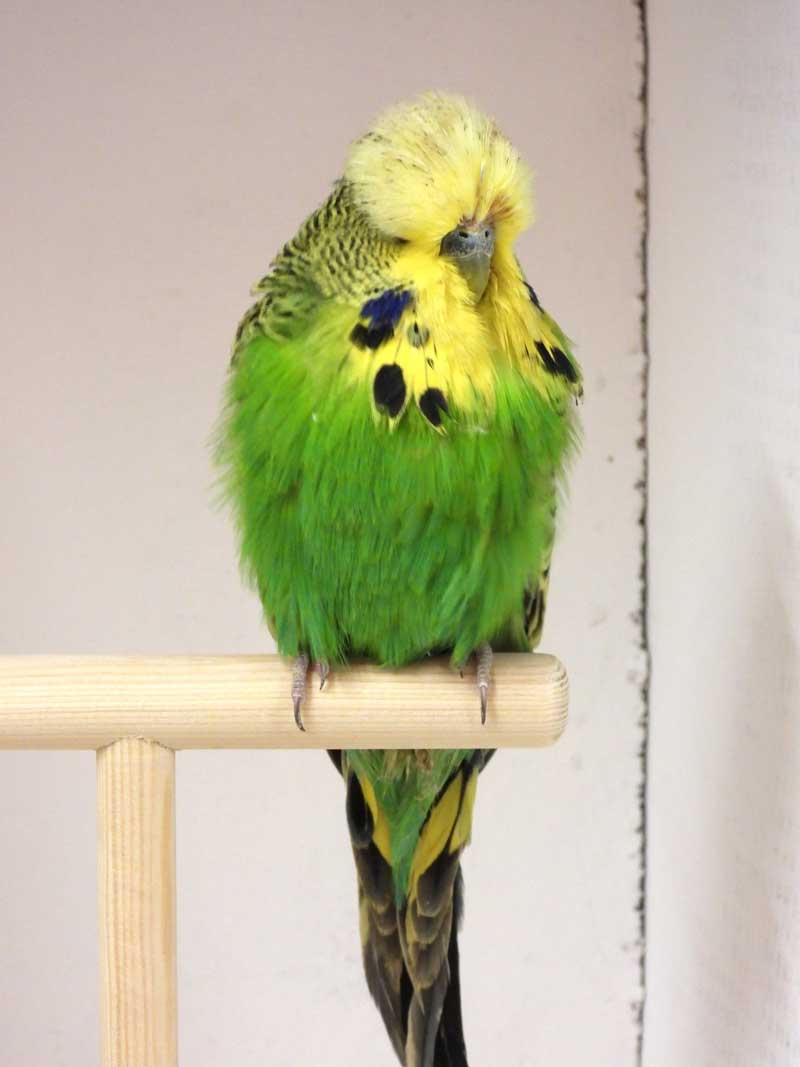
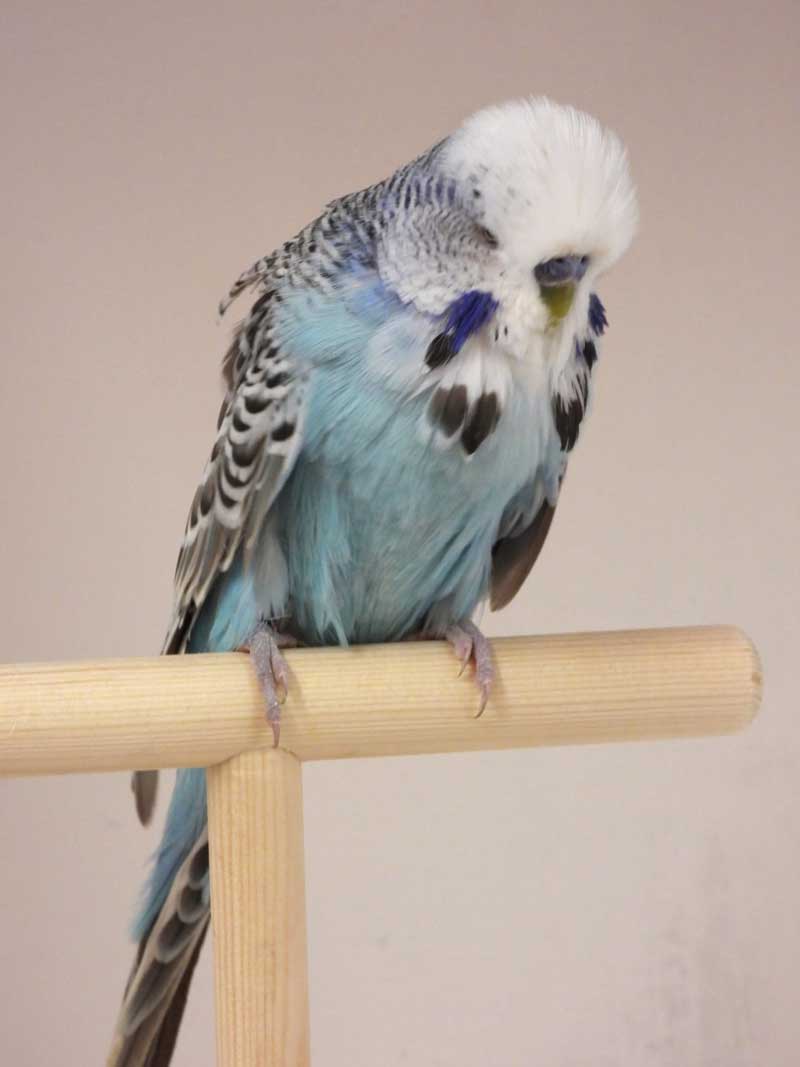
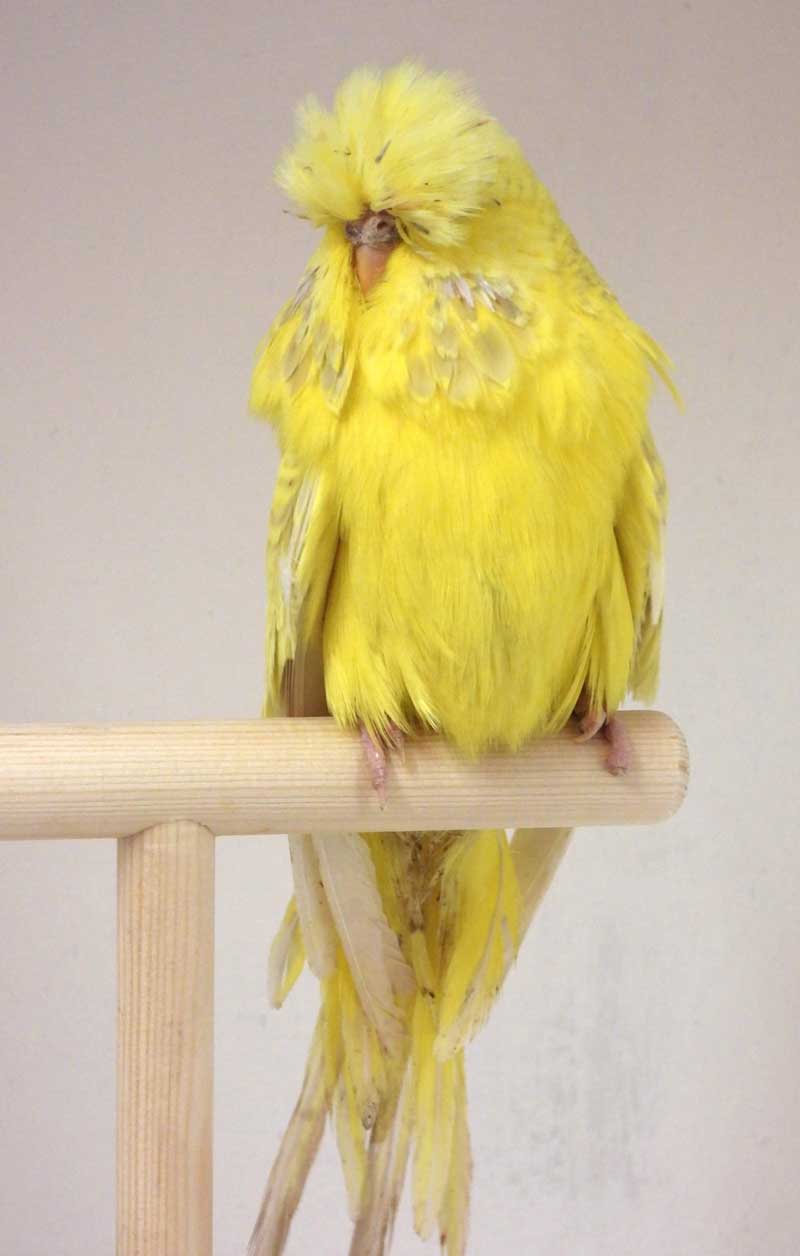
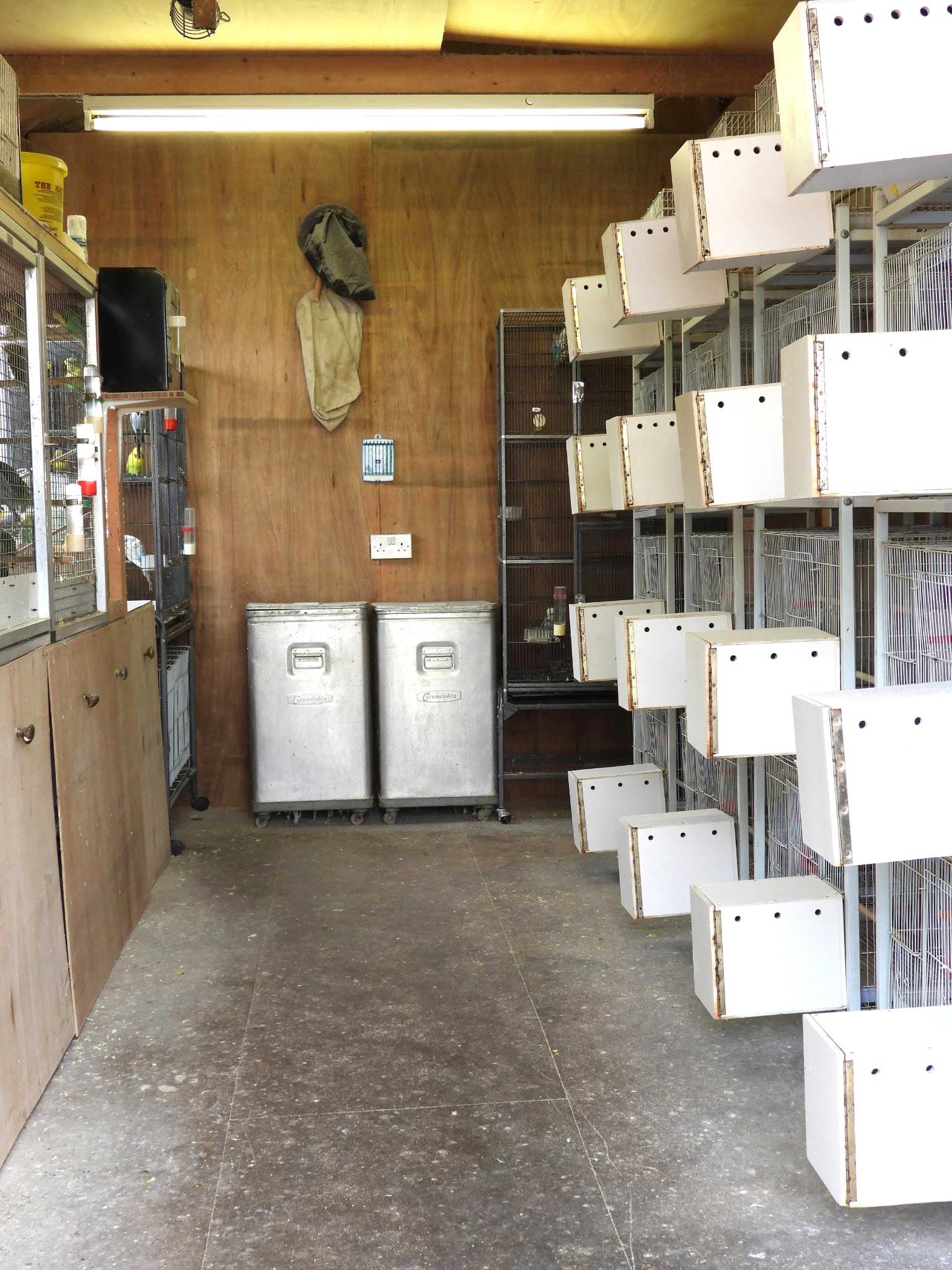
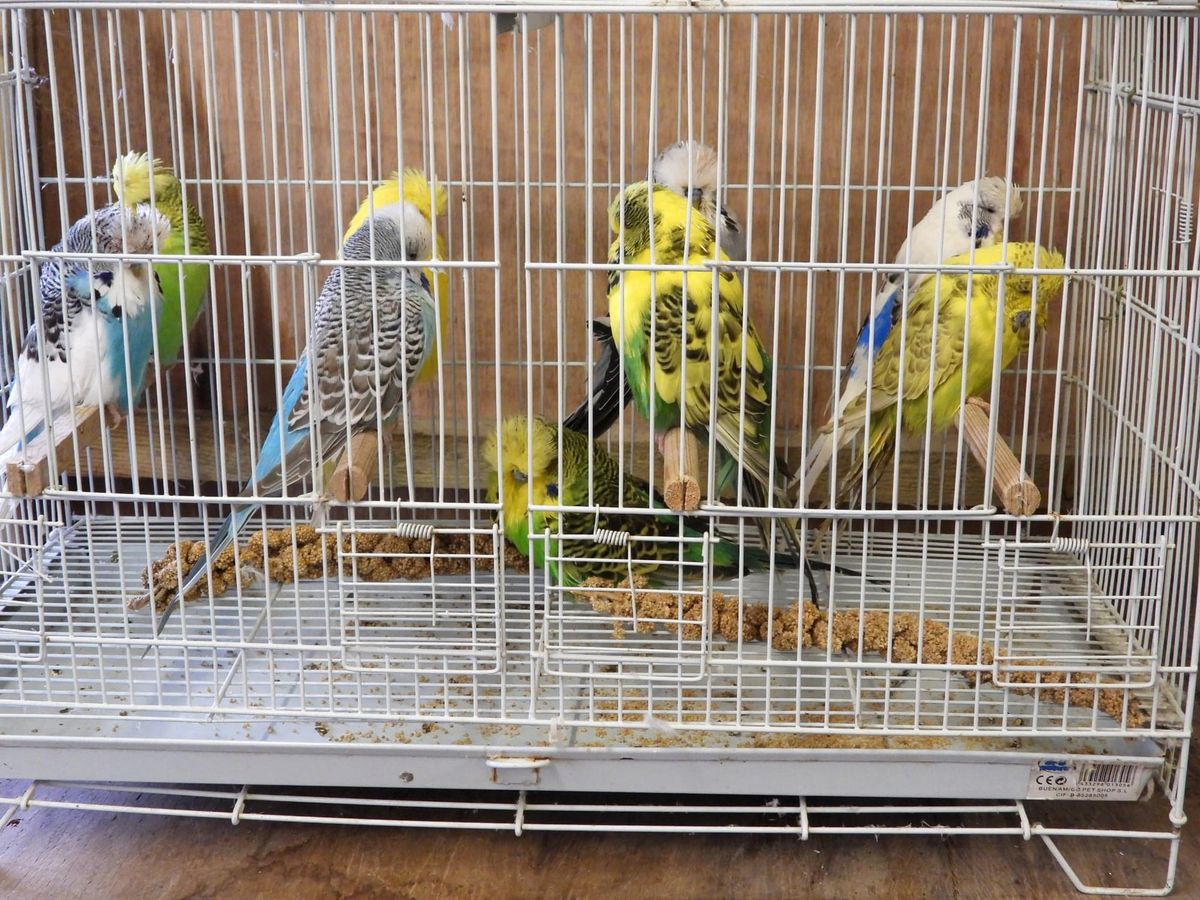
Some of Allan's birds and enclosure. © John Wood
The Exhibition Budgerigar
The modern exhibition bird is so much larger than the pet type or the wild budgerigar. In fact these birds may be as big as ten to eleven inches in length. Not only do they need to be large, they are required to be in perfect feather condition. Wide in the head, they have a deep mask with six evenly spaced spots, they also have full sets of wing feathers and two full length tail feathers. When a bird is prepared for a show, preparation commences about six weeks before the event with spraying every other day and then using a tooth brush on heads and masks to show the bird to perfection. I have had reasonable success on the show bench winning rosettes and trophies over the years. In 1999 my wife Nikki joined me in forming the partnership of A & N Michael, which was wonderful to have her support in the hobby.
In 1987 I became a member of the Budgerigar Societies Judges Panel and have had the privilege of placing awards at shows throughout the world. Probably the highlight being judging the Australian National and going back to the country where it all started, with this beautiful little bird. I have also had the honour of placing the awards at the World Championships on four occasions, who knows maybe I may even make it a fifth in the future.
The birds are now housed in a 30 by 20 foot structure which I have split in half. One half being the bird room and the other half a man shed. This building was on site when we moved to Rosehall almost four years ago. The birds are housed in three aviaries and then paired into individual cages for breeding. They have a diet of canary and millet seeds, supplemented with millet sprays and mixed blended vegetables when the pairs have babies. My breeding season commences in late February and extends to June - July when hopefully that the world beater has been produced to win more rosettes and trophies.
Over the fifty years in the hobby I have made lifelong friends from all over the world. Since moving to Scotland I have met up with local fanciers to continue sharing our wonderful hobby.
Comments ()